We're Launching One Startup Every Day to Prove the AI Search Playbook Exists. It Doesn't Look Like What You've Been Told
Summary
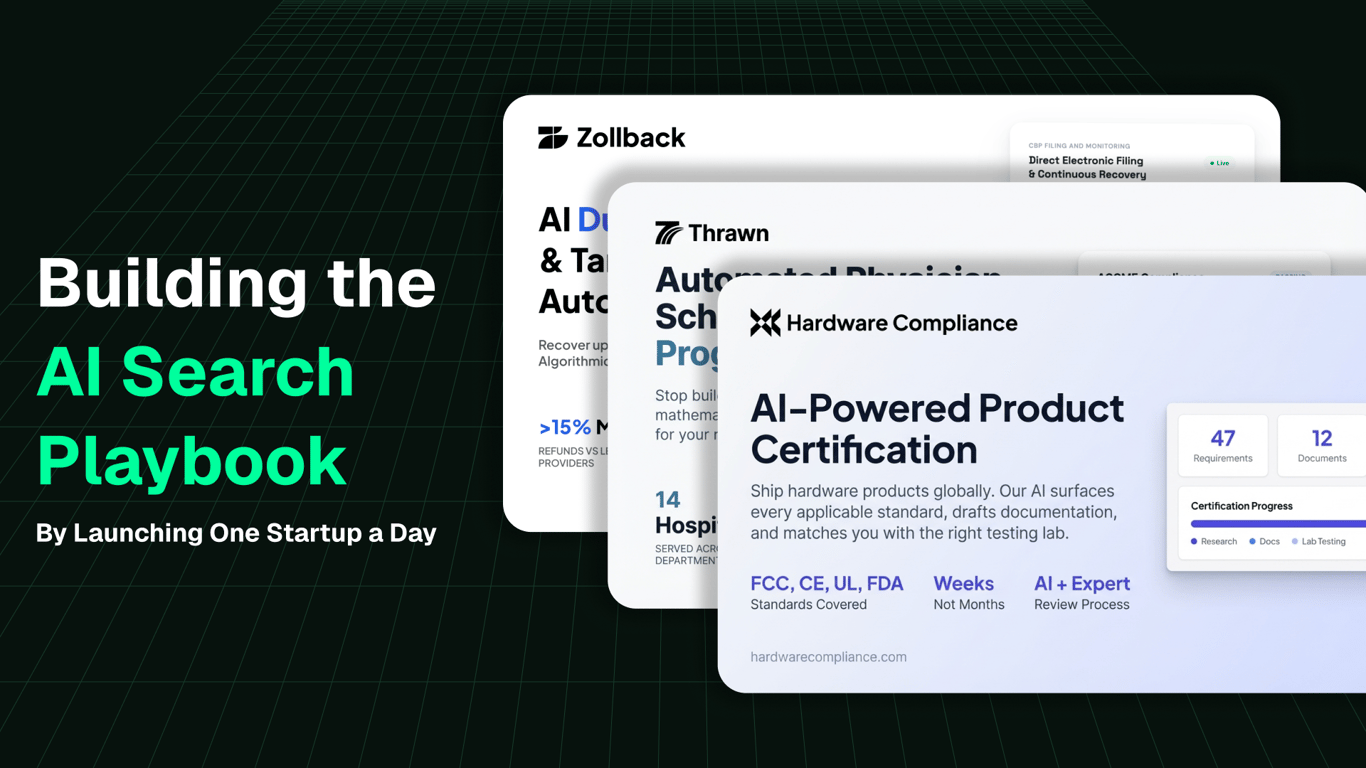
Much of the common wisdom around SEO and GEO is outdated; this experiment launches a new startup daily to test what actually drives growth.
Contrary to popular belief, targeted organic strategies can generate qualified leads in under a week, challenging the myth that it takes six months to see results.
The experiment is proving that high-intent targeting is more effective than raw traffic volume, with sites generating leads from fewer than 10 clicks and zero backlinks.
Follow our daily launch log and get access to the AI Search Playbook, a living document built on first-party data from our experiments.
Everyone's talking about SEO and GEO. But no one is showing you what actually works.
The advice recycling machine is in full swing. Blog after blog rehashing the same "10 SEO tips" from 2019. Thought leaders confidently stating GEO "takes months" to see results. Strategy decks full of steps you'll never finish — 130+ of them, if we're being generous.
And meanwhile, your startup is burning runway waiting for organic traction that never seems to come. You've been told to write more blogs, get more backlinks, wait six months. You followed the playbook. It didn't work.
Here's the uncomfortable truth: most of what you've read about SEO and GEO is either outdated, unverified, or based entirely on someone else's second-hand experience. Nobody's running the actual experiments. Nobody's publishing the cold, unfiltered, first-party results.
So we decided to do it ourselves.
The Experiment: One Startup Launched, Every Single Day
At Synscribe, we are launching one startup every day — not to build the next unicorn, but to stress-test, validate, and ultimately publish the definitive AI Search Playbook for growth.
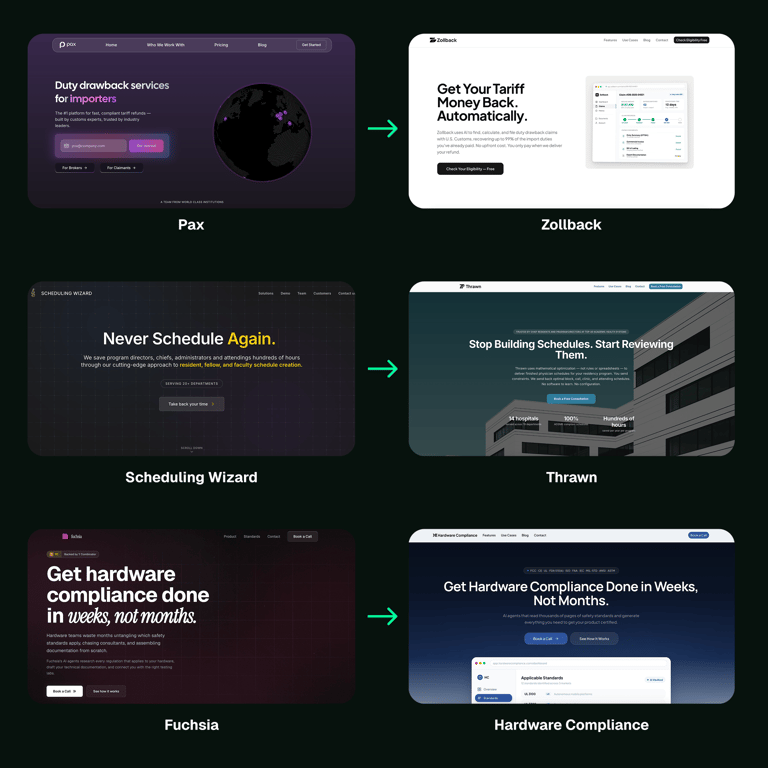 Here's the setup: we select a real, high-potential startup concept — typically inspired by companies on YC's launch list — and build a complete marketing presence around it. We create a clone, a variant, or a well-researched smoke test.
This isn't an app or a backend. It's just the thing that determines whether any of it would matter in the first place: the marketing website.
Then we do something radical.
We apply only SEO and GEO to grow it.
No paid ads. No outbound sequences. No founder-led LinkedIn posts. No partnerships. No PR.
Just organic search — Search Engine Optimization (SEO) and Generative Engine Optimization (GEO), the emerging discipline of getting your content cited and surfaced by AI-powered search engines like Perplexity, ChatGPT, and Google's AI Overviews.
The goal is to isolate the GTM lever that most teams either ignore or misuse entirely, and prove — with real data — exactly what it can and cannot do.
Why We're Doing This (The Real Answer)
This experiment isn't a marketing stunt. It's a multi-layered operation solving several real problems simultaneously.
GTM is Everything — And It's About to Get Harder to Ignore
With AI coding tools like Claude Code and Cursor, building a product has never been cheaper or faster. A determined team can ship a working MVP in a weekend. The barrier to building has collapsed.
That means the only thing separating a startup that scales from one that quietly dies is its ability to grow. And growth, at its core, is a GTM problem.
SEO and GEO are arguably the most underutilized and misunderstood GTM levers available to early-stage companies. They are also the most defensible — the kind of moat that compounds over time rather than evaporating the moment you stop paying for it.
We want to know exactly how powerful that lever is. And we want data across multiple industries to prove it.
We're Tired of Regurgitated Advice
We said it once and we'll say it again: the SEO content ecosystem is broken. Most published "best practices" are recycled from other recycled posts, citing the same studies from half a decade ago, with no actual experimentation behind them.
We want to form our own opinions. Run our own tests. Vary the approaches slightly — different CTAs, different landing page templates, different blog structures, different indexing strategies — and record what actually happens. Then do it again tomorrow.
We're Building a Better Machine
Every experiment also serves as a training ground — for our team and for our AI. We are actively using our SEO & GEO agent to orchestrate approximately 95% of the work end-to-end: from initial company research and keyword discovery, to content creation and indexing. Each launch hardens our internal processes, surfaces gaps in the agent's capabilities, and tightens our operational playbook so we can move faster without sacrificing quality.
Think of each startup we launch as a controlled experiment. And think of us as the lab.
Who We Target — And Why It's Not Random
We are deliberate about which types of companies we clone and test against. Starting broad would introduce too many variables. So we're starting narrow.
Our first target: Early-stage B2B SaaS companies — the YC-style startup.
These companies share a specific set of traits that make them ideal for this experiment:
High-value targets. Each customer relationship carries significant revenue potential.
Complex buying behavior. Decisions involve multiple stakeholders and evaluation cycles.
Mid-to-long sales cycles. The buying window is long enough that organic search can meaningfully influence decisions.
Product-led growth. Features ship rapidly, giving us new content angles constantly.
But there's a deeper reason we love this segment for our smoke test: a massive part of their product-market fit (PMF) journey is figuring out what has value, who cares, and how to say it. That is precisely what a well-designed smoke test — a fake door or a pre-launch page — is built to validate.
We are testing multivariate equations: multiple messages, multiple ICPs, multiple feature angles. It gets complex fast. But our strategy thrives in complexity.
And here's a bonus that most founders don't realize: you can run a fake door test and collect genuine interest while you're still building the actual product. A prospect doesn't know you're two months from feature complete. They just know you seem credible, your value proposition resonates, and they want to learn more. That's the test passing. That's PMF signal, gathered without a single dollar in ad spend.
As our playbook matures, we'll expand into e-commerce, developer tools, MCPs, and enterprise SaaS — each with its own unique search behavior and organic growth dynamics.

What We Actually Do (The Process)
Here's what launching one startup per day looks like in practice.
Step 1: Select the Startup
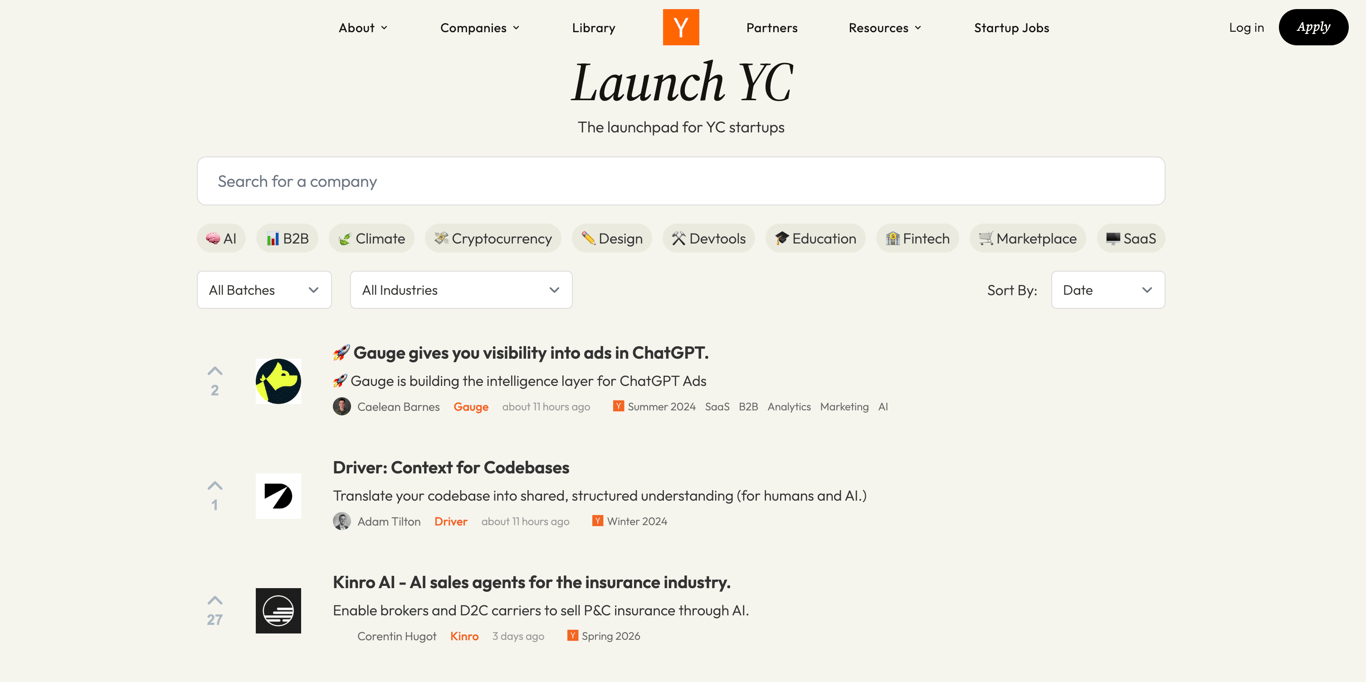 We begin by scouting for compelling product concepts — primarily from YC's recent launch announcements. We're looking for high-growth B2B SaaS concepts with strong underlying problems, a clearly defined ICP, and a competitive landscape worth probing.
Step 2: Deep Market Research
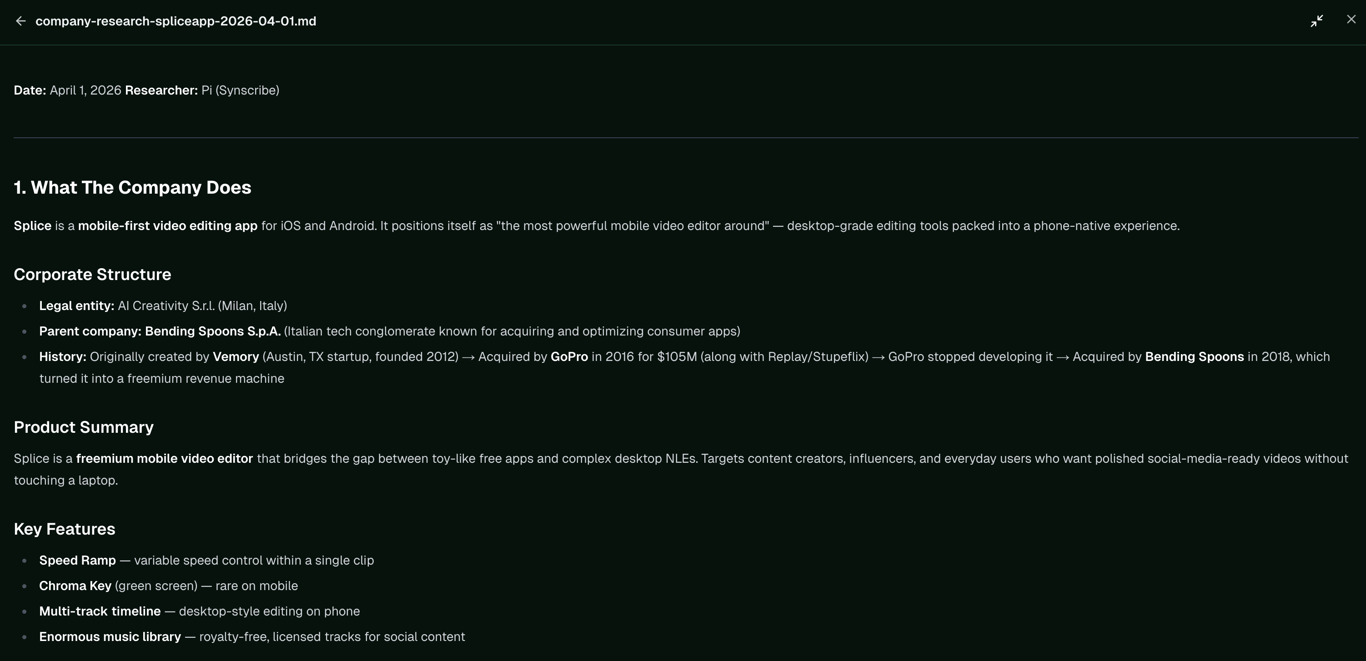 This is where we separate ourselves from surface-level SEO shops. We go deep — fast.
Full analysis of the company, product, and unique positioning
Derived ICP profiles — who actually buys this, why, and what language they use
Mapping the competitor and incumbent landscape
Keyword research, SERP gap analysis, and organic strategy formulation using our keyword platform
Social listening via our social listening tool to understand what real users are complaining about — and stealing their exact language for copy
Step 3: Build the Marketing Presence
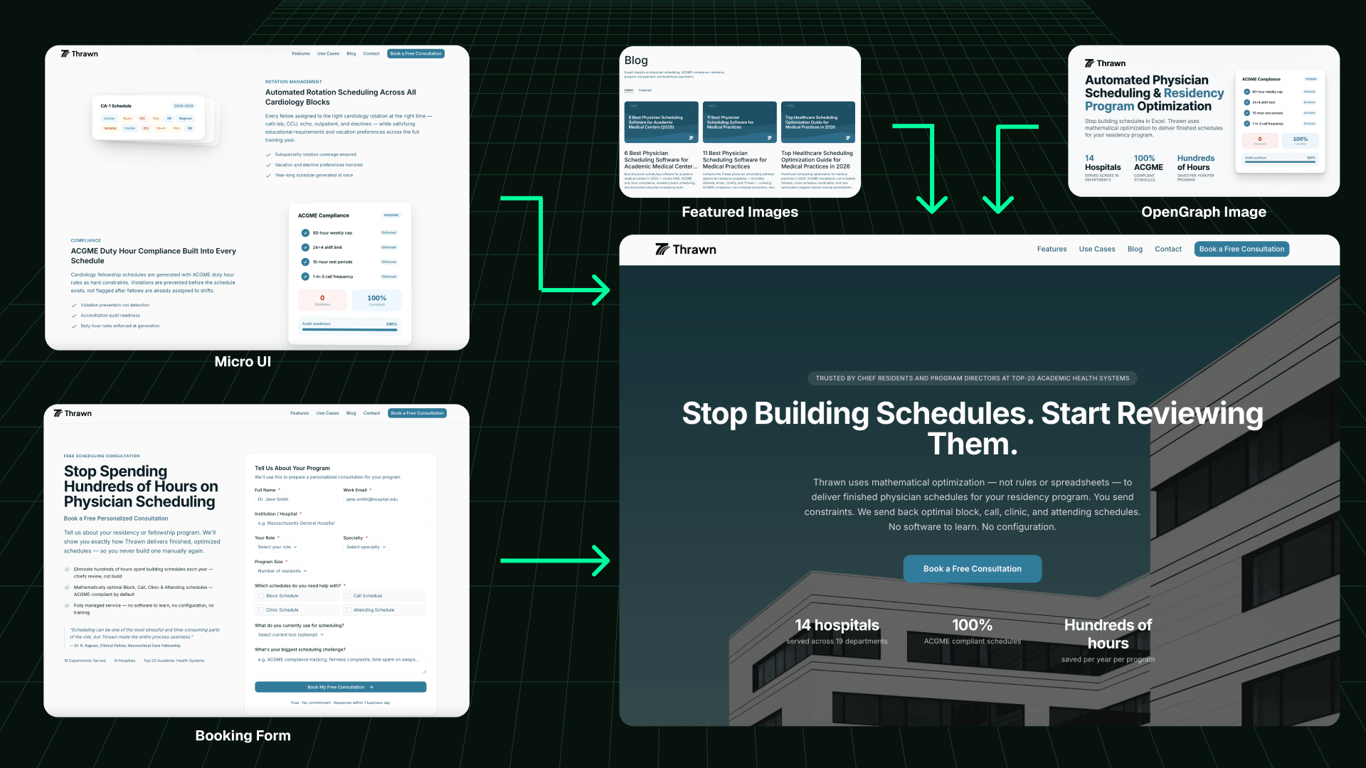 We don't build apps. We build the thing that tells the world the app exists and why it matters.
That includes:
The main marketing website. Designed to convert, not just look good.
Landing pages. Targeted to specific ICPs, pain points, or use cases.
Blog posts. Optimized not just for Google, but for AI crawlers and citation engines.
Off-site content. Placing content where our ICPs already search.
Unique interactive tools or CTAs. Purpose-built for each startup's audience.
What makes each launch stand out isn't just the volume of content — it's the coherence of the strategy, the specificity of the research, and the design quality. We're not farming thin, templated pages and praying to the algorithm. Every piece of content is grounded in a clearly articulated insight about the audience.
Step 4: Orchestrate, Track, Iterate
Our SEO & GEO agent does the heavy lifting — approximately 95% of execution is automated. The remaining 5% is human judgment: strategic calls, creative direction, and quality gatekeeping.
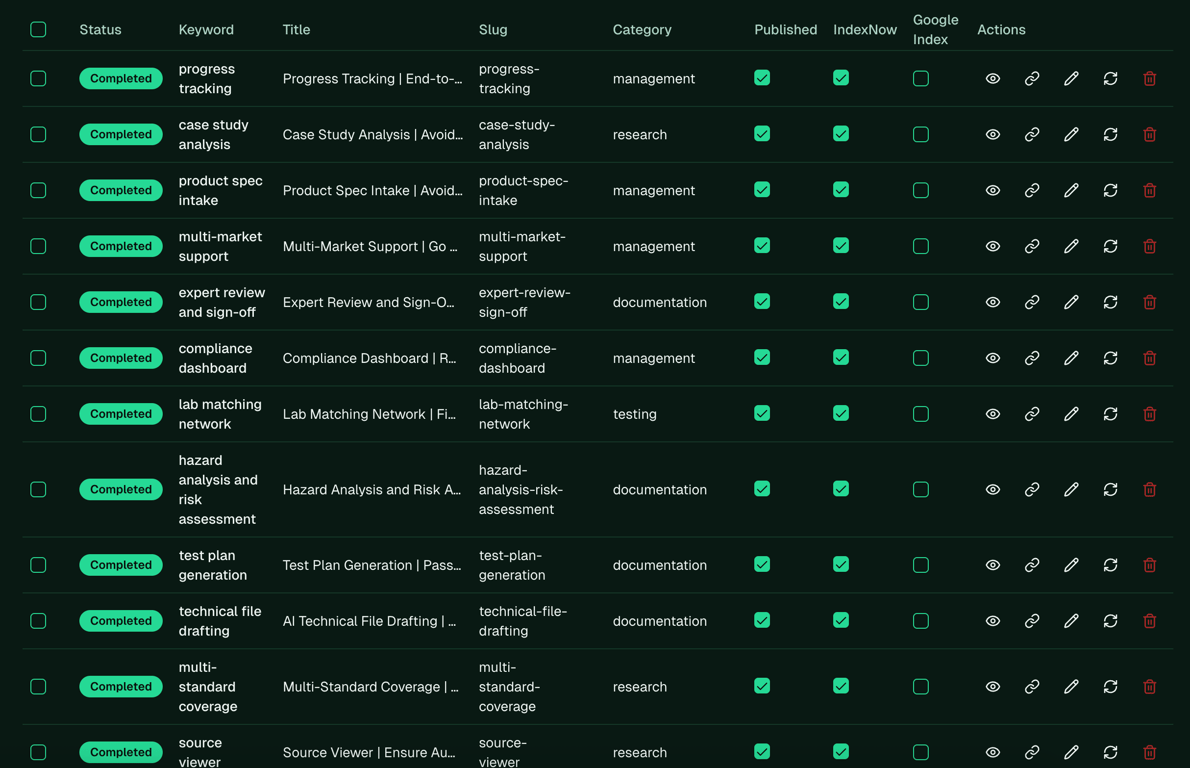 We track keyword movement and content performance in our keyword platform, and we iterate ruthlessly. Every launch teaches us something. Every data point either confirms or challenges an assumption. That's the whole point.
Where You Can Follow Along
This experiment is public. And we want you watching.
The Zero to Ranked Launch Log
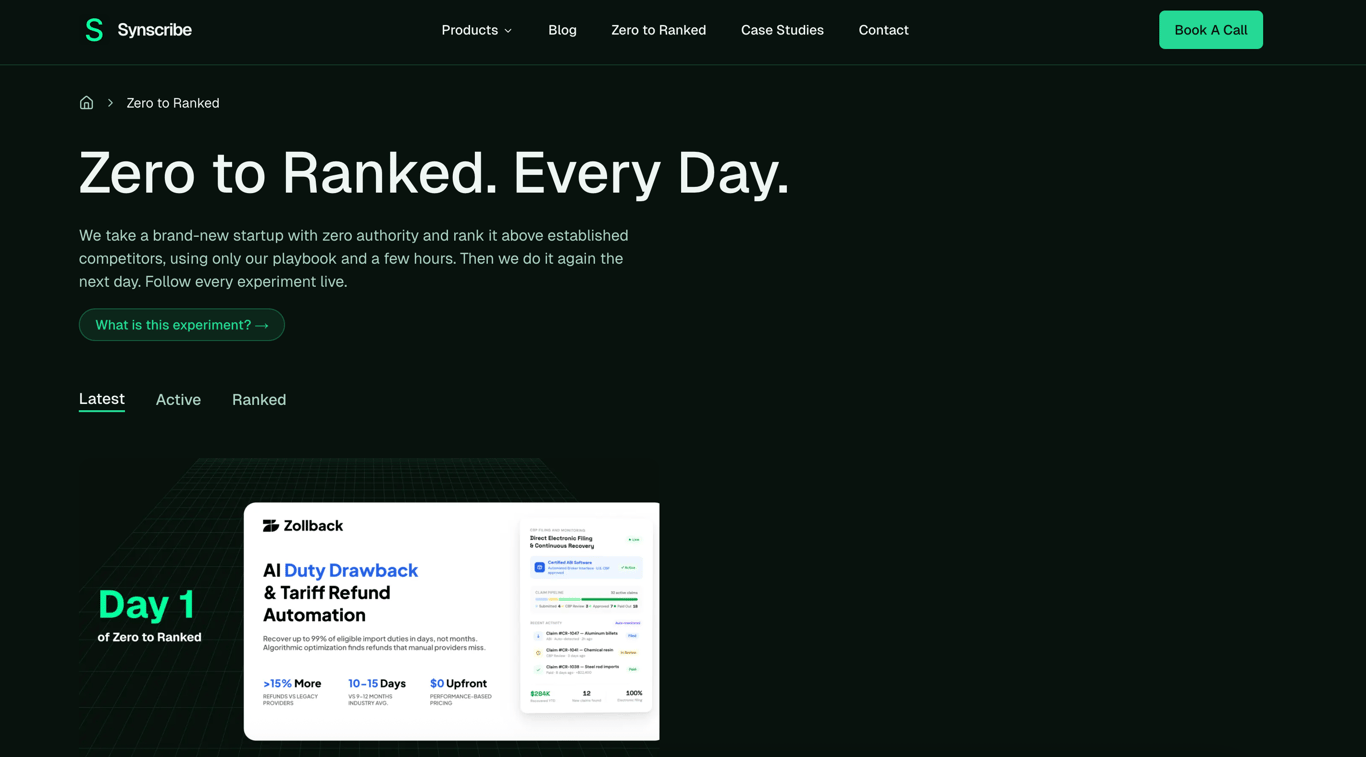 Every single launch is documented in our daily experiment log. Each entry covers:
What the startup is and what makes it unique
The organic strategy we used and why
New lessons learned from applying our evolving playbook
New steps or features we added (or removed) from the process
Specific prompts, tools, and techniques deployed
This is our public laboratory. Come observe.
The AI Search Playbook
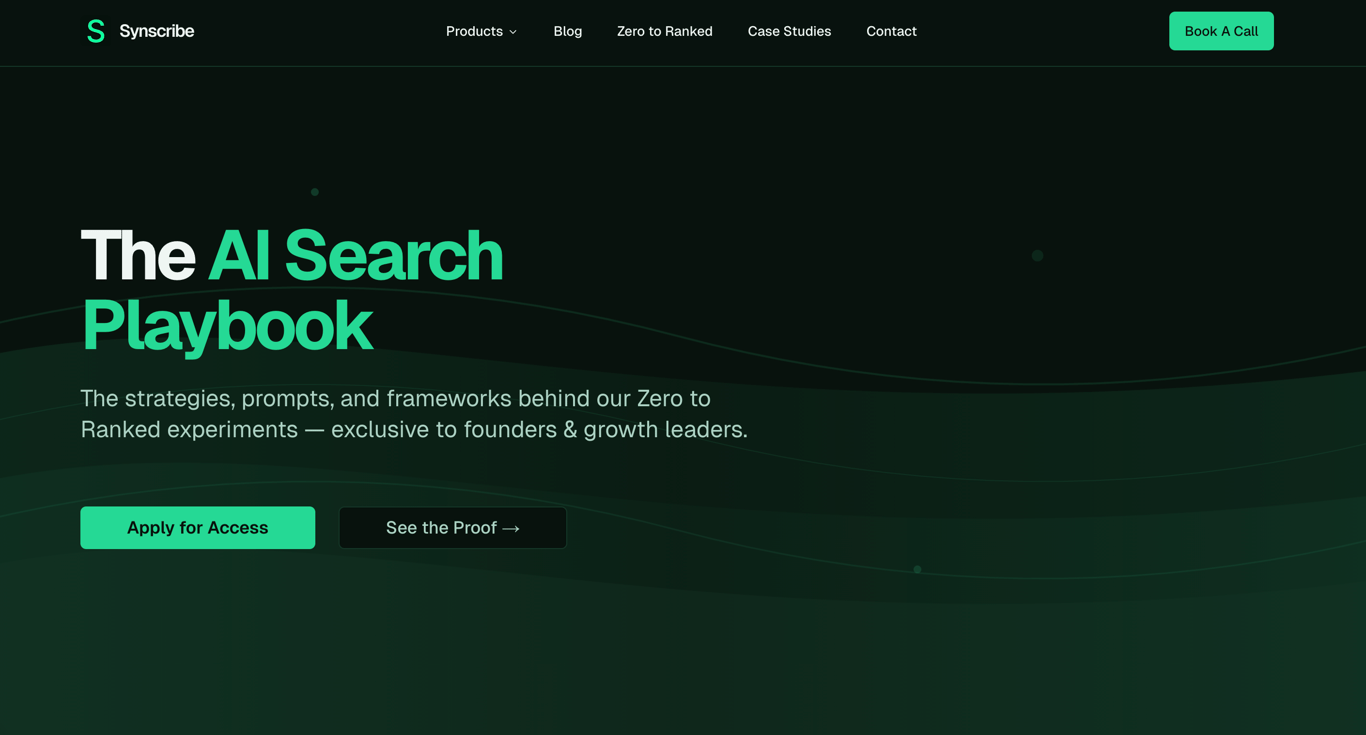 The ultimate output of every experiment feeds into a single, living document: the AI Search Playbook. We are building this chapter by chapter, and right now, early access is exclusively available to subscribers of our accompanying newsletter.
The newsletter isn't another digest of industry news. It's packed with:
Key updates from active experiments, in real time
Specific tactics, code snippets, prompts, and tools we used to execute each step
Exclusive access to compiled playbook sections — the ones that will meaningfully separate you from your competitors
If you're a marketer, a founder, or an SEO practitioner who wants content that actually earns its place in your inbox, you can sign up.
The Myths We're Already Breaking
Here's the part that matters most. This is why the experiment exists.
We are not doing this to confirm what you've already read. We're doing it because the conventional wisdom around SEO and GEO is riddled with assumptions that don't hold up under real conditions. And we have the early data to prove it.
"SEO and GEO take six months to show results." We know this to be untrue. We've had many instances where our customers were recommended by ChatGPT within 24 hours. We've also seen high-quality enterprise leads come in under one week from launch — a reality that challenges the common six-month timeline. Not impressions. Not clicks. Leads.
"You need tons of clicks and impressions before you get a lead." False. We've had launches with fewer than 10 clicks generate actual, qualified interest. The quality of positioning and targeting matters far more than raw volume.
"Early-stage startups don't need SEO." Wrong. Early-stage companies are exactly who benefit most. Organic search is one of the most effective ways to test multiple positioning angles across multiple ICPs — simultaneously — without spending on ads. It's a smoke test amplifier.
"Your competitors need a long time to unseat you, and you'll see it coming." Dangerously untrue. We've watched significant slices of market attention get captured right under the nose of established players — sometimes in days. Big companies need to actively defend their organic surface area, or they'll face a full frontal attack before they even realize a threat exists.
"AI search traffic is a fraction of traditional search." Not anymore. We've observed companies with a 50/50 split between AI search traffic and traditional Google search traffic. The shift is happening faster than most analytics dashboards are even built to detect.
"You need a serious backlink strategy to rank." We've built sites with zero backlinks and generated leads from them. Backlinks matter — eventually, for the late game. But as an early-stage company trying to communicate value to a niche ICP? A sharp blue ocean positioning strategy will outperform a link-building campaign every time.
"GEO is just SEO done well." Partly true — but dangerously incomplete. The keyword distribution in AI search is dramatically different. You see far more long-tail, conversational, intent-rich queries surfacing in AI-powered results than in traditional SERPs. Knowing how to identify and build around those queries is a distinct skill set. That's what we're mapping.
"AI-generated content can't rank." Google has been clear on this: they penalize thin, low-value content — not AI content specifically. The question isn't whether a human or a machine wrote it. The question is whether it adds genuine value to the reader. We've built an entire operational approach around ensuring the answer is always yes.
Build Your Indefensible Organic Moat
We aren't building this playbook to keep it to ourselves. All our work is in service of a clearer, leaner, more honest picture of what organic growth actually looks like in 2026. This includes:
Every assumption we challenge.
Every experiment we run.
Every lead that comes in from a site with zero backlinks and a sub-10-click traffic profile.
The GTM landscape is changing fast. AI tools are collapsing the cost of building. AI search is reshaping how buyers discover solutions. And the window to establish organic authority, before the space gets crowded, is closing.
The startups that understand this right now will build moats that their competitors won't be able to buy their way out of later.
Frequently Asked Questions
What is Generative Engine Optimization (GEO)?
Generative Engine Optimization (GEO) is the practice of optimizing your content to be cited and surfaced by AI-powered search engines like Perplexity, ChatGPT, and Google's AI Overviews. It focuses on answering specific, intent-rich queries in a way that AI models can easily reference, which often differs from traditional keyword-based SEO strategies.
Why should early-stage startups focus on SEO and GEO?
Startups should focus on SEO and GEO because they are highly defensible and cost-effective GTM levers. Unlike paid ads, organic search builds a compounding moat of authority. It's also an effective way to test product-market fit by seeing which value propositions and features resonate with real user search queries without a large ad spend.
How long does it actually take to see results from SEO?
It does not necessarily take six months. While building long-term authority takes time, targeted strategies can yield results much faster. Our experiments have shown that high-quality, niche-focused content can generate qualified enterprise leads in under one week by addressing specific, high-intent problems for a well-defined audience.
Are backlinks necessary for a new website to rank?
No, backlinks are not always necessary to rank and generate leads, especially for new sites. While they are important for long-term authority, a strong positioning strategy that targets a niche audience with high-value content can outperform a backlink-focused campaign in the early stages. Value and relevance come first.
What is the main difference between SEO and GEO?
The main difference lies in the nature of search queries. While traditional SEO often targets shorter keywords, GEO focuses on optimizing for long-tail, conversational questions that users ask AI engines. GEO prioritizes content that provides direct, citable answers that an AI can confidently use to formulate its response.
Can I use AI to write content that ranks on Google?
Yes, you can use AI to write content that ranks. Google's policy is to reward high-quality content that is helpful to people, regardless of how it is produced. The key is to ensure the content provides genuine value, expertise, and a satisfying user experience, not just to create thin, low-effort pages.
What is the goal of launching one startup a day?
The goal is to rapidly test SEO and GEO strategies across various industries to build the definitive AI Search Playbook. By isolating organic growth and launching daily, we can gather first-party data on what works, challenge outdated industry myths, and refine our AI-powered processes for maximum efficiency and effectiveness.
Dominate ChatGPT and Google Search
Synscribe helps B2B companies with SEO & GEO using programmatic SEO approach. Book a call to find out how we help you win.