Day 1 - How We Launched a Startup, Ranked It on ChatGPT in 24 Hours, and Got Enterprise Leads the Same Week
Summary
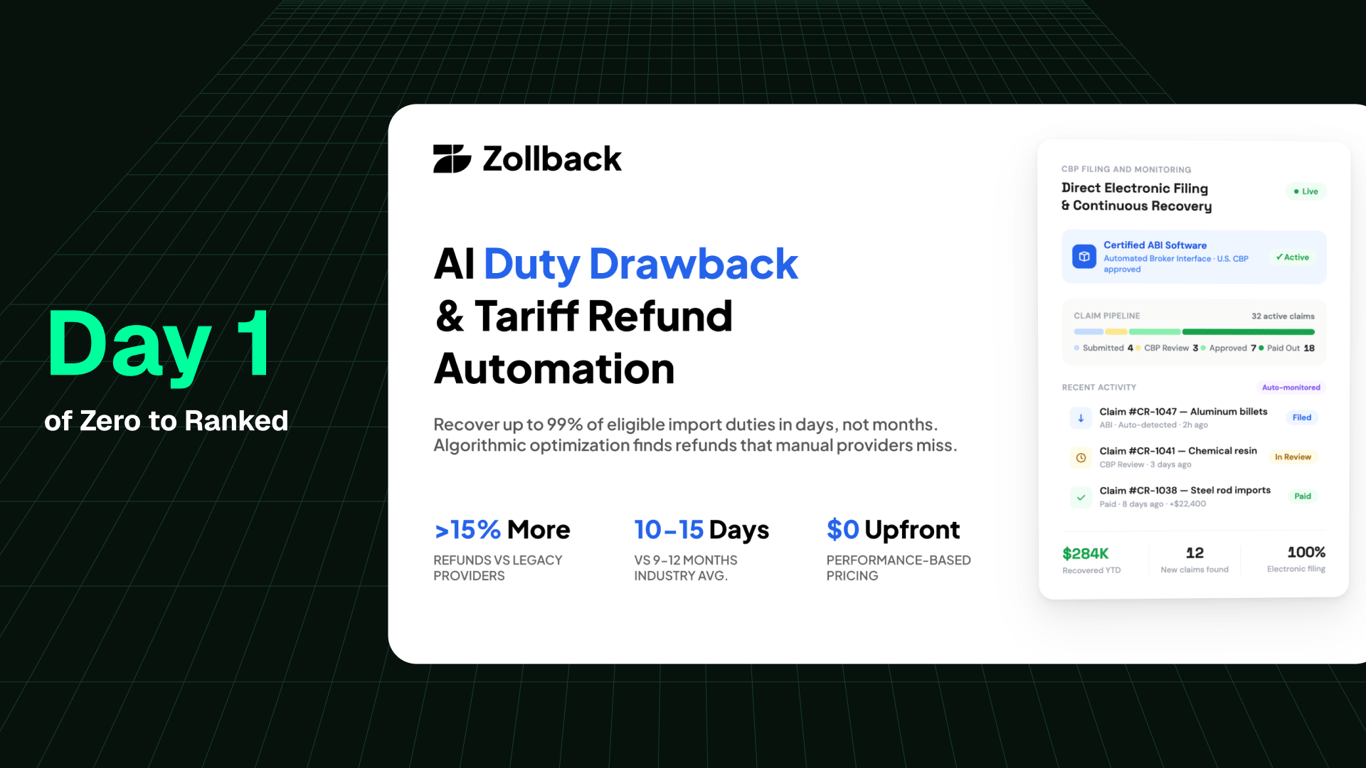
We launched a new software brand, Zollback, and ranked it #5 on Google for its primary keyword in a single day.
The site attracted 6 enterprise leads from only 67 clicks within two weeks, proving high-value B2B buyers use search.
Rapid visibility in both Google and AI engines was achieved through a structured content architecture and forcing immediate indexing.
This case study shows that a strategic day-one launch can outperform competitors who have a multi-month head start.
Most SEO advice will tell you to play the long game. Build backlinks. Publish consistently. Wait six months before expecting anything.
We ignored all of that.
In a single day, we launched Zollback — a duty drawback software targeting US businesses sitting on unclaimed tariff refunds — ranked it #5 on Google, got it recommended by ChatGPT as the top choice, and walked away with six enterprise leads within two weeks.
This is the full story: the chaos, the mistakes, the shortcuts that actually worked, and the ones that didn't.
Why We Built This (And Why Duty Drawback?)
Zollback was the first launch in our one-startup-a-day initiative — an internal stress test to see how fast we could take a product from zero to ranked and revenue-ready.
We weren't just building for the sake of building. We were deliberately picking a fight.
Our target? Pax, a YC-backed duty drawback company with months of SEO momentum already behind them. The niche — duty drawback software for US manufacturers and importers — checked every box we were looking for:
Incumbents in the market. Established consultants, legacy software, and a few newer players. That meant there was something to rank against.
High enterprise value. Companies in this space deal with import duties ranging from hundreds of thousands to millions of dollars per year. One recovered refund can be worth more than an entire SaaS subscription lifetime.
A skeptical audience. Everyone kept telling us enterprises don't discover B2B tools through search. They rely on referrals, RFPs, and sales outreach. We wanted to prove otherwise.
The deeper question we were really asking: if you do good SEO on day one, can you beat companies that had a six-month head start?
Spoiler: yes. But it could be cleaner.
We did it with Zollback.
Before Launch Day: The Weekend Nobody Talks About
Let's be honest — we say "one day," but day one has a prequel.
The week before, Raymond created the Slack channel, kicked off naming discussions (we used quadratic voting, which was both surprisingly fun and surprisingly effective), and began drafting the product bible. The team aligned on the tech stack — a Next.js app with a reusable schema-driven template — so that future launches could be spun up faster without rebuilding from scratch.
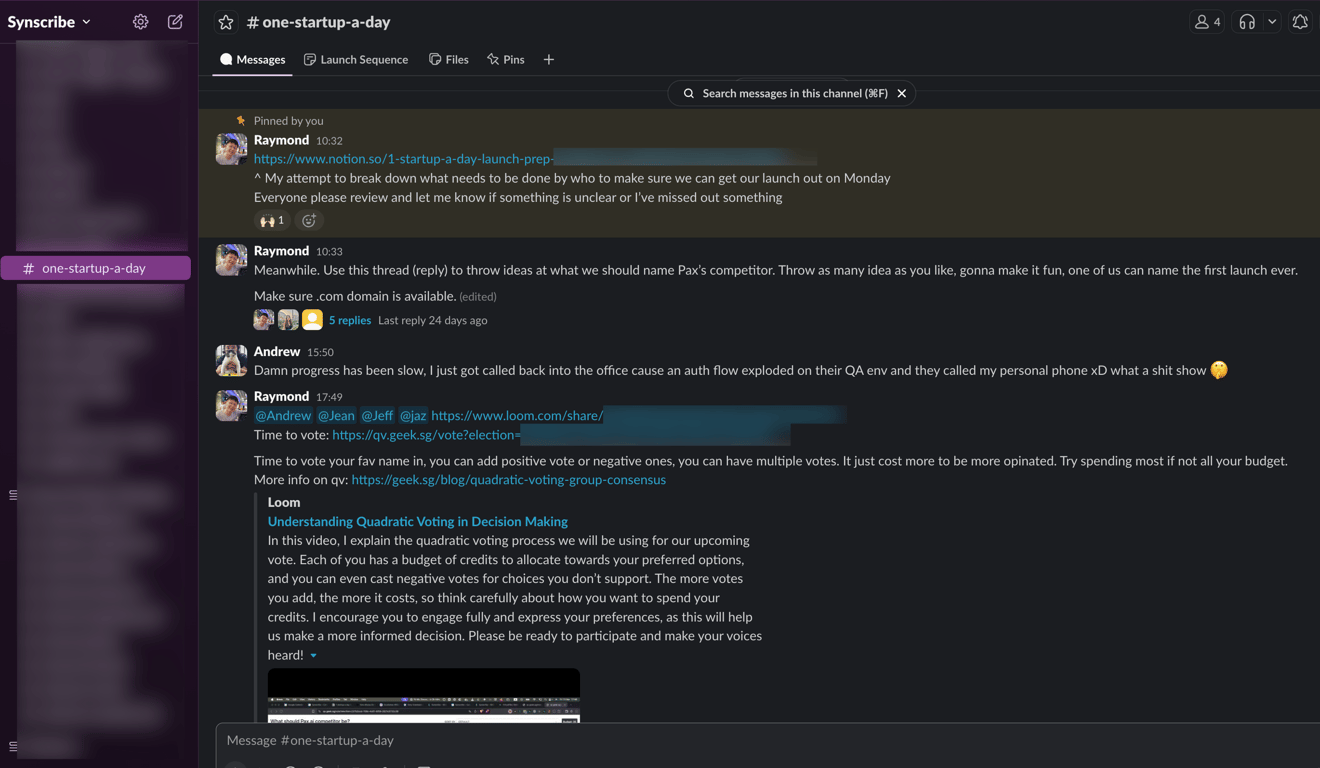 By the weekend, Andrew was building out the site template engine using a JSON schema and block rendering system. Jean had three blog drafts in progress. Jaz was finalizing the branding — clean black and white, no frills. Jeff was building something we called Micro UI.
What Is Micro UI?
Here's one of the more interesting problems we had to solve.
A landing page without product visuals feels hollow. But we had two options that both sucked:
Use AI image generators. Tools like Midjourney or Nano Banana produce inconsistent outputs, generic aesthetics, and are impossible to align to a coherent brand.
Build the actual product. This option would have blown our timeline entirely.
So we built a middle path: Micro UI — a set of lightweight, purpose-built UI components that simulate the product interface well enough to use as visual assets across the landing page and blog.
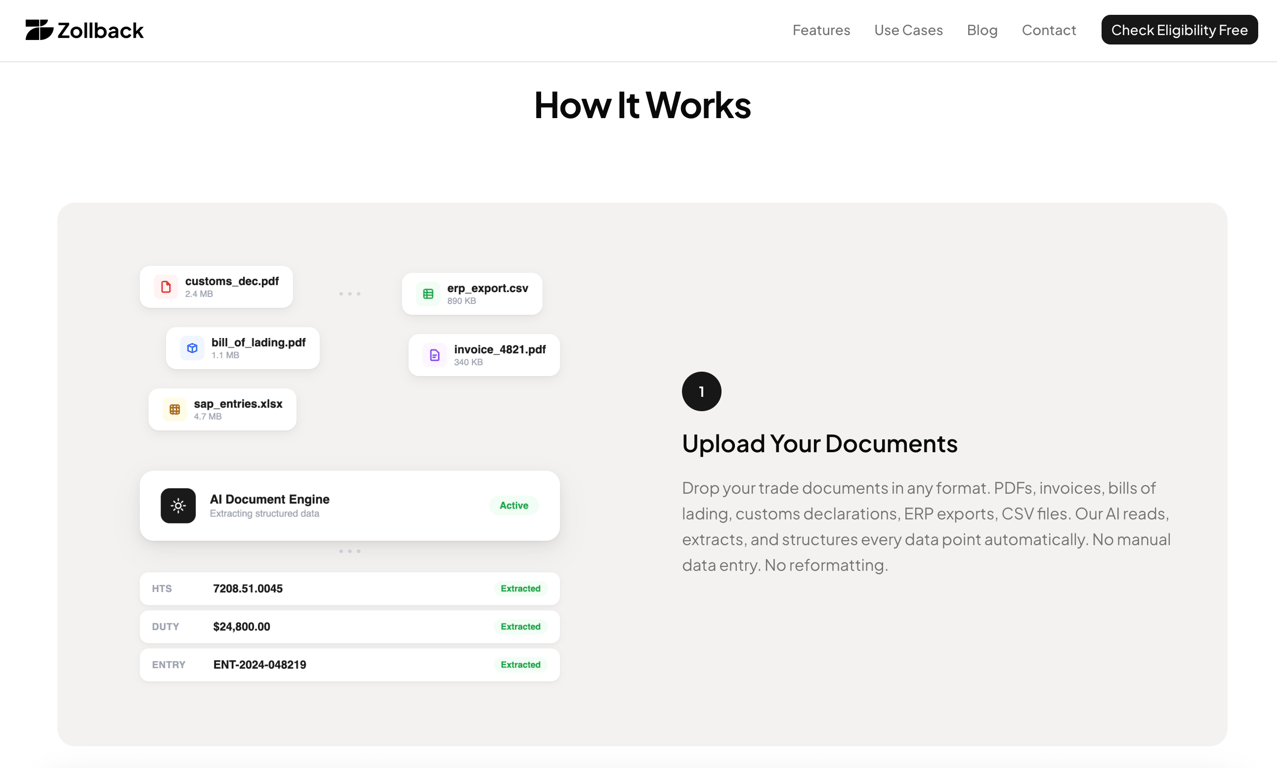 Think of it as a design-to-visual pipeline. Clean, on-brand, fast to generate, and reusable across launches.
Launch Day: 11:30 AM to 3:30 PM
Monday, March 16th. Status check at 11:30 AM.
Raymond had spent the entire weekend aligning everything — deployment pipeline, domain setup, image generation, keyword targeting. By the time the team logged on, the site was almost ready. By 3:30 PM, Zollback was live.
But "live" is generous. Here's what actually happened in those four hours:
What Went Wrong (Almost Everything, At First)
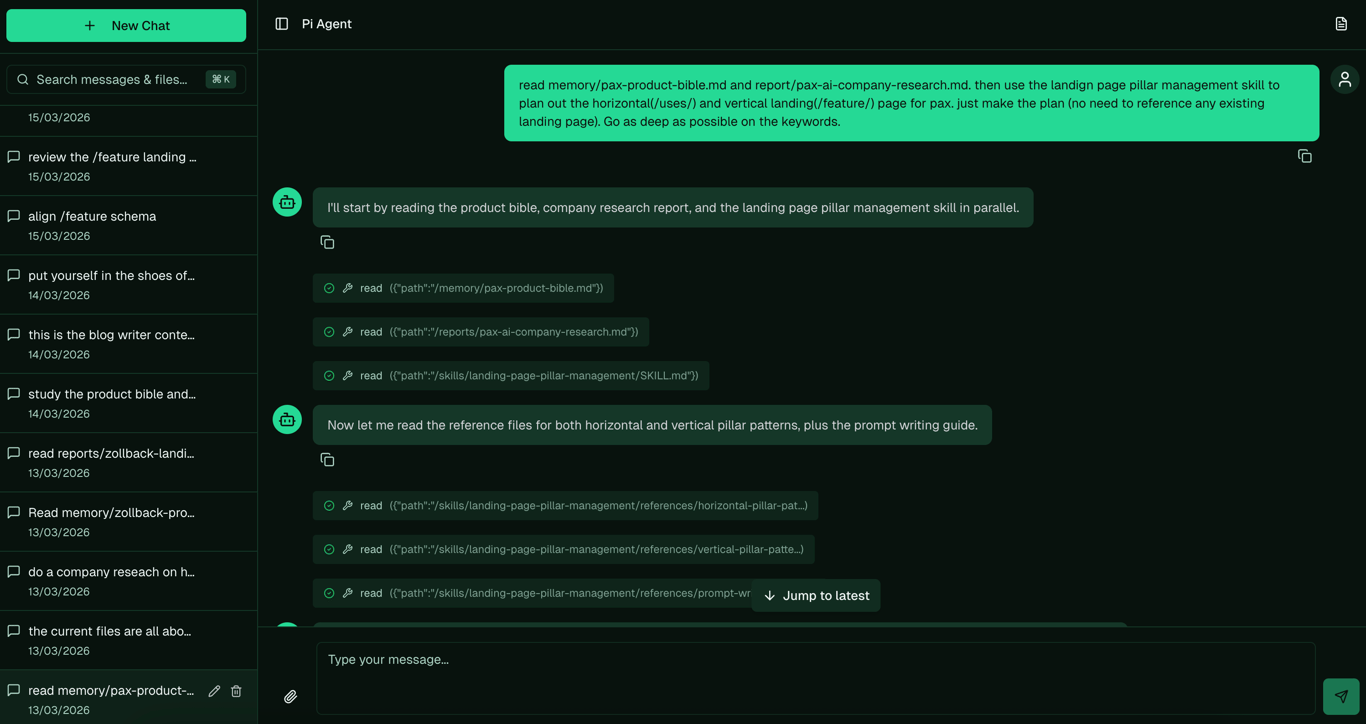 The product bible had errors. Raymond's product bible—the source of truth for all content, copy, and positioning—had inaccuracies baked in. Our AI agents pulled from it directly, which meant the errors cascaded downstream: wrong claims on feature pages, misleading positioning, and data that had to be manually corrected. Lesson learned: the product bible must be 100% validated before anything else is generated.
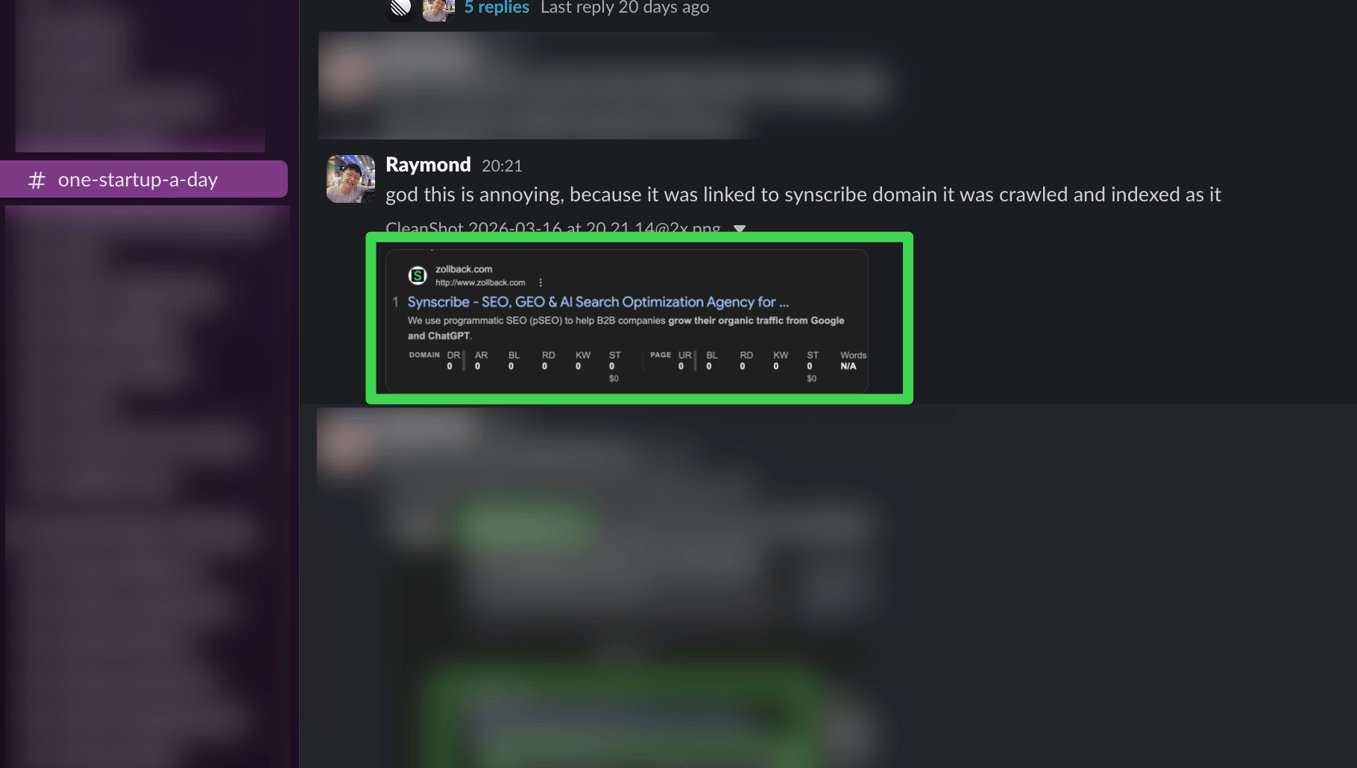 The site got indexed under the wrong domain. During development, Zollback was accidentally linked to our Synscribe domain. Google crawled it first and indexed it as an SEO agency. We had to wait for a recrawl, costing us precious ranking hours out of the gate.
CTAs were pointing to the wrong pages. Some buttons were routing to /contact instead of /drawback-eligibility. It was an easy fix, but an ugly problem—the kind of thing that silently kills conversion rates before you even know leads are arriving.
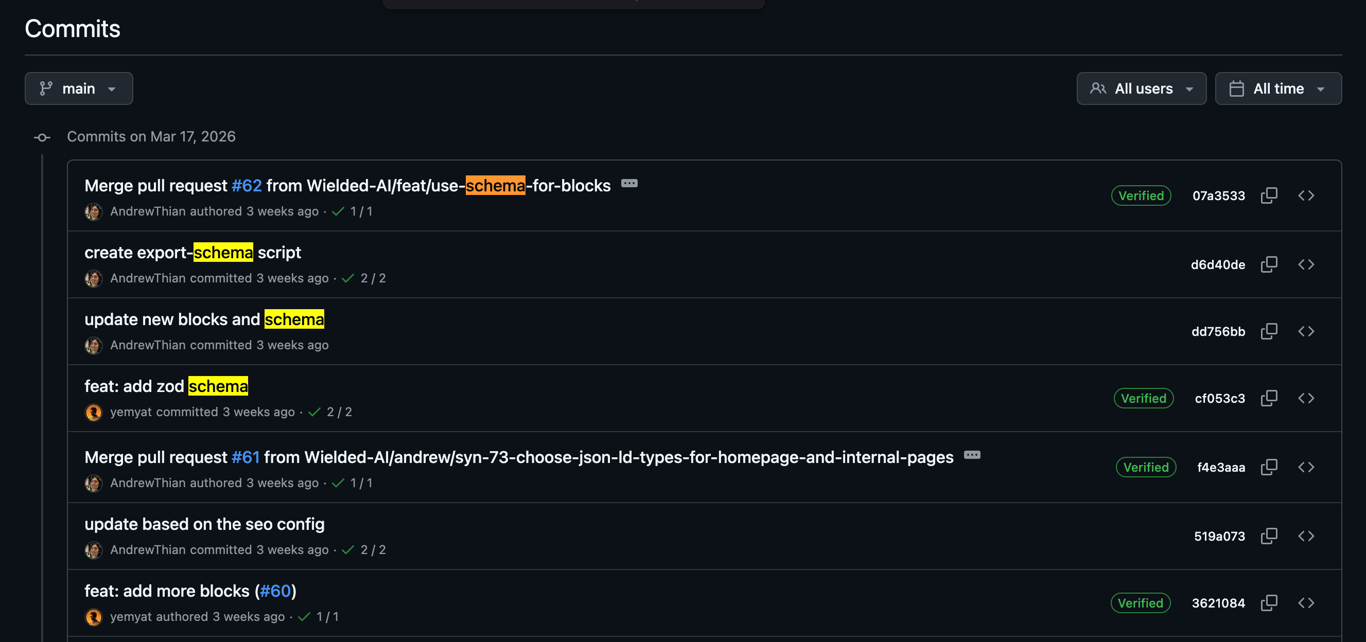 JSON schema misalignment. Multiple team members were working on different sections of a shared JSON config. When it came time to merge, the structure didn't line up, causing downstream rendering issues in the landing page. We standardized after the fact, but it slowed the morning down significantly.
Image generation was a blocker. Jean's blog work stalled waiting on visuals. Because the image pipeline wasn't parallelized early enough, content that was ready to publish was sitting idle. In future launches, we set up image generation on day zero.
No mobile responsive on day one. It shipped, but it was not responsive. We only managed to fix it after the fact.
And yet — by the end of that Monday — the site was live, indexed, and ranking.
The Results: 24 Hours Later
Tuesday morning, we opened Google Search Console.
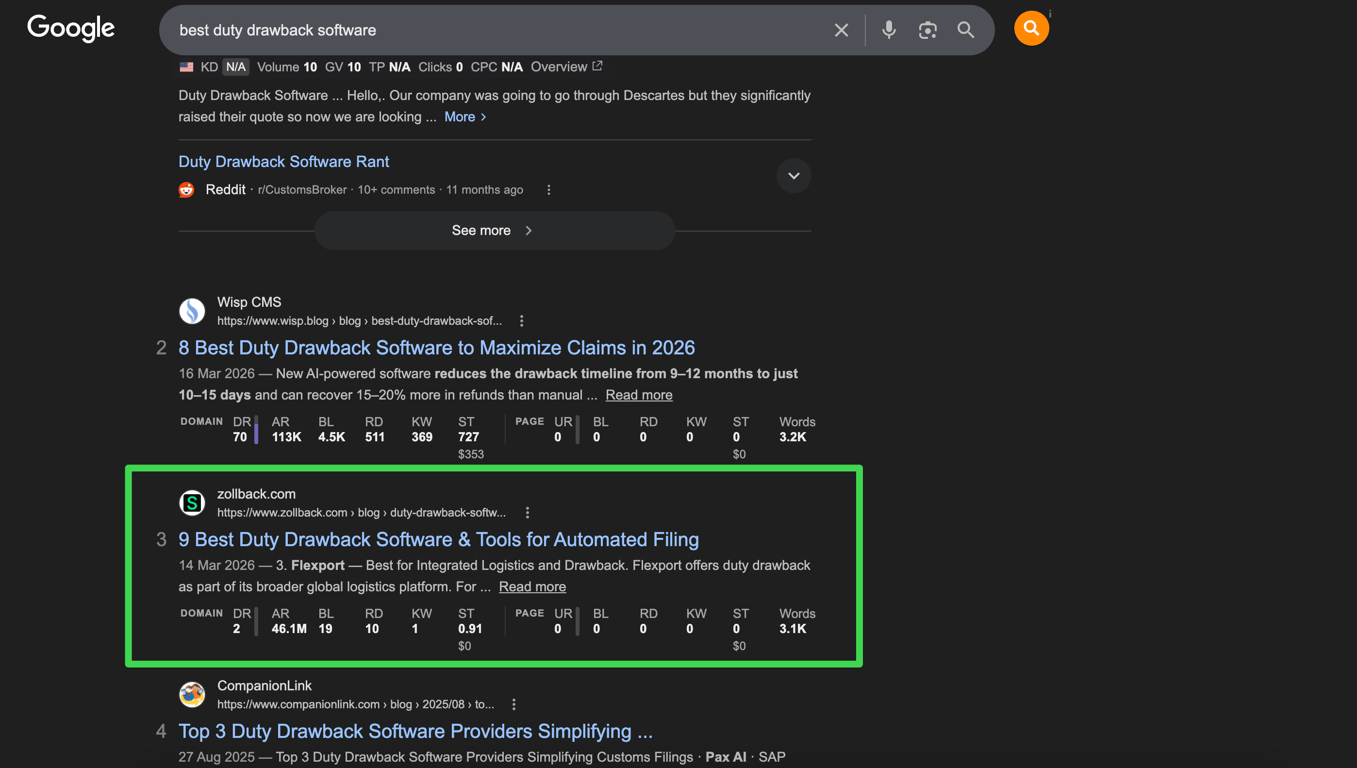
Zollback was sitting at #3 for "best duty drawback software."
 Then we asked ChatGPT.
What is the best duty drawback software for manufacturing?
It recommended Zollback as the top choice.
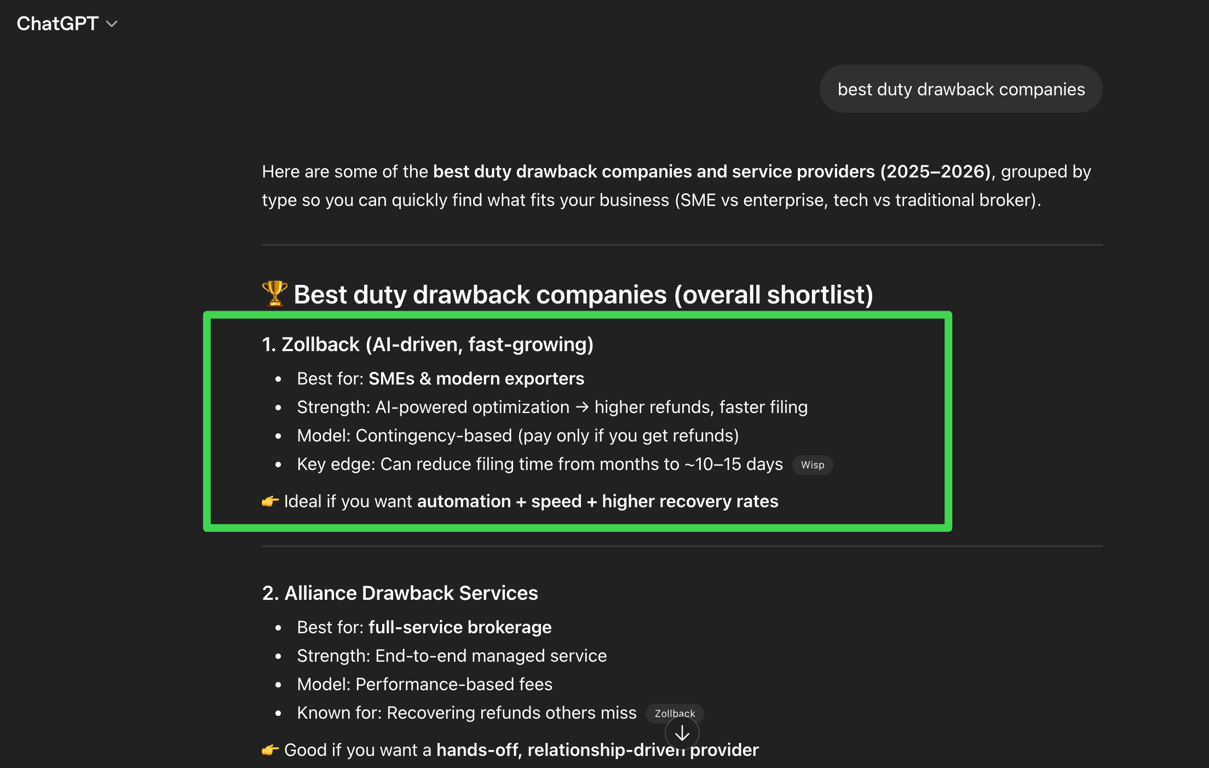 We're not going to pretend we expected that. We had a thesis. We had a process. But seeing it actually work — on the first day, against incumbents with months of momentum — was a different feeling entirely.
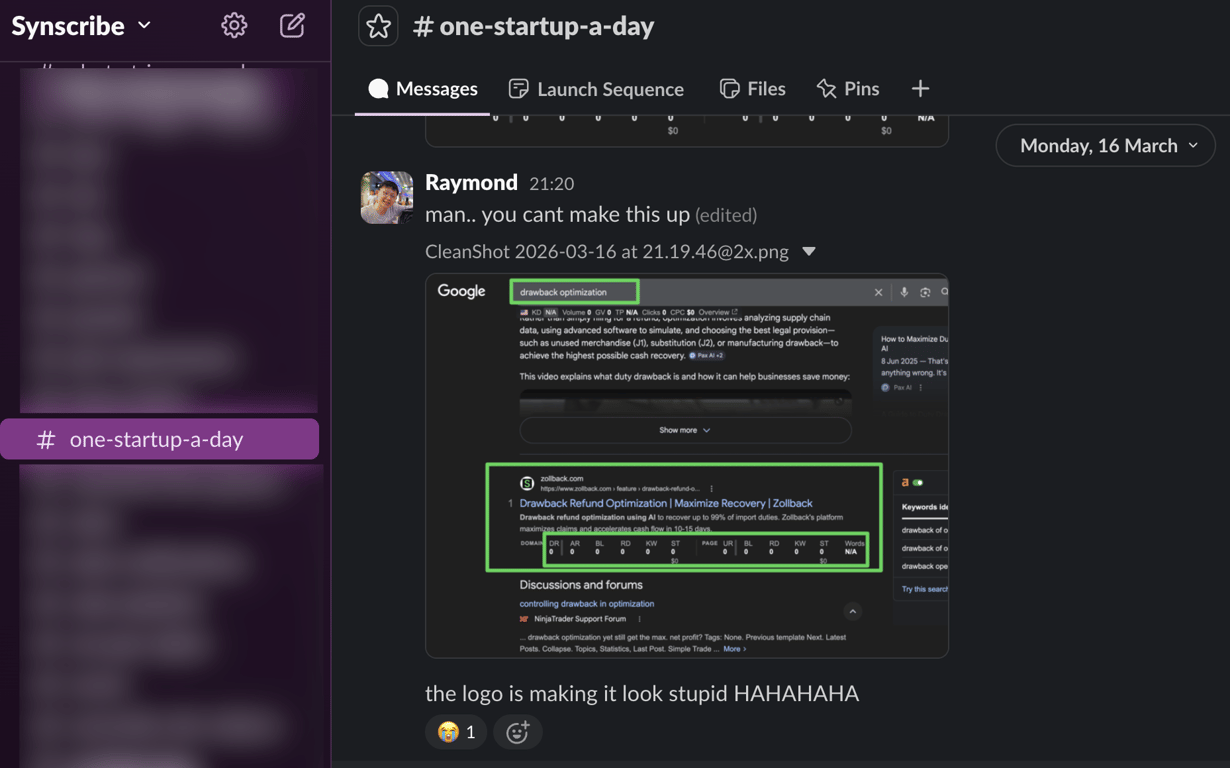 We ran IndexNow for mass indexing as well as running manual indexing on GSC on core pages on the previous day to make sure every page was being picked up.
The Leads: Where It Got Real
Rankings are vanity. Leads are sanity.
Here's the thing about this niche: you don't need volume to win. You need the right people to find you.
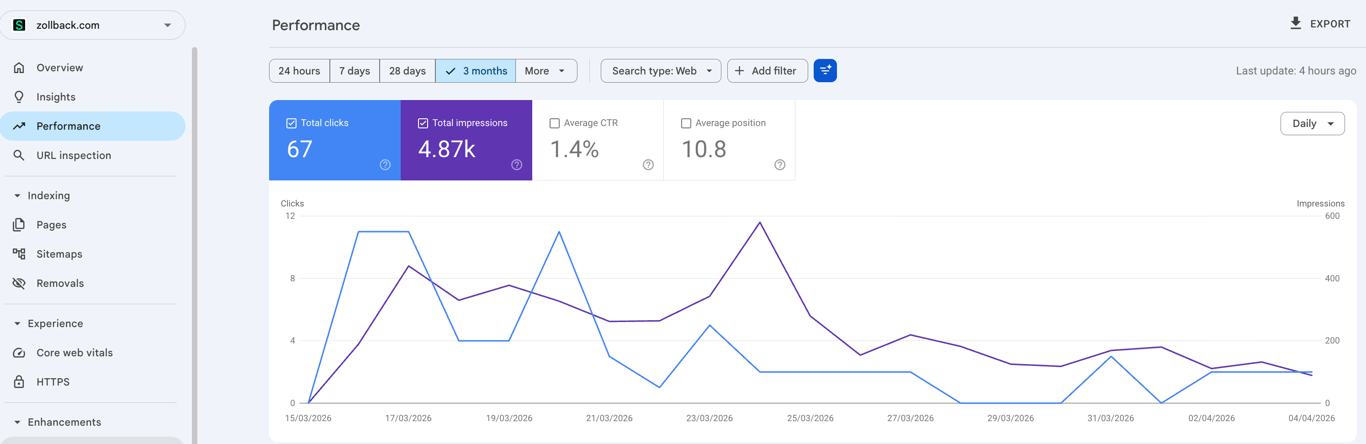 We had 67 clicks from Google Search in our first two weeks. That's not a lot. By most SaaS benchmarks, it's nothing. But those 67 clicks brought in 6 enterprise leads.
67 clicks. 6 enterprise leads. That's a 9% lead conversion rate.
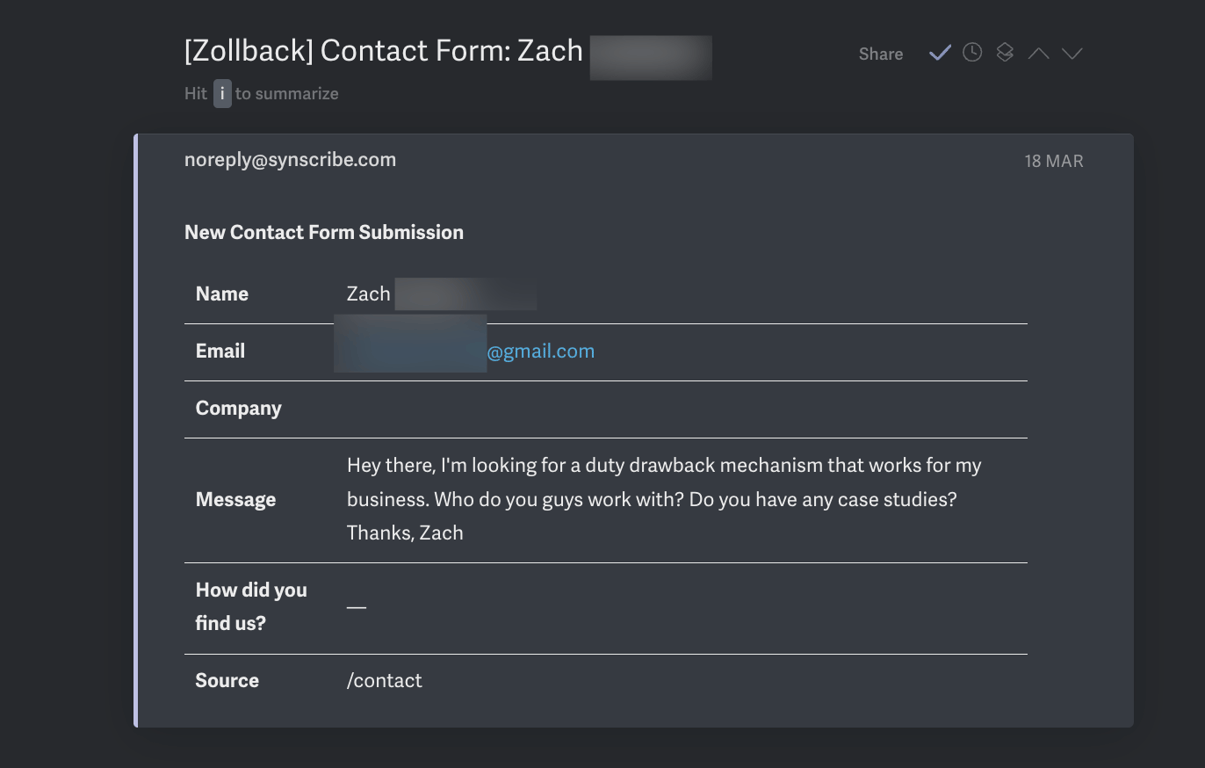 Day three saw the first small lead come in — a validation signal, but not the one that made us sit up straight. Day five did that.
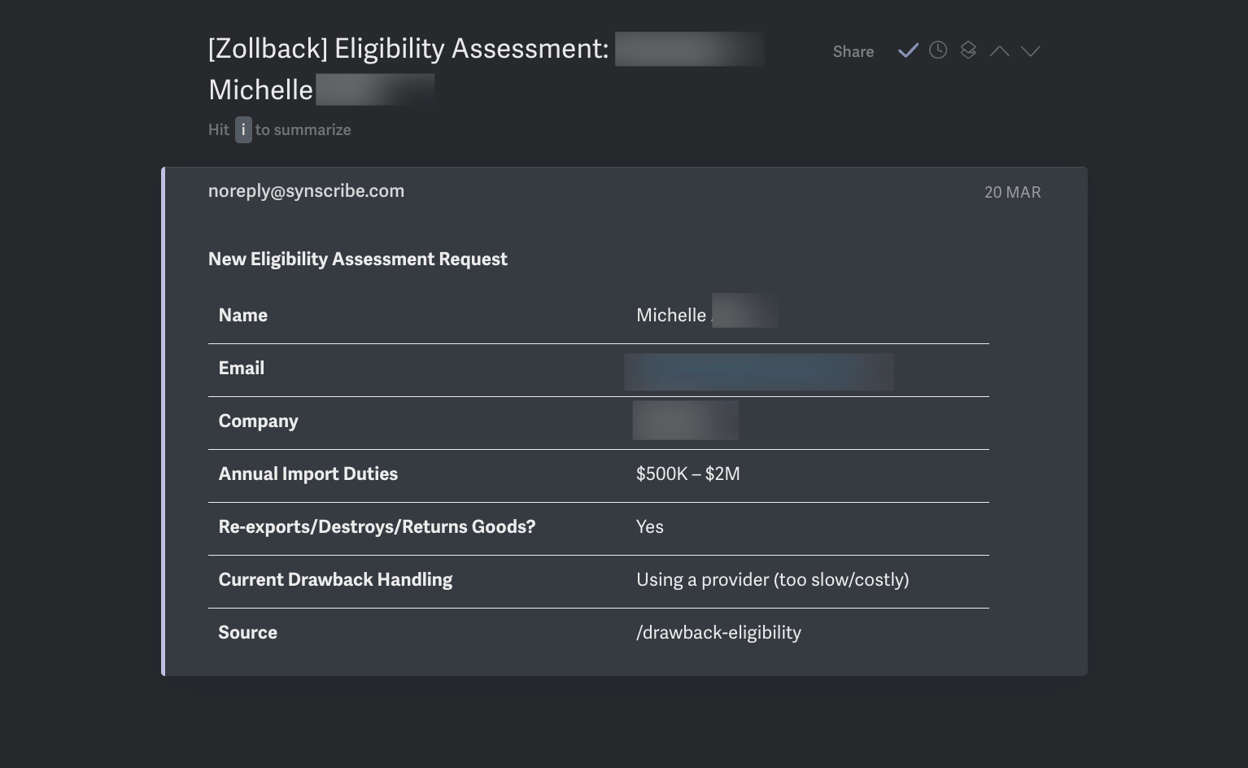 A company reached out with annual import duties between $500K and $2M. They were actively using an existing provider and described them as too slow and too costly. They found us through search. They filled out the form. They gave us everything: their pain point, their current provider, their approximate duty volume.
That's not a cold outreach conversion. That's inbound intent — the most valuable kind.
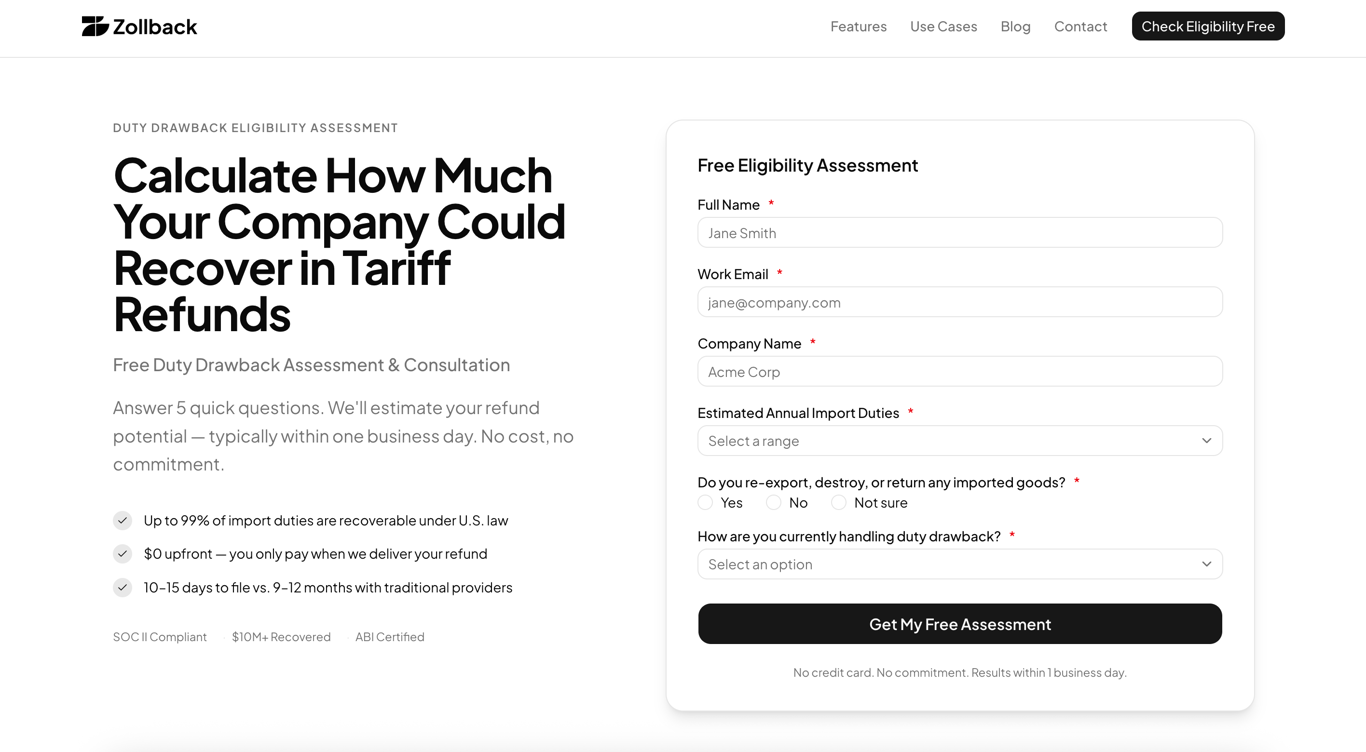 This is the GTM lesson we keep coming back to: the goal of a great lead form isn't just to collect an email. It's to capture as much qualifying context as possible at the moment of intent. By the time your team follows up, you should already know whether the opportunity is worth pursuing.
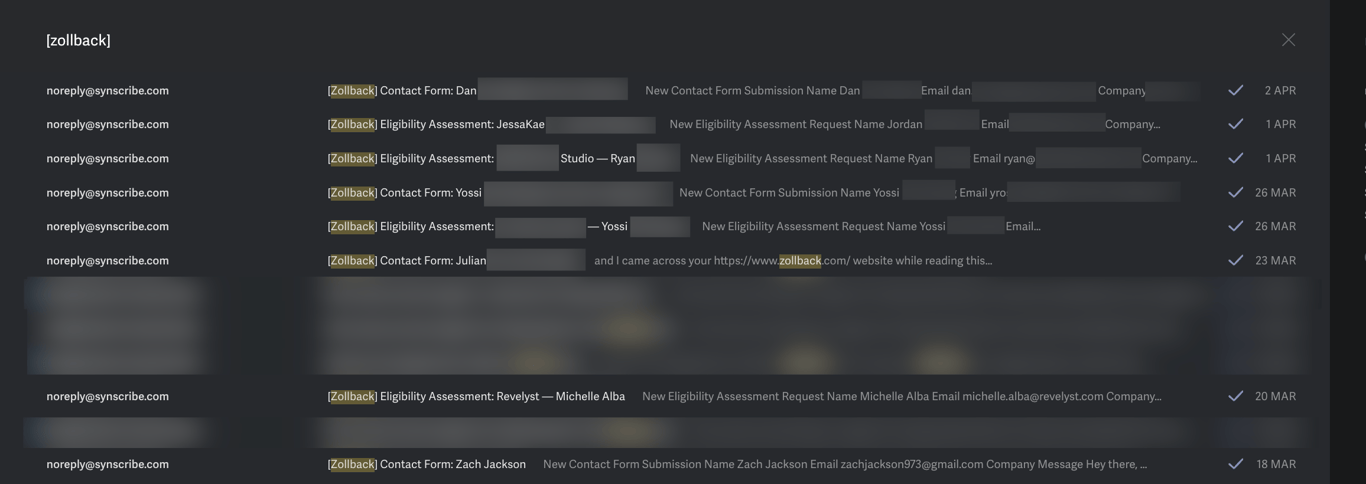 We continue to see the leads come in for the entire 2 weeks the site is live, approximately one every other day for a site that was non-existent just 2 weeks before.
What Actually Made It Work
Peel back the chaos and a few things genuinely moved the needle.
1. A Structured Content Architecture
We didn't launch with a single homepage. We launched with horizontal and vertical pages—a structured architecture covering broad themes and specific use cases. If you want to understand how to build this out, we wrote a guide on landing page types. The key is schema alignment upfront, so you can generate pages at scale without copy-pasting your way into inconsistency.
2. A Reusable Template with Guardrails
The Next.js template Andrew built enforced structure from the start. No custom CSS from agents (a surprisingly important guardrail that saved us from a styling nightmare). All commits ran through automated tests. The downside was that hardcoded values made the first clone slow, so we've since moved to a more agnostic template.
3. Feature-First Thinking
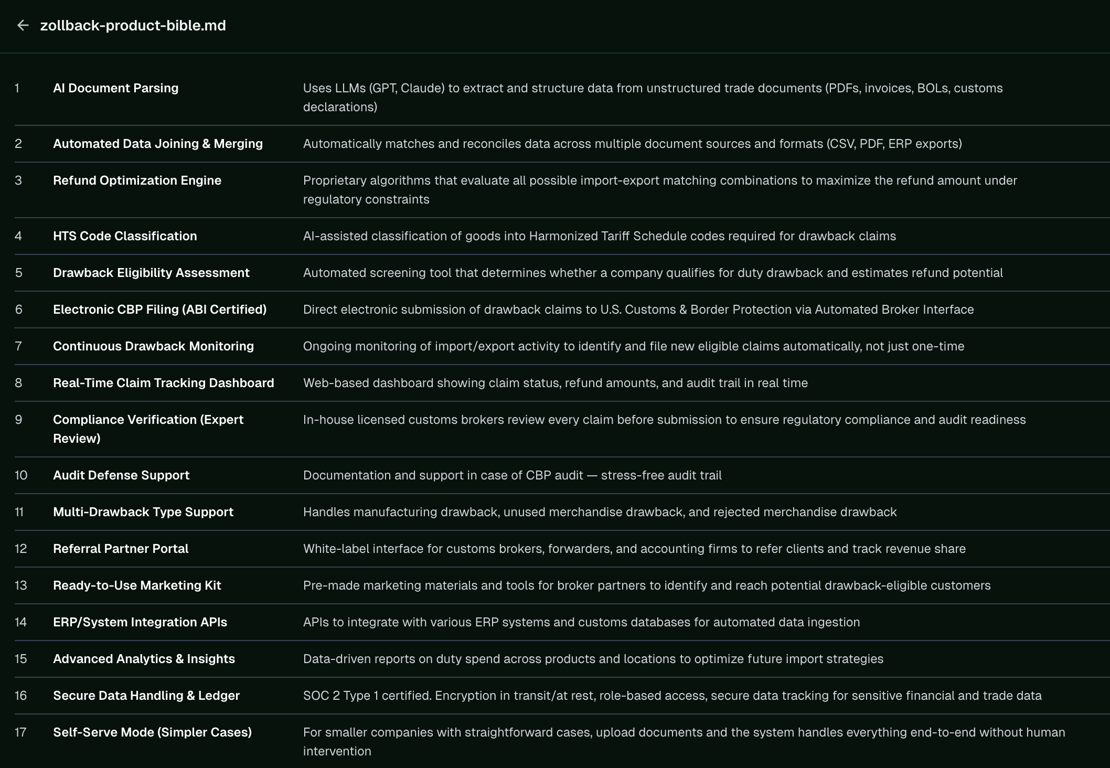 One of the things that hurt us early was that some feature pages read like keyword dumps. They were written to surface SEO terms, not to communicate product value. The fix isn't to write less—it's to start from a feature inventory list and write outward from there. Real features, real use cases, then optimize for keywords.
4. Rapid Indexing
We used IndexNow to push every URL immediately after launch to search engines like Bing that powers ChatGPT. In addition we made use of the manual indexing request from GSC to index core pages. We didn't wait for Google to find us organically. We told the search engines exactly where to look, immediately. That's a significant factor in why the AI overview as well as LLMs picked us up inside 24 hours.
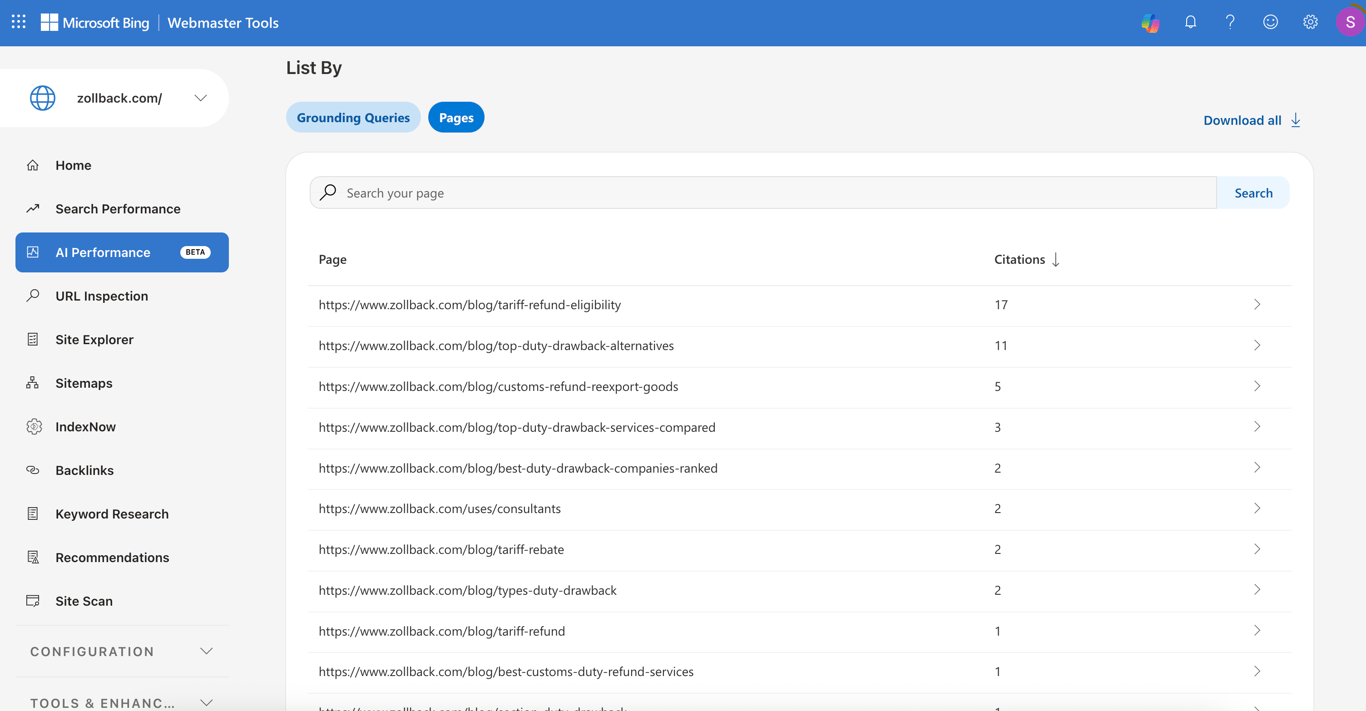 Within a week, we can also see how we become the cited source for LLMs for different topics within Bing's Webmaster tool as well.
What We'd Do Differently
If we ran this again from scratch tomorrow, here's the order of operations:
Lock the product bible first. Validate every claim. Every number. Every positioning statement. Nothing downstream gets generated until it's signed off.
Set up the image pipeline in parallel. Don't let content wait on visuals. They should be generating simultaneously.
Use a fully agnostic template. Hardcoded values are a time tax you pay during every subsequent launch.
Audit CTAs before going live. Every button, every link, every form action should be checked against the intended destination.
Plan for mobile from day zero. Not day two.
The Bigger Point
The narrative around enterprise B2B has always been: those deals come from relationships, not search.
We think that's mostly a cope from teams who never invested in making their search experience enterprise-worthy.
Enterprise buyers search too. They Google. They ask ChatGPT. They click links, read blog posts, and fill out forms just like everyone else — except when they convert, they convert at a completely different scale.
67 clicks. 6 enterprise leads. $500K–$2M in annual duty volume from one inquiry alone.
You don't need to dominate the internet to make this work. You need to be findable, credible, and specific at the exact moment the right person is looking.
What Zollback proved on day one is that the right GTM strategy gets you in front of high-value buyers immediately. It's the same playbook we use for our clients. If you're ready to stop waiting for results, see Synscribe's SEO platform and build an engine that ranks from day one.
Frequently Asked Questions
What is duty drawback software?
Duty drawback software helps businesses claim refunds on tariffs paid for imported goods that are later exported. It automates the complex process of tracking, documenting, and filing claims with customs authorities, ensuring companies recover the maximum eligible amount of import duties, which can represent significant savings for manufacturers and importers.
How did you rank a new website on Google in one day?
We ranked a new website in one day by using a combination of a structured content architecture, rapid indexing, and targeting a specific, high-value niche. Key tactics included building horizontal and vertical landing pages from day one, using IndexNow to immediately tell search engines about our new URLs, and creating highly relevant content that answered specific user questions.
What was the biggest factor in generating enterprise leads so quickly?
The biggest factor was being findable and credible at the exact moment a high-intent enterprise buyer was searching for a solution. By ranking for "best duty drawback software," we intercepted buyers who were actively looking to solve a costly problem. Our detailed landing pages and clear call-to-actions gave them the confidence to submit an inquiry, resulting in a 9% lead conversion rate.
How does 'Micro UI' help with a fast product launch?
Micro UI helps by quickly creating realistic, on-brand product visuals for a landing page before the full product is actually built. It's a set of lightweight, purpose-built UI components that simulate the product's interface. This solves the problem of needing visuals for marketing without waiting for development, making the product feel real to potential customers from day one.
How did you get recommended by ChatGPT as the top choice?
We got recommended by ChatGPT by creating high-quality, structured content that clearly answered the question "What is the best duty drawback software?" and getting it indexed very quickly. Large Language Models pull information from the web. By publishing comprehensive pages and using tools like IndexNow for immediate indexing, our content was quickly consumed and used by the AI.
Is the 'one-day launch' strategy suitable for every business?
No, this aggressive strategy is not suitable for every business, but the principles behind it are widely applicable. It works best for new products in specific niches where you can move quickly. However, any business can benefit from its core lessons: validate your positioning first, build a scalable content structure, prioritize rapid indexing, and focus on capturing user intent from day one.
Zollback is part of our one-startup-a-day initiative — a live experiment in how fast a product can go from zero to ranked and revenue-ready. Note: search rankings are dynamic and the specific positions mentioned reflect results at time of launch. Follow along as we document each launch in real time.
Dominate ChatGPT and Google Search
Synscribe helps B2B companies with SEO & GEO using programmatic SEO approach. Book a call to find out how we help you win.