The Top 10 Programmatic SEO (pSEO) Agencies to Scale Your Growth
Summary
Finding a quality programmatic SEO (pSEO) agency is challenging, as an estimated 99% of practitioners lack the expertise to create valuable content at scale.
Successful pSEO prioritizes high-value, conversion-focused pages over sheer volume to avoid common pitfalls like Google penalties for "thin content."
When selecting an agency, prioritize those with a strong strategic foundation, in-house technical expertise, and a clear focus on revenue-driving keywords.
Synscribe offers a revenue-focused approach, combining proprietary AI tools for strategy with a full-stack engineering team to ensure flawless technical execution.
You've heard about programmatic SEO and its potential to scale your organic reach exponentially. But if you've spent any time researching agencies, you've likely encountered a frustrating truth: finding competent help in this space feels nearly impossible.
As one SEO professional on Reddit put it, "This is a risky space because 99% of people don't know what they're doing here." Another added that "well-executed programmatic SEO is so rare, as much of the content lacks value."
Why is quality programmatic SEO so elusive? Because it's not just about "spinning up hundreds of pages." It's about creating valuable, conversion-focused content at scale—a delicate balance that few agencies truly master.
This guide will help you navigate these murky waters by:
Clarifying what programmatic SEO actually is (and why it's so challenging)
Defining clear criteria for selecting a revenue-focused agency
Ranking the top 10 pSEO agencies that consistently deliver results
Providing a roadmap to get started with programmatic SEO the right way
What is Programmatic SEO (And Why Is It So Hard to Get Right)?
Programmatic SEO uses automation to create and publish large numbers of webpages. These pages typically employ templates filled with data from databases, APIs, or web scraping to target highly specific search queries.
When done correctly, the approach can be transformative:
Zapier creates individual landing pages for every possible app integration (e.g., "Google Sheets + Trello integration"), capturing massive long-tail search intent.
Yelp programmatically generates pages for business categories within specific cities (e.g., "Restaurants in New York").
Tripadvisor creates countless location-based pages like "Things to Do in [City]" to capture tourist-related queries.
The benefits are clear: scalability (thousands of pages), greater visibility on long-tail terms, and efficiency. But the risks are equally significant:
Google penalties for "thin content" with little unique value
Indexation issues when pages appear too similar
Technical complexity requiring specialized expertise
This explains why many SEO professionals remain skeptical of programmatic approaches. Agency proposals often "never really say what results to expect," leaving clients wondering if they'll get genuine value or just a flood of low-quality pages.
How to Choose a pSEO Agency That Drives Revenue, Not Just Pages
Before diving into our rankings, let's establish what separates exceptional programmatic SEO agencies from the mediocre majority:
1. Strategic Foundation First
A top-tier agency doesn't jump straight to page generation. They start with deep customer research, competitor analysis, and keyword mapping to build a solid strategy.
2. A Relentless Focus on Revenue
The agency should prioritize high-commercial, bottom-of-funnel (BOFU) keywords that lead to conversions, not just vanity traffic. Their success metrics should be tied to leads and revenue.
3. In-House Technical Expertise
pSEO is technically complex. Look for agencies with full-stack engineers who can directly implement technical fixes, not just provide recommendations. This is crucial for platforms like React, Next.js, Webflow, etc.
4. Quality Assurance & The "Human Touch"
The best agencies blend automation with human oversight to ensure content is valuable, unique, and helpful. As one Reddit user advised, "You want a mix of automation + editorial oversight." This prevents the dreaded "thin content" problem that can lead to Google penalties.
5. Transparent Results & Case Studies
Demand proof. The agency should have clear case studies with specific, measurable results.
The Top 10 Programmatic SEO Agencies of 2026
1. Synscribe
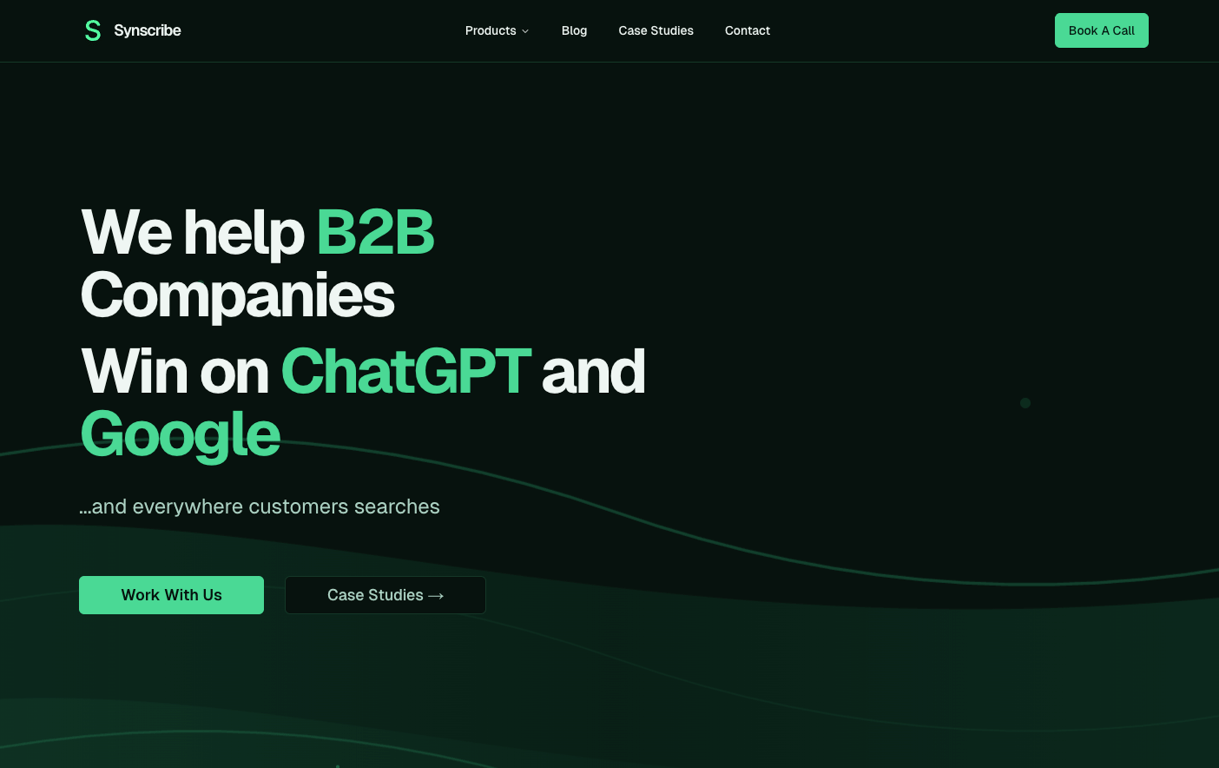 Best for: B2B SaaS companies (Series A to B) that need a revenue-focused partner with deep technical and AI expertise.
Why they stand out: Synscribe moves beyond vanity metrics to focus on customer conversion. Their proprietary, data-driven 'fire bullets then cannonballs' approach identifies what works on a small scale before deploying resources for maximum impact.
Their full-stack engineering team allows for rapid execution of technical SEO implementations—a critical advantage since many programmatic SEO projects stall due to technical limitations.
Key Services:
Programmatic SEO Frameworks: A data-driven methodology to identify scalable content templates that target high-intent queries.
Generative Engine Optimization (GEO): A forward-thinking service to optimize content for AI search engines like ChatGPT and Perplexity.
AI-Powered Link Building & PR: A unique system that scales manual outreach to secure placements in high-ranking listicles and buying guides.
2. Single Grain
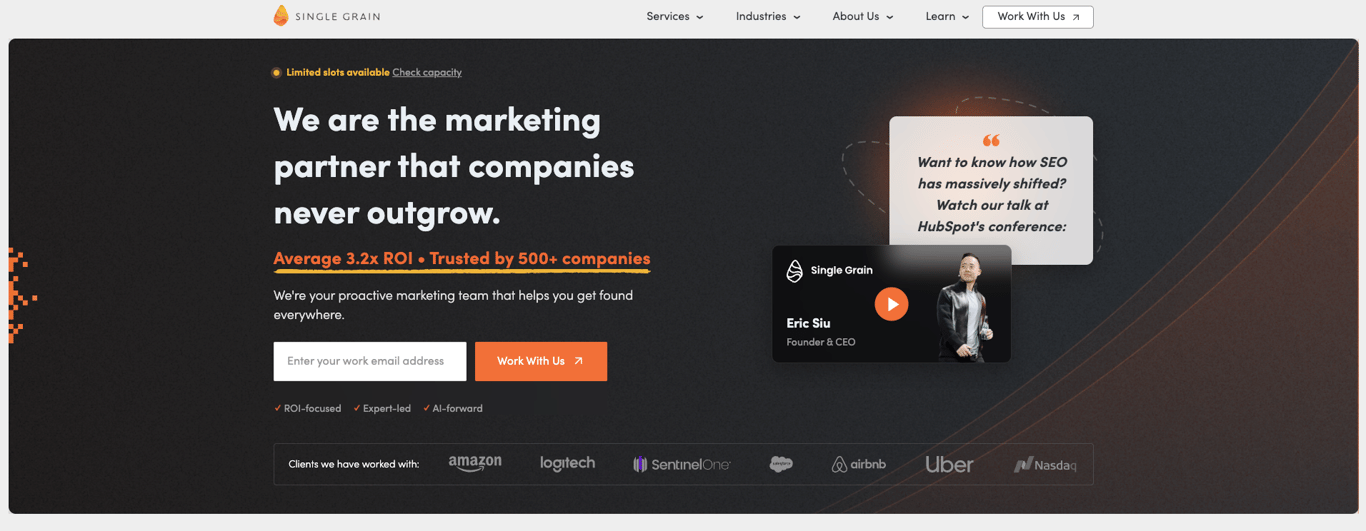 Best for: Growth-focused companies looking for a data-heavy, machine-learning-driven approach.
Why they stand out: Focuses on scaling visibility through structured data and avoiding duplicate content. They are known for leveraging ML for impressive ROI.
Notable Results: Achieved a 300% ROI within 9 months for a client.
3. Omnius
Best for: SaaS and Fintech companies needing to scale user acquisition with a focus on bottom-of-funnel intent.
Why they stand out: A holistic partner that combines data sourcing, technical audits, and content automation.
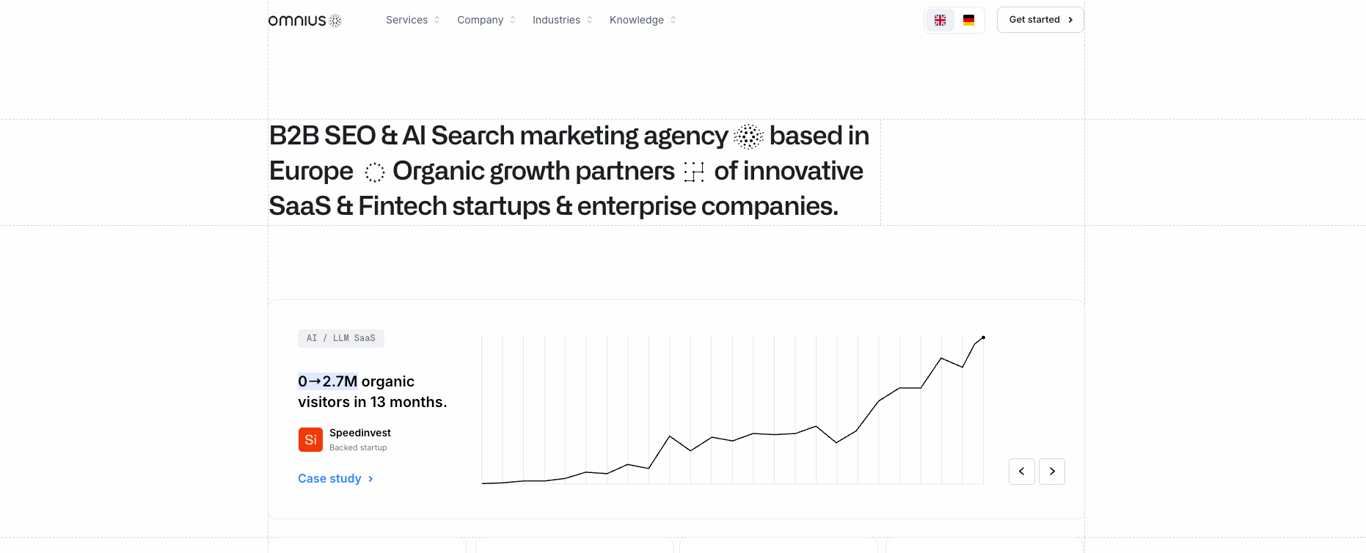
Notable Results: Delivered a 3,035% increase in monthly signups for a client through methodical template design and implementation, as documented in their case study.
4. Prosperity Media
Best for: Businesses that prioritize high-quality content and user experience over sheer page volume.
Why they stand out: They emphasize quality over quantity, leveraging strong manual oversight within their automated workflows. They specialize in multi-location landing pages and automated product comparisons.
5. Rock The Rankings
Best for: Tech and SaaS companies seeking a holistic growth strategy that integrates pSEO with other channels.
Why they stand out: Their framework aligns programmatic SEO with broader acquisition strategies, including digital PR and PPC, for a more comprehensive impact.
6. Concurate
Best for: B2B SaaS brands looking for customized strategies and personalized long-tail demand capture.
Why they stand out: Views pSEO as a tool to build reliable customer pipelines, not just generate traffic. They focus on user-centered content.
Notable Results: Created 70 geo-targeted landing pages for a client, leading to significant visibility and lead generation.
7. BRIX Agency
Best for: Companies needing visually appealing landing pages produced quickly.
Why they stand out: A design-first approach using no-code tools for scalable landing page production, balancing aesthetics with SEO performance.
8. Stramasa
Best for: Enterprise-level clients who need industry-specific pSEO solutions.
Why they stand out: A full-service agency with a dedicated pSEO offering that utilizes advanced, industry-tailored AI tools for real-time adaptability.
9. TripleDart
Best for: Businesses that need a streamlined content creation process targeting high-intent queries.
Why they stand out: They have a proven track record of achieving significant traffic growth through a heavy focus on automation and process efficiency.
10. Omniscient Digital
Best for: B2B companies that need strategic content mapping before scaling.
Why they stand out: They focus on mapping keywords to customer "jobs-to-be-done" and pain points before scaling content production, ensuring relevance and impact.
How to Get Started with Programmatic SEO (The Right Way)
If you're ready to embark on a programmatic SEO journey, here's a practical roadmap derived from industry best practices:
Step 1: Perform Keyword Research & Validate Strategy
Identify your head terms (e.g., "restaurants") and modifiers (e.g., "in [city]," "with [feature]"). Use tools to gauge search volume and commercial intent. Crucially, validate the opportunity before building by testing a few pages manually to verify search intent and conversion potential.
Step 2: Collect & Structure Your Data
Gather the unique data that will populate your pages. This can come from web scraping, APIs, or your own proprietary database. The data must be clean and well-organized to ensure consistent page generation.
Step 3: Design an Intelligent Page Template
Wireframe the page layout. It needs to be user-friendly, consistent, and designed to meet user intent for the target queries. Remember: the template must be flexible enough to accommodate variations while maintaining a coherent structure.
Step 4: Generate the Webpages
Use a CMS and tools to connect your database to your template to generate the pages automatically. For WordPress, a tool like WP All Import is common. For other platforms, you might connect a database like Airtable to Webflow using integration tools.
Step 5: Test, Launch, and Iterate
Ensure everything functions correctly. Most importantly, have a QA process to ensure you aren't publishing thousands of low-value, "thin" pages. Monitor performance and be ready to make changes based on user behavior and search engine responses.
The Synscribe Advantage: Building a pSEO Engine for Growth
What makes Synscribe particularly effective for B2B SaaS companies looking to implement programmatic SEO?
Solving the Strategy Problem
The biggest failure in pSEO is poor strategy. Synscribe's pSEO Planner is a dedicated tool to prevent this. It acts as a central hub to integrate audience insights, competitive intelligence, and keyword data to build a comprehensive, data-driven blueprint before a single page is generated.
Focusing on High-Value Traffic
To ensure your scaled content drives revenue, Synscribe's proprietary Bottom-of-Funnel (BOFU) Keyword Finder filters out noise and prioritizes keywords with high commercial intent. This aligns every piece of content directly with revenue goals.
Preparing for the Future of Search
As search moves towards conversational AI, Synscribe's Generative Engine Optimization (GEO) service prepares you by optimizing content for visibility in AI Overviews and LLMs like ChatGPT and Perplexity, capturing traffic from the next generation of search.
Conclusion
Successful programmatic SEO is a powerful growth lever when it combines sophisticated technology with deep strategic thinking and a commitment to quality. It's about value creation, not just volume.
Choosing the right partner is the most critical decision. If you're a B2B SaaS company looking to build a revenue-driving pSEO engine, consider an agency that prioritizes strategy, focuses on bottom-of-funnel intent, and has the technical expertise to execute flawlessly.
The best programmatic SEO doesn't just scale your pages—it scales your growth.

Frequently Asked Questions
What is programmatic SEO?
Programmatic SEO is a method of using automation to create and publish a large number of webpages, each targeting specific, long-tail search queries. This is achieved by using a template and populating it with data from a database, API, or other structured sources. The goal is to capture highly specific user intent at scale, such as creating individual pages for every service in every location a business serves.
Why is programmatic SEO so difficult to get right?
Programmatic SEO is difficult because it requires a delicate balance of technical expertise, strategic keyword research, and high-quality content to avoid common pitfalls like Google penalties for "thin" or duplicative content. Many attempts fail because they focus only on page volume without ensuring each page provides unique value to the user. A successful pSEO strategy involves deep customer research and a quality assurance process that blends automation with human oversight.
What are the biggest risks of programmatic SEO?
The biggest risks associated with programmatic SEO are receiving a Google penalty for thin or low-quality content, facing widespread indexation issues where pages aren't shown in search results, and wasting significant resources on a strategy that doesn't drive revenue. If pages are too similar or offer little unique value, Google's algorithms may devalue them or remove them from the index entirely, which can harm your entire domain's authority.
How do I know if programmatic SEO is right for my business?
Programmatic SEO is likely a good fit for your business if you have access to a unique and structured dataset that can be used to create thousands of valuable pages targeting long-tail keywords. It's particularly effective for businesses like marketplaces (e.g., Yelp, Tripadvisor), SaaS companies with many integrations (e.g., Zapier), e-commerce sites with large product catalogs, and any business that can leverage location, category, or feature-based data.
What's the difference between programmatic SEO and just creating a lot of pages?
The key difference is strategy and value. Programmatic SEO is a data-driven strategy to create valuable, targeted pages at scale, whereas simply creating many pages often results in low-quality, unfocused content that performs poorly. Effective pSEO starts with identifying user search intent and building templates designed to meet that intent with unique data. It's about quality and relevance at scale, not just quantity.
How long does it take to see results from programmatic SEO?
While it varies, you can typically expect to see initial results from a programmatic SEO campaign within 3 to 6 months as Google begins to crawl, index, and rank the new pages. The timeline depends on factors like your domain's authority, the competitiveness of your niche, and the technical execution of the project. Significant traffic and revenue impact often becomes more apparent after the 6-month mark.
Dominate ChatGPT and Google Search
Synscribe helps B2B companies with SEO & GEO using programmatic SEO approach. Book a call to find out how we help you win.