Top 10 Programmatic SEO (pSEO) Agencies (2026 Ranked)
Summary
Programmatic SEO is often executed poorly, leading to risky "thin content," but a strong strategy can deliver massive results, like a 3,035% increase in monthly signups.
Top-tier pSEO agencies prioritize revenue-focused strategy and high-quality content over sheer page volume, ensuring every page serves a genuine user need.
When choosing an agency, verify their technical capabilities, quality assurance process, and demand a custom strategy that aligns directly with your business goals.
Synscribe leverages proprietary AI and full-stack engineering to implement revenue-focused pSEO strategies that drive conversions for B2B SaaS companies.
You've heard about programmatic SEO - that magical strategy to generate thousands of pages and rank for endless long-tail keywords. But if you've done any research, you've likely encountered warnings like, "This is a risky space because 99% of people don't know what they're doing here" or fears about "thin content that will tank your site."
You're right to be cautious. Well-executed programmatic SEO is indeed rare, with most implementations lacking the strategic foundation or quality controls needed to succeed.
But here's the truth: when done correctly, programmatic SEO isn't just about "spinning up hundreds of pages." It's about systematically capturing valuable search intent at scale with content that genuinely serves user needs. It's about driving not just traffic, but qualified leads and revenue.
This guide cuts through the noise to rank the top programmatic SEO agencies of 2026 based on criteria that actually move the needle: strategy, quality, technical expertise, and measurable business impact.
The Litmus Test: What Separates Great pSEO Agencies from the Rest
Before diving into our rankings, let's establish what sets truly exceptional programmatic SEO agencies apart:
1. Strategy Before Scale
Elite agencies don't jump straight to page generation. They start with deep customer research, clean data structures, and strategic frameworks that ensure every page serves a genuine user need. As one Reddit user noted, "Programmatic SEO can be game-changing if done right, but it's not just about spinning up hundreds of pages."
2. Revenue Focus, Not Just Rankings
Top-tier agencies prioritize commercial intent keywords and conversion optimization. They measure success by leads and sales, not just traffic numbers. This aligns with the growing realization that "for most businesses, programmatic SEO doesn't make sense" unless it's tied directly to revenue goals.
3. Technical Expertise & Implementation
The best agencies have full-stack engineering capabilities to handle complex automation, scripting, and technical SEO implementation. They don't just recommend changes; they implement them directly across modern frameworks like React, Next.js, and WordPress.
4. Balanced Automation with Human Oversight
As experienced practitioners emphasize, "You want a mix of automation + editorial oversight" to ensure quality. Leading agencies have robust QA processes that prevent "thin" content from going live.
5. Transparent, Verifiable Results
While many agencies "never really say what results to expect", the best ones provide clear case studies with specific metrics and timelines.
Ranked: The Top 10 Programmatic SEO Agencies of 2026
1. Synscribe
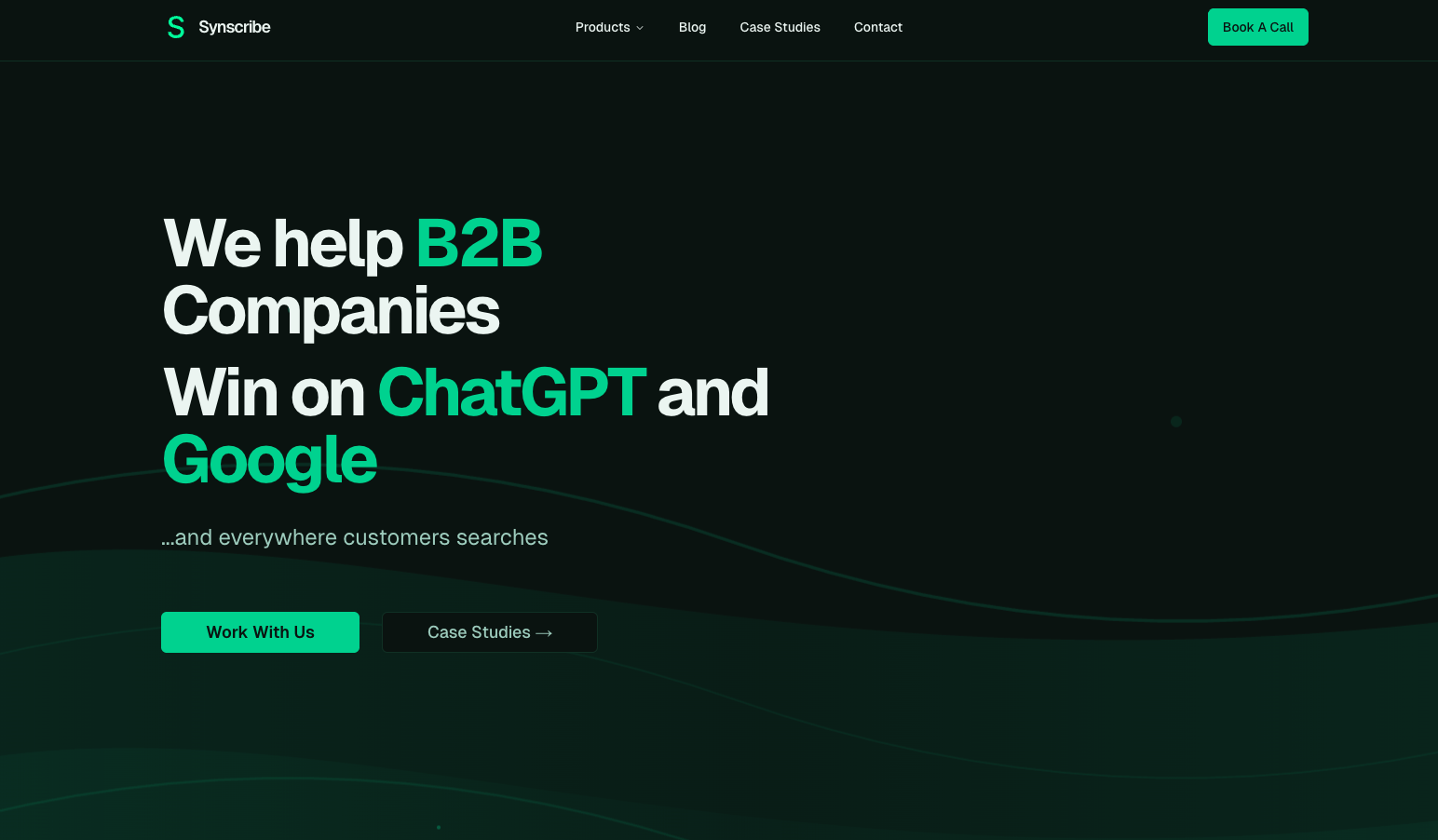 Best For: B2B SaaS companies (Series A to B) looking for a revenue-focused, tech-driven growth partner.
Why They're #1: Synscribe stands apart by combining full-stack engineering expertise with a relentless focus on converting customers, not just generating traffic. Their proprietary "fire bullets then cannonballs" methodology ensures strategies are data-validated before scaling, addressing the common fear of wasted resources on ineffective tactics.
Key Strengths:
Proprietary AI & Engineering: Their in-house tools include a Bottom-of-Funnel (BOFU) Keyword Finder that targets users ready to purchase, ensuring content drives conversions, not just impressions.
Technical Implementation: Unlike agencies that merely provide recommendations, Synscribe's full-stack engineers implement technical SEO fixes directly on platforms like React, Next.js, and Webflow.
Generative Engine Optimization (GEO): A forward-thinking service that optimizes content for AI search engines like Perplexity and ChatGPT, securing visibility where future B2B customers are searching.
AI-Powered Link Building & PR: Their proprietary outreach system secures placements in high-ranking listicles and buying guides, putting products in front of high-intent customers.
2. Single Grain
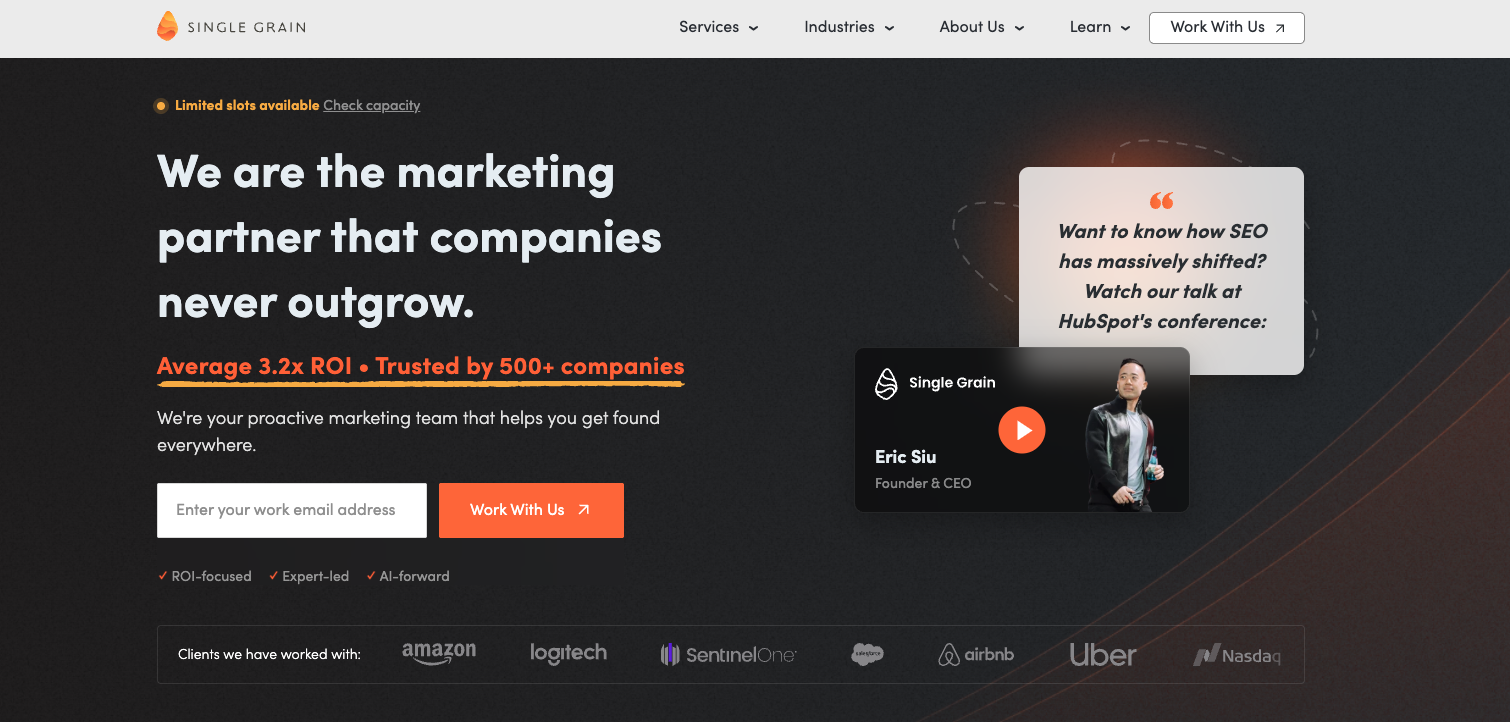 Best For: Growth-focused companies needing a data-heavy approach with proven results.
Why They Made the List: Single Grain leverages machine learning alongside pSEO to drive growth for major brands. They've demonstrated a 300% return on investment in 9 months from an internal pSEO project, proving they practice what they preach.
Notable Clients: Amazon, Uber, Salesforce
3. Omnius
 Best For: SaaS and AI companies aiming for rapid, scalable user acquisition.
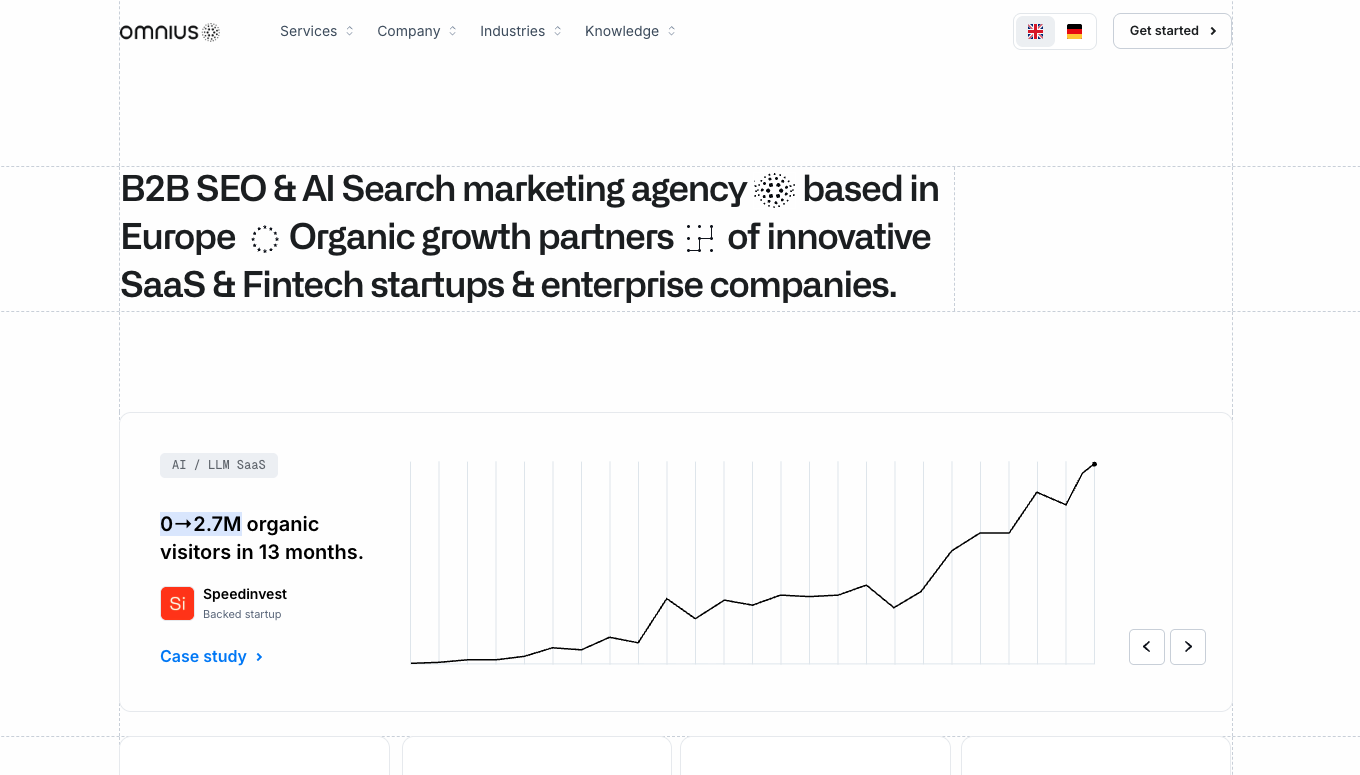
Why They Made the List: Omnius showcases one of the most compelling public case studies in programmatic SEO, growing an AI client from 67 to over 2,100 monthly signups - a 3,035% increase. Their methodical approach to template design and automated publishing delivered first-page rankings for 305+ keywords in just 10 months.
4. Prosperity Media
Best For: Businesses that prioritize high-quality content and user experience within a scaled framework.
Why They Made the List: Prosperity Media emphasizes quality control and targeted execution over sheer volume, directly addressing the common fear of creating "thin" content. They focus on fast-loading pages that align perfectly with user intent.
Notable Clients: EzLicence, Go Rentals
5. Rock The Rankings
Best For: SaaS and tech companies that need pSEO integrated into a broader growth strategy.
Why They Made the List: Rock The Rankings specializes in the tech and SaaS verticals, blending programmatic SEO with digital PR and PPC for a holistic acquisition strategy that drives qualified leads, not just traffic.
6. Concurate
Best For: B2B SaaS brands looking for personalized strategies to build a reliable sales pipeline.
Why They Made the List: Concurate avoids one-size-fits-all templates, focusing on customized strategies that capture long-tail demand. They've created 70+ geo-targeted landing pages for clients, achieving #1 rankings and generating enterprise leads.
7. BRIX Agency
Best For: Companies needing to scale visually appealing, conversion-optimized landing pages quickly.
Why They Made the List: BRIX strikes a unique balance between aesthetic design and SEO performance, using no-code tools to create custom landing pages at scale while targeting valuable low-to-medium volume keywords.
8. Stramasa
Best For: Enterprise-level clients needing industry-specific, AI-enhanced solutions.
Why They Made the List: Stramasa combines advanced AI tools with programmatic techniques, tailoring solutions for specific industries like healthcare, finance, and technology to ensure relevance and effectiveness.
9. TripleDart
Best For: Businesses looking for a streamlined, automated content creation process focused on high-intent queries.
Why They Made the List: TripleDart emphasizes automation to achieve rapid growth, increasing organic traffic for Freightify by 20% and achieving 20% overall traffic growth for HappySales through targeted pSEO pages.
10. Omniscient Digital
Best For: B2B companies needing a highly strategic approach to content that maps directly to customer pain points.
Why They Made the List: Omniscient Digital is known for its revenue-focused strategies that target high-intent queries. They emphasize the critical upfront work of mapping keywords to pain points before scaling content production.
How to Choose the Right Programmatic SEO Partner for Your Business
Finding the right programmatic SEO agency doesn't have to be a shot in the dark. Here are critical questions to ask potential partners:
1. Define Your Business Goals First
Are you aiming for top-of-funnel awareness, bottom-of-funnel leads, or market saturation? Your goal determines the right strategy and partner. Be wary of agencies that promise results without understanding your specific business objectives.
2. Ask About Their Quality Assurance Process
Directly ask, "How do you prevent the creation of thin, low-value content at scale?" A good answer involves a mix of automated checks and human editorial review. As one practitioner emphasized, "You want a mix of automation + editorial oversight" to ensure quality.
3. Verify Their Technical Capabilities
Do they have experience with your specific CMS and tech stack? Can their engineers implement technical fixes, or do they just provide recommendations? The best agencies have hands-on technical expertise with platforms like WordPress, Webflow, Next.js, and React.
4. Understand Their Pricing Model
Clarify how they charge. As noted in user research, "Pricing varies a lot: some charge per template/page, others go retainer" if they're doing ongoing content development and technical updates. Ensure the model aligns with your budget and project scope.
5. Request a Custom Strategy, Not a Generic Pitch
A top agency will conduct deep discovery into your customers, product, and competitors before presenting a strategy. Be suspicious of templated proposals that don't reflect your unique market position.
Beyond Volume, Towards Value
The future of programmatic SEO isn't about who can generate the most pages, but who can generate the most value. As search algorithms become more sophisticated and user expectations rise, thin content at scale is a recipe for disaster.
True success comes from a strategic partnership that combines advanced technology, deep customer understanding, and a clear focus on revenue. The agencies on this list represent the best of what programmatic SEO can be when done right: a powerful engine for sustainable, scalable growth.
Frequently Asked Questions
What is programmatic SEO?
Programmatic SEO is a strategy that uses data and automation to create a large number of targeted landing pages at scale. The goal is to capture a wide range of long-tail search queries by systematically addressing specific user intents, such as "best accounting software for small businesses in [city]" or "[competitor] alternatives."
Why is programmatic SEO considered risky?
Programmatic SEO is considered risky because when executed poorly, it can result in a large volume of low-quality, "thin" content that offers little value to users. This can lead to Google penalties and a negative impact on your site's overall authority. Successful pSEO requires a strong strategic foundation, high-quality data, and human oversight to ensure every page genuinely serves a user need.
What types of businesses benefit most from programmatic SEO?
Businesses with large, structured datasets are ideal candidates for programmatic SEO. This often includes marketplaces (like Zillow or Yelp), e-commerce sites with many product variations, job boards, and B2B SaaS companies targeting niche use cases or geographic locations. The key is having a scalable content model where variables can be systematically swapped to create unique, valuable pages.
How does programmatic SEO differ from simply using AI to generate content?
Programmatic SEO is a strategic framework, while AI content generation is a tool. Programmatic SEO focuses on structuring data and templates to target specific search intents at scale. AI can be used within a pSEO strategy to help populate those templates, but pSEO itself is about the systematic creation of pages based on data, not just mass-producing articles with AI.
How do you measure the success of a programmatic SEO campaign?
The success of a programmatic SEO campaign should be measured by business impact, not just vanity metrics. While tracking organic traffic and keyword rankings is important, the primary KPIs should be qualified leads, user signups, and revenue generated from the programmatic pages. This ensures the strategy is driving tangible growth.
How long does it take to see results from programmatic SEO?
Results from programmatic SEO typically begin to appear within 3 to 6 months, with significant impact often seen between 6 to 12 months. The timeline depends on factors like your website's existing authority, the competitiveness of the keywords, and the speed of technical implementation and indexing. Unlike some marketing channels, pSEO is a long-term investment that builds a sustainable growth asset.
What is the typical cost of working with a programmatic SEO agency?
The cost of working with a programmatic SEO agency varies widely based on scope and complexity. Pricing models can include a one-time project fee for setup and page generation, a monthly retainer for ongoing management and optimization, or a hybrid approach. Retainers can range from a few thousand to tens of thousands of dollars per month, depending on the agency's expertise and the level of service provided.
 For B2B SaaS companies ready to build a scalable organic growth engine that drives conversions, not just clicks, Synscribe's data-driven approach offers a proven pathway to success. Their methodical process ensures every page serves both users and business goals, moving beyond vanity metrics to drive tangible results that impact your bottom line.
Dominate ChatGPT and Google Search
Synscribe helps B2B companies with SEO & GEO using programmatic SEO approach. Book a call to find out how we help you win.