How to Advertise on ChatGPT: Your Guide to Paid Ads & Winning with GEO Today
Summary
The AI search ad market is projected to hit $26 billion by 2029, and ChatGPT's new ad platform will shift advertising from static display to interactive, conversational commerce.
While many marketers are speculating about future ad formats, the most urgent opportunity is gaining visibility in ChatGPT's organic answers today through Generative Engine Optimization (GEO).
Start implementing GEO now by creating unique, citable content, using structured data, and earning high-authority mentions to build a foundational presence before your competitors do.
Executing a robust GEO strategy is complex, but specialized partners like Synscribe can optimize your content for AI engines to drive revenue-focused results.
You've just heard the news: ChatGPT is officially entering the advertising game. As OpenAI announced on January 16, 2026, they'll begin testing ads in the "coming weeks" for free and new low-cost Go tier users in the U.S.
If you're like most marketers, you're probably wondering: What will these ads actually look like? How can I prepare for them? And most importantly—what can I do right now to ensure my brand doesn't become invisible in the AI era?
The truth is, nobody knows exactly what ChatGPT ads will look like yet. Many agencies are overthinking this, spending valuable time speculating about a platform that doesn't fully exist when they could be optimizing channels that are making money today.
This article cuts through the noise to give you both a practical roadmap for preparing for ChatGPT's ad platform and actionable strategies you can implement immediately to gain visibility on AI platforms through Generative Engine Optimization (GEO).
The Big News: ChatGPT is Officially Entering the Ad Space
On January 16, 2026, OpenAI announced they would begin testing ads on ChatGPT in the "coming weeks" for U.S. users. This isn't just another ad platform launch—it's the beginning of what analysts project will be a massive shift in digital advertising.
Key Details of the Announcement:
Who sees ads: Only logged-in adults in the U.S. on the Free and new Go tier ($8/month). Pro, Business, and Enterprise subscriptions will remain ad-free.
Initial timeline: Testing begins in early Q1 2026 (late January/February) for the U.S. market, with expansion to other markets anticipated later in 2026.
Market potential: The AI search ad market is projected to grow from $1.1 billion in 2025 to a staggering $26 billion by 2029.
This move shouldn't come as a surprise. As one Reddit user aptly noted, "The paradox of the internet is that users hate ads, but users also hate paying for things." With ChatGPT's enormous user base of over 800 million weekly active users, monetization was inevitable.
Understanding OpenAI's Ad Philosophy: It's Not Business as Usual
What makes ChatGPT's approach to advertising different is OpenAI's emphasis on building a trust-based platform. This directly addresses concerns about "lack of control and transparency" that many marketers have expressed.
OpenAI has outlined five core principles for their advertising approach:
Mission alignment: Ads support the mission of making AI accessible to everyone.
Answer independence: Ads will not influence ChatGPT's organic answers and will be clearly labeled.
Conversation privacy: User conversations remain private, and data is not sold to advertisers.
Choice and control: Users can turn off ad personalization and clear their data.
Long-term value: User trust and experience are prioritized over short-term revenue.
These principles signal that OpenAI is trying to build a different kind of ad platform—one where advertisers must provide genuine value rather than just interrupting the user experience. This is a significant departure from many existing digital advertising models.
What Will ChatGPT Ads Look Like? A Shift from Display to Dialogue
Perhaps the most intriguing aspect of ChatGPT advertising is that it represents a fundamental shift from traditional display advertising to conversational commerce.
The Basic Format
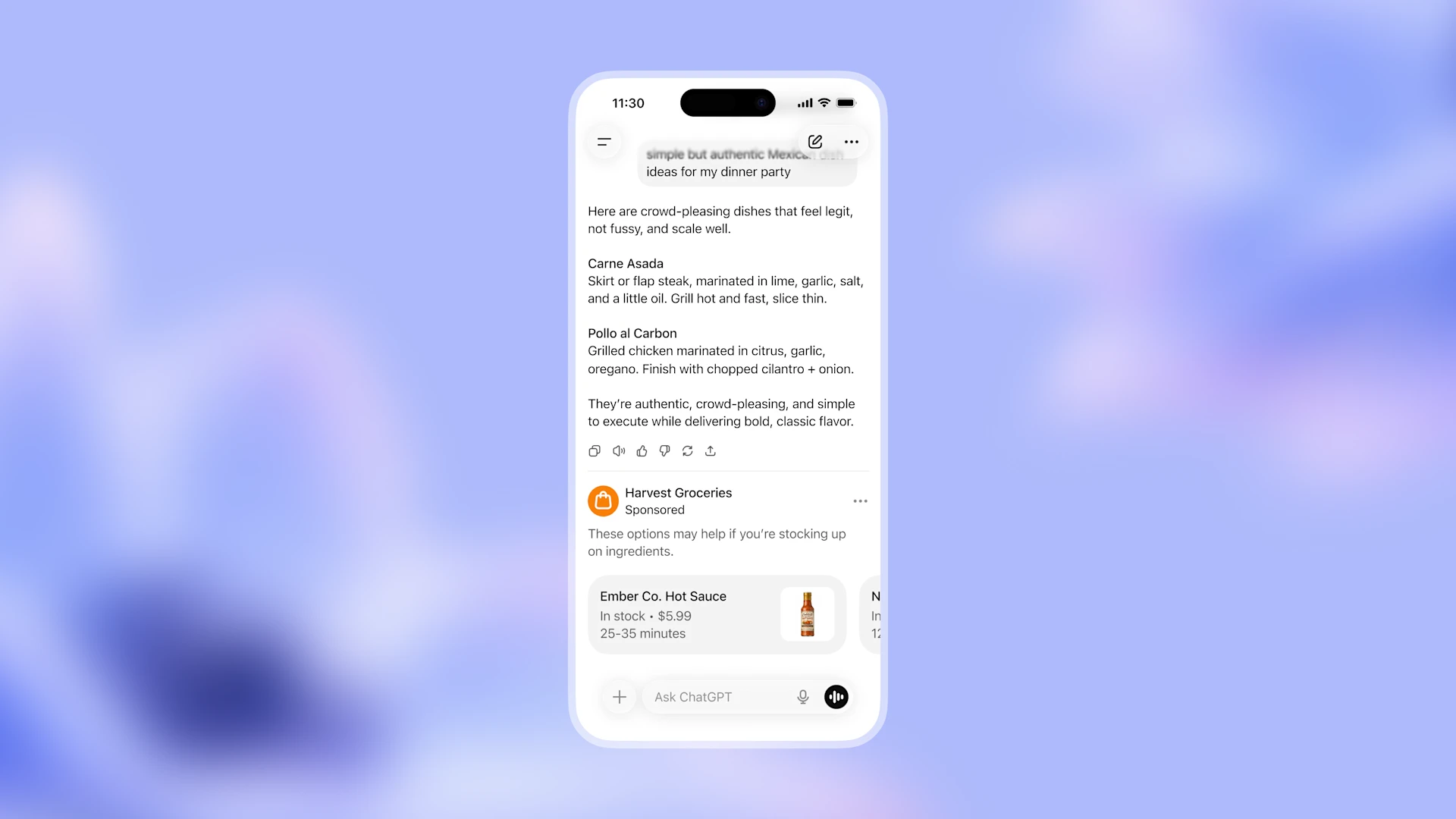 According to OpenAI's announcement, ads will:
Appear in a "bottom slot" under the AI's response
Be clearly marked as "Sponsored" or "Ad"
Show up when relevant to the ongoing conversation
But here's where things get interesting: as one Reddit user pointed out, "This isn't a display ad. It's a persuasive conversation. Totally different animal and likely far more effective."
The Interactive Advantage
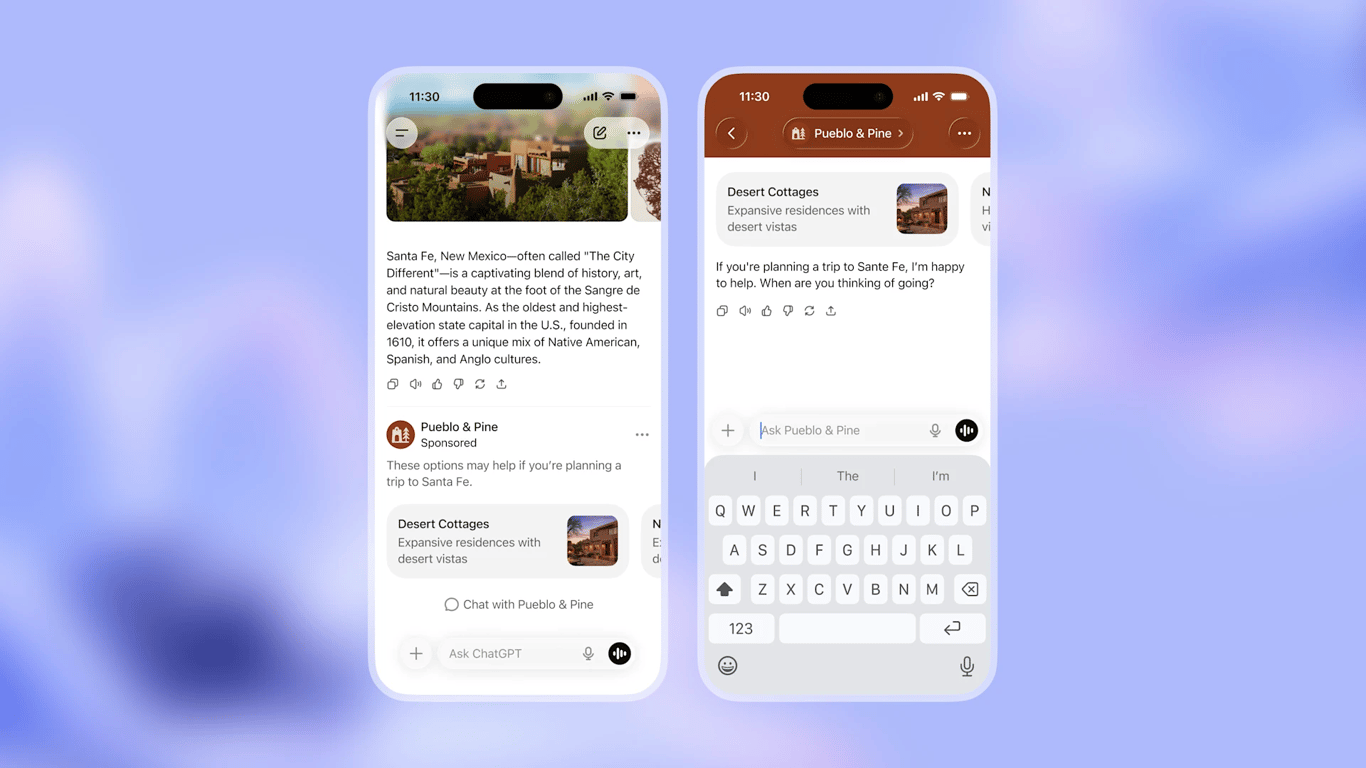
The key differentiator of ChatGPT ads is their interactive nature. Users can engage with the ad directly by asking follow-up questions.
For example: If a user asks for a recipe, ChatGPT might provide it and then show a sponsored ad for a brand of hot sauce. The user could then click the ad and ask, "Is this sauce gluten-free?" or "Where can I buy it near me?"
This conversational capability makes ChatGPT ads potentially far more engaging and effective than traditional digital ads, which are static and one-dimensional.
Potential Future Ad Formats
While the initial format is a bottom slot, experts anticipate the platform could evolve to include:
Contextual recommendations woven into responses
Embedded sponsored links
Product carousels for shopping queries
Sponsored sessions for uninterrupted access
As for pricing, ChatGPT ads will likely follow familiar models like CPM (Cost Per Mille) or CPC (Cost Per Click), though they may start with lower costs due to less competition during the testing phase.
Your 6-Step Playbook: How to Prepare for Advertising on ChatGPT
While the full rollout is still months away, smart marketers are already preparing their strategies. Here's your actionable checklist:
1. Creative Preparation
Start thinking beyond static copy. Develop conversational ad content, scripts, and potential user Q&As. Prepare high-quality visual assets for product cards.
2. Targeting Strategy
Begin preliminary keyword research relevant to conversational queries. Analyze how people actually talk to ChatGPT vs. how they type into Google. These are fundamentally different interaction models.
3. Data Management
Ensure your product feeds are well-structured, machine-readable, and up-to-date. This will be crucial for real-time, relevant ad integration.
4. Interactive Engagement Plan
Prepare for the chat function within ads. Develop a database of FAQs and potential conversational flows to handle user inquiries directly from the ad.
5. Budget Planning
Earmark an experimental budget for when the ad platform rolls out. Define clear KPIs (e.g., engagement rate, cost-per-inquiry) to measure performance beyond simple clicks.
6. Compliance Awareness
Familiarize yourself with OpenAI's content policies. Note that ads will not be shown adjacent to sensitive topics like health and politics, addressing concerns that "political ads could lead to misinformation."
The Immediate Opportunity: How to Win on ChatGPT Today with Generative Engine Optimization (GEO)
While preparing for the eventual rollout of paid ads is important, there's a more urgent opportunity that exists right now: making sure your brand appears in ChatGPT's organic responses through Generative Engine Optimization (GEO).
As one marketer bluntly put it on Reddit, "If your brand isn't showing up in those answers, you're invisible in the AI era."
What is GEO?
Generative Engine Optimization (GEO) (also called LLM Optimization) is the process of optimizing your digital content and presence to be favorably cited, referenced, and recommended by AI models like ChatGPT, Perplexity, and AI Overviews.
Think of it as SEO for the AI age—except instead of optimizing for Google's ranking algorithms, you're optimizing to be included in an AI's knowledge base and cited in its responses.
Why GEO is Crucial Now
It builds a foundational presence that will complement your future ad efforts
It captures traffic and builds authority today, while competitors are still waiting
It's a proactive strategy, not a reactive one
While many are wasting time on speculation about future ad platforms, GEO gives you a way to capture AI-driven traffic immediately.
How to Start with GEO Today
Make your website accessible: Ensure clean code and easy crawler access. AI models learn from what they can crawl and index.
Produce unique content: Go beyond generic information. Publish content with specific data, insights, and unique points of view that an LLM would want to cite as an authoritative source.
Optimize with structured data: Use schema markup to help AI models understand the context of your content (products, reviews, articles, etc.).
Earn citations on high-authority sites: LLMs learn from the web. Mentions on reputable third-party websites (like industry blogs, news sites, and even Reddit) are powerful signals that increase your chances of being cited.
Focus on bottom-of-funnel keywords: Target terms that indicate commercial intent, ensuring AI models recommend your products or services when users are ready to make purchasing decisions.
(Source)
Partnering for the Future of Search
Executing a robust GEO strategy requires a deep understanding of how LLMs work—a new and complex field that's constantly evolving.
This is where specialized partners like Synscribe can provide valuable expertise. Synscribe's Generative Engine Optimization (GEO) service is specifically designed to optimize content for visibility across AI engines like ChatGPT, using proprietary methods to analyze LLM search behavior.
What sets Synscribe apart is their revenue-focused approach. Using tools like their Bottom-of-Funnel (BOFU) Keyword Finder, they ensure optimization efforts attract customers ready to convert, not just casual browsers. This aligns perfectly with businesses looking to generate actual revenue from AI-driven traffic, not just vanity metrics.
Conclusion: A Dual Strategy for Success
The introduction of ads on ChatGPT marks a pivotal moment in digital marketing. The path forward for smart marketers is two-fold:
Prepare: Use the 6-step playbook outlined above to get your assets and strategy ready for the inevitable rollout of ChatGPT ads later this year.
Act Now: Don't wait. Invest in Generative Engine Optimization (GEO) to build your organic presence and start winning on AI platforms today.
The winners in this new era will be those who embrace the conversational nature of these platforms and prioritize providing genuine value, both in their paid ads and their organic content.
The AI revolution in search and advertising isn't coming—it's already here. The question is: will your brand be visible, or invisible?
Frequently Asked Questions
What are ChatGPT ads?
ChatGPT ads are sponsored content designed to be relevant to a user's conversation, appearing within the ChatGPT interface after an AI-generated response. Unlike traditional static ads, they are interactive, allowing users to ask follow-up questions directly, creating a conversational commerce experience. They will be clearly labeled as "Sponsored" or "Ad."
When will ChatGPT ads be available?
OpenAI will begin testing ChatGPT ads in the United States in early Q1 2026, which is expected to be in late January or February. Following the initial testing phase for U.S. users on the Free and Go tiers, a wider rollout to other markets is anticipated for later in 2026.
How will ChatGPT ads differ from traditional search ads?
The primary difference is interactivity; users can engage in a conversation with ChatGPT ads, whereas traditional search ads are static links. For example, after seeing a sponsored product, a user can ask the ad about its features, availability, or compatibility. This shift from one-way display to two-way dialogue makes them a fundamentally different and potentially more engaging advertising tool.
What is Generative Engine Optimization (GEO)?
Generative Engine Optimization (GEO) is the practice of optimizing your website's content and digital presence to be favorably cited, referenced, and recommended by generative AI models like ChatGPT. It is essentially SEO for the AI era, aiming to make your brand visible in the AI's organic, non-ad answers when users ask relevant questions.
How can my business start preparing for ChatGPT ads today?
Your business can start preparing now by developing conversational ad content, ensuring product data feeds are well-structured and machine-readable, and planning an experimental budget. It's also crucial to create an interactive engagement plan, such as a database of FAQs, to handle user inquiries that will come directly through the ad's chat function.
Who will see ads on ChatGPT?
Initially, ads will only be shown to logged-in adults in the U.S. who are on the Free and new low-cost Go tier ($8/month). Users with Pro, Business, and Enterprise subscriptions will continue to have an ad-free experience.
Will my private conversations be used for ad targeting?
No, OpenAI has stated that user conversations will remain private and will not be sold to advertisers. While ads will be contextually relevant to the current conversation, this is one of OpenAI's core principles for advertising. Users will retain control over ad personalization and can clear their data, prioritizing privacy and user trust.
Dominate ChatGPT and Google Search
Synscribe helps B2B companies with SEO & GEO using programmatic SEO approach. Book a call to find out how we help you win.