Top 14 SEO Courses for AI Search Domination (Ranked & Updated for 2026)
Summary
With traditional SEO becoming obsolete, adapting to Generative Engine Optimization (GEO) is crucial and can boost visibility in AI search features by over 40%.
Success in 2026 requires mastering foundational SEO alongside new specializations like Answer Engine Optimization (AEO), GEO for AI responses, and Programmatic SEO (pSEO) for scaling content.
This guide ranks the top 20 SEO courses that provide actionable, AI-ready strategies to help you cut through the noise and build a future-proof skill set.
While courses teach strategy, executing advanced tactics like programmatic SEO requires technical expertise. Synscribe partners with B2B SaaS companies to build and deploy these complex AI and pSEO systems, turning strategy into measurable growth.
"Just create great content," they say. "Focus on backlinks," others insist. "No, it's all about technical SEO now!" And the latest buzzword: "You need to optimize for GEO (Generative Engine Optimization) if you want to survive in 2026!"
With Google's AI Overviews now answering queries directly, and search becoming less about ten blue links and more about synthesized answers, the goalposts aren't just moving – they're being completely redesigned.
We hear you. This isn't another generic list of SEO courses that teach outdated tactics. It's a strategic guide to help you master what actually works in 2026 and beyond, focusing on the skills necessary for AI search dominance:
Traditional SEO fundamentals that still matter
Answer Engine Optimization (AEO) for featured snippets
Generative Engine Optimization (GEO) for AI-generated responses
Programmatic SEO (pSEO) for scaling your efforts
Let's cut through the noise and focus on courses that deliver tangible results.
The Great SEO Shift: Why Your 2023 Playbook Is Obsolete
Before diving into the courses, let's understand why traditional SEO approaches are increasingly falling short.
From Keywords to Intent
Traditional SEO focused heavily on identifying high-volume keywords and creating content around them. While keywords still matter, Google's AI has gotten dramatically better at understanding user intent:
RankBrain (2015): Connected unknown search queries to known ones
BERT (2019): Understood context and nuance in search queries
MUM (2021): Processed information across languages and formats
AI Overviews (2024): Uses generative AI to provide direct, synthesized answers
This evolution means that optimizing for specific keywords alone is no longer sufficient. Search engines now understand topics, entities, and relationships between concepts.
The Rise of GEO
Generative Engine Optimization (GEO) refers to the practice of optimizing content to be selected as a trusted source for AI-generated responses. Implementing GEO methods can boost visibility in AI-driven search features by over 40%.
The core pillars of modern AI-driven SEO include:
AI-driven keyword research: Using predictive analysis to find emerging trends and semantic clustering to group keywords by intent
People-First Content: Creating genuinely helpful, expert-level content structured for both humans and AI
Technical Excellence: Ensuring crawlability, site speed, and implementing schema markup
As one Redditor wisely noted: "SEO is a very philosophical and psychological understanding of what a user would normally do, think, or ask." This user-centered approach is now more important than ever.

Our Ranking Methodology
We've evaluated these courses based on:
Practicality: Prioritizing actionable strategies over pure theory
AI-Readiness: Addressing modern challenges like GEO and semantic search
Specialization: Including courses for scaling, quick wins, and foundational knowledge
Community Trust: Cross-referencing recommendations from platforms like Reddit and industry experts
With that framework in place, let's explore the top 20 SEO courses for AI search domination in 2026.
The Top 20 Courses for AI Search Domination (Categorized)
Category 1: All-in-One Foundational Mastery (For Beginners & Vets)
1. Google SEO Fundamentals (by UC Davis on Coursera)
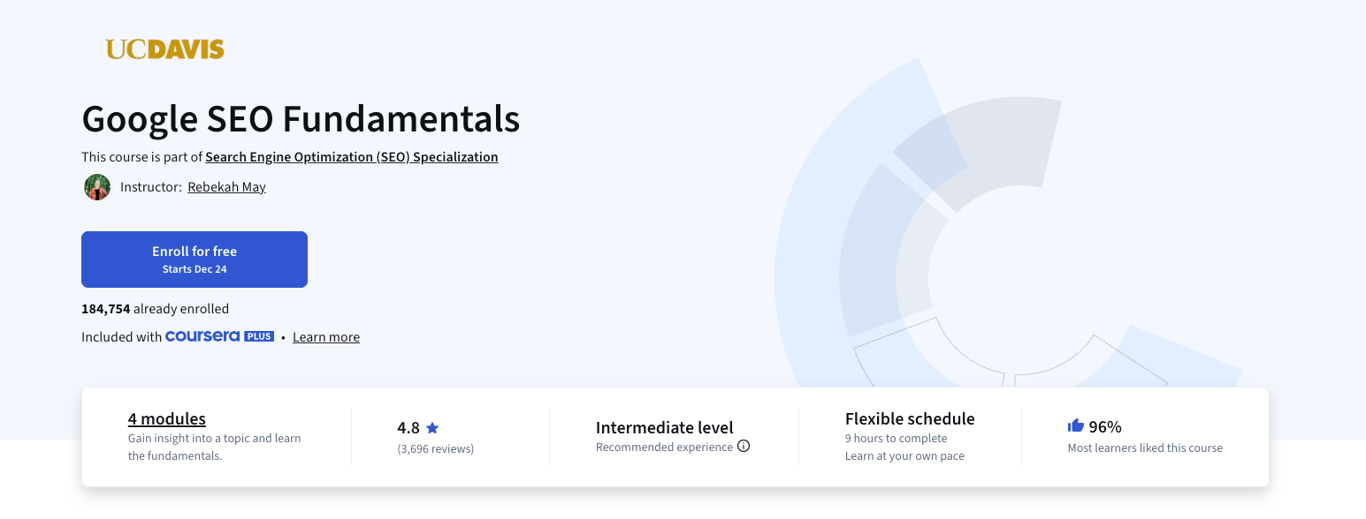 Why it's ranked here: The perfect starting point, direct from the source's best practices. Highly rated and practical for beginners.
Skills: Web Analytics, Keyword Research, Google Analytics
Rating: 4.8 (3.7K reviews)
Price: Free
Link: Google SEO Fundamentals
2. Search Engine Optimization (SEO) Specialization (by UC Davis on Coursera)
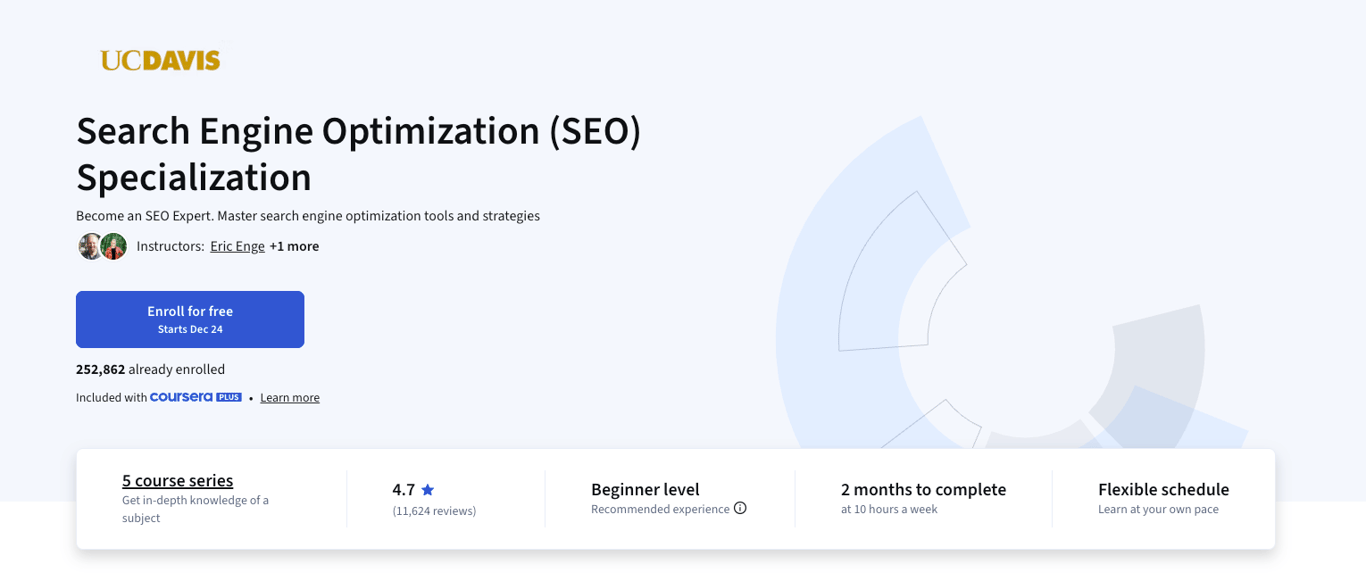 Why it's ranked here: A comprehensive, university-backed program covering the full spectrum of SEO.
Skills: Keyword Research, Social Media Strategy, Competitive Analysis, Technical SEO, Link Building
Rating: 4.6 (13K reviews)
Price: Free
Link: SEO Specialization
3. Ahrefs Academy (Blogging for Business)
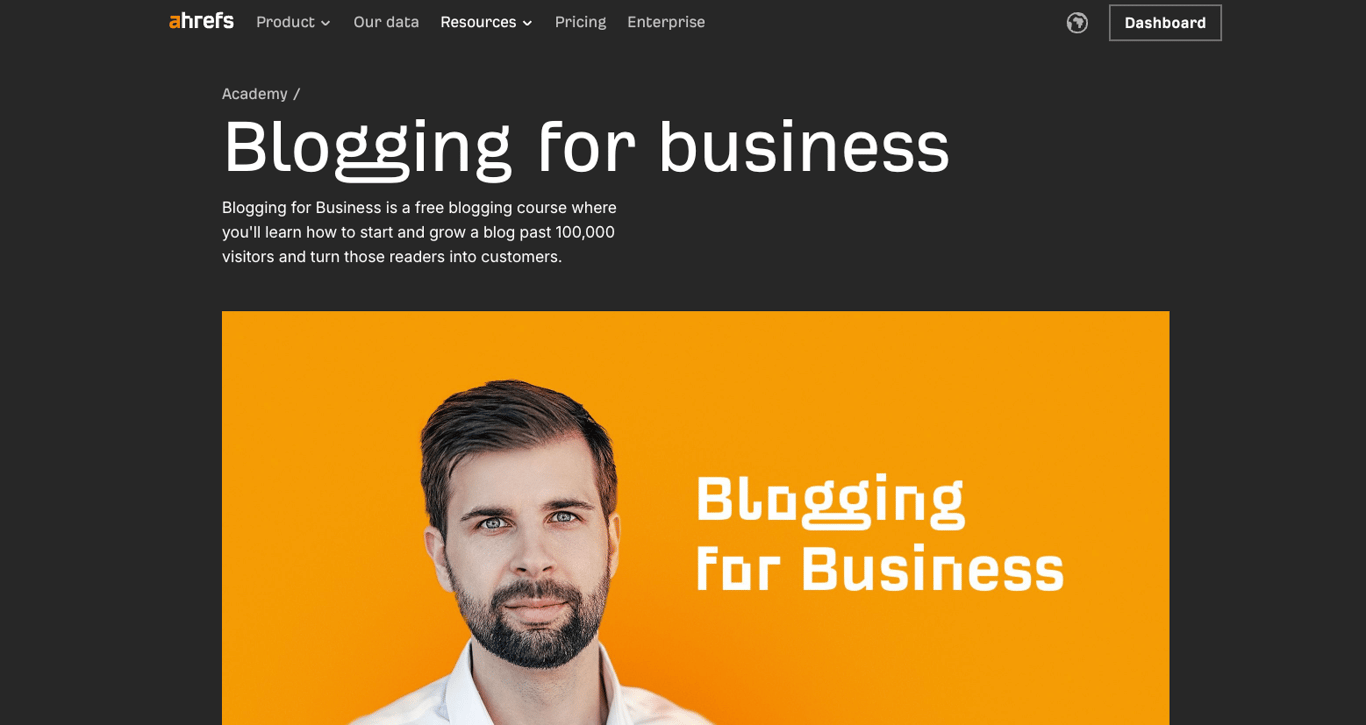 Why it's ranked here: Praised in Reddit threads for its clarity and practical, step-by-step approach. An accessible intro to SEO for beginners.
Skills: Keyword research, on-page optimization, link analysis using Ahrefs
Price: Free
Link: Ahrefs Academy
4. SEMrush Academy
 Why it's ranked here: Excellent free courses that teach SEO concepts while simultaneously training you on one of the industry's most powerful toolkits.
Skills: Technical SEO, Link Building, Keyword Research using SEMrush tools
Price: Free
Link: SEMrush Academy
5. Moz Academy: SEO Essentials Certification
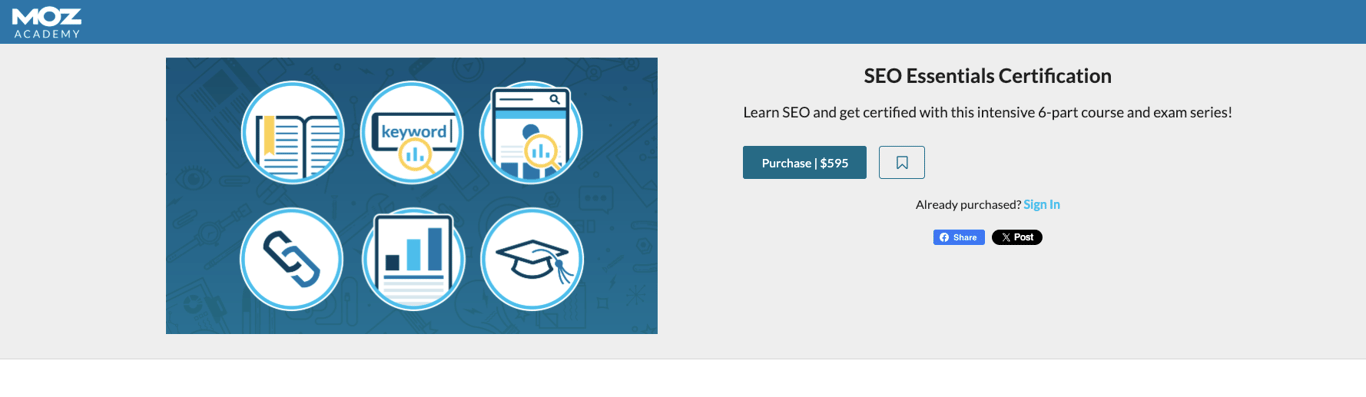 Why it's ranked here: An industry-recognized certification that provides a structured path to mastering fundamentals with practical exercises.
Skills: SEO Fundamentals, Keyword Research, On-Page Optimization
Price: $595
Link: SEO Essential Certification
Category 2: Tactical Deep Dives for Quick Wins & Niche Skills
6. Edward Sturm's Compact Keyword
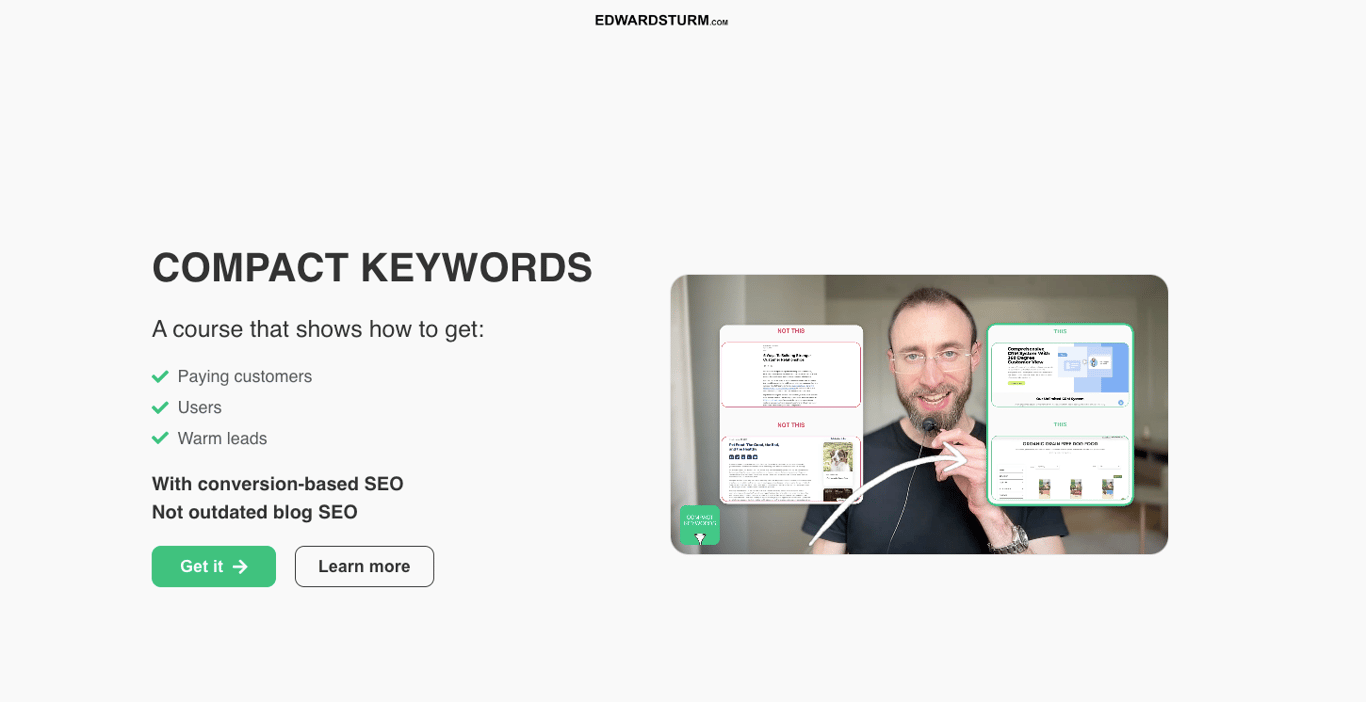
Why it's ranked here: A laser-focused course on a high-impact area: finding and ranking for high-intent commercial keywords. Perfect for getting quick wins and understanding what truly moves the needle for landing page conversions.
Skills: Commercial intent keyword research, landing page SEO, conversion optimization
Price: $499
Link: Edward Sturm's Compact Keywords
7. Yoast SEO Academy
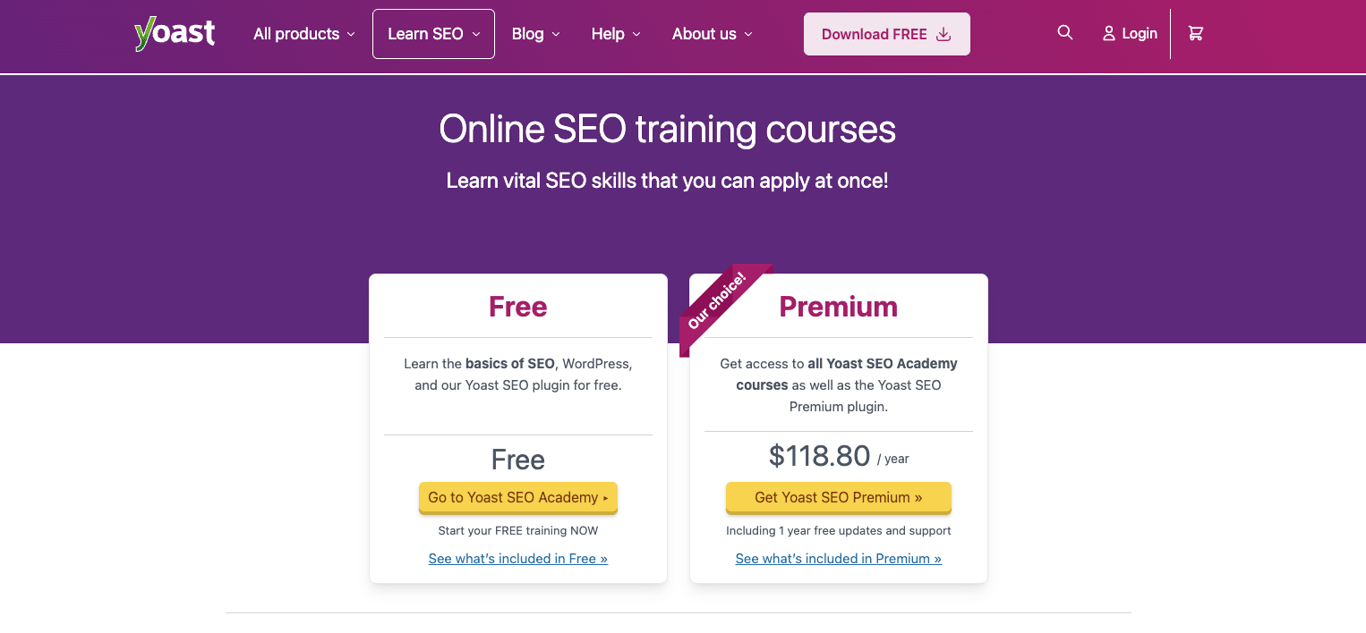 Why it's ranked here: Essential for anyone working with WordPress. Provides hands-on training to get the most out of the world's most popular CMS and SEO plugin.
Skills: Keyword research, schema, site structure, WordPress SEO
Price: Free, 118.8/yr for Premium
Link: Yoast SEO Academy
8. Increase SEO Traffic with WordPress (Coursera Project)
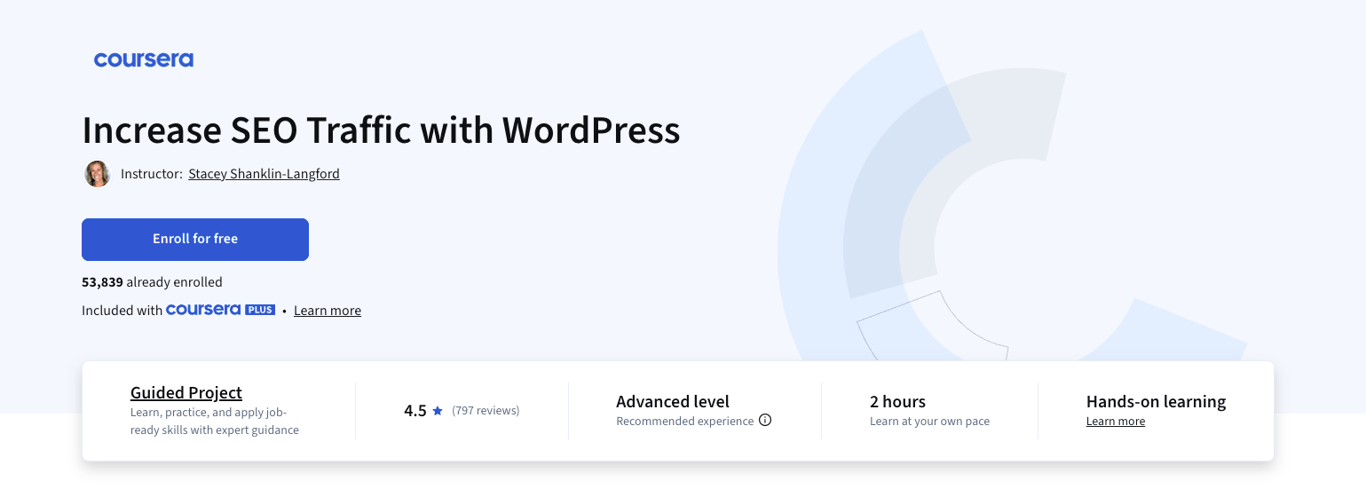 Why it's ranked here: A short, project-based course for those who learn by doing. A great, low-commitment way to practice WordPress SEO.
Duration: Less than 2 hours
Price: Free
Link: Increase SEO Traffic with WordPress
Category 3: Scaling with Code - Programmatic SEO (pSEO)
Programmatic SEO is the practice of using automation and large datasets to create hundreds or thousands of optimized landing pages, targeting long-tail keywords at a scale impossible to achieve manually. It's becoming essential for dominating niche verticals.
9. Practical Programmatic
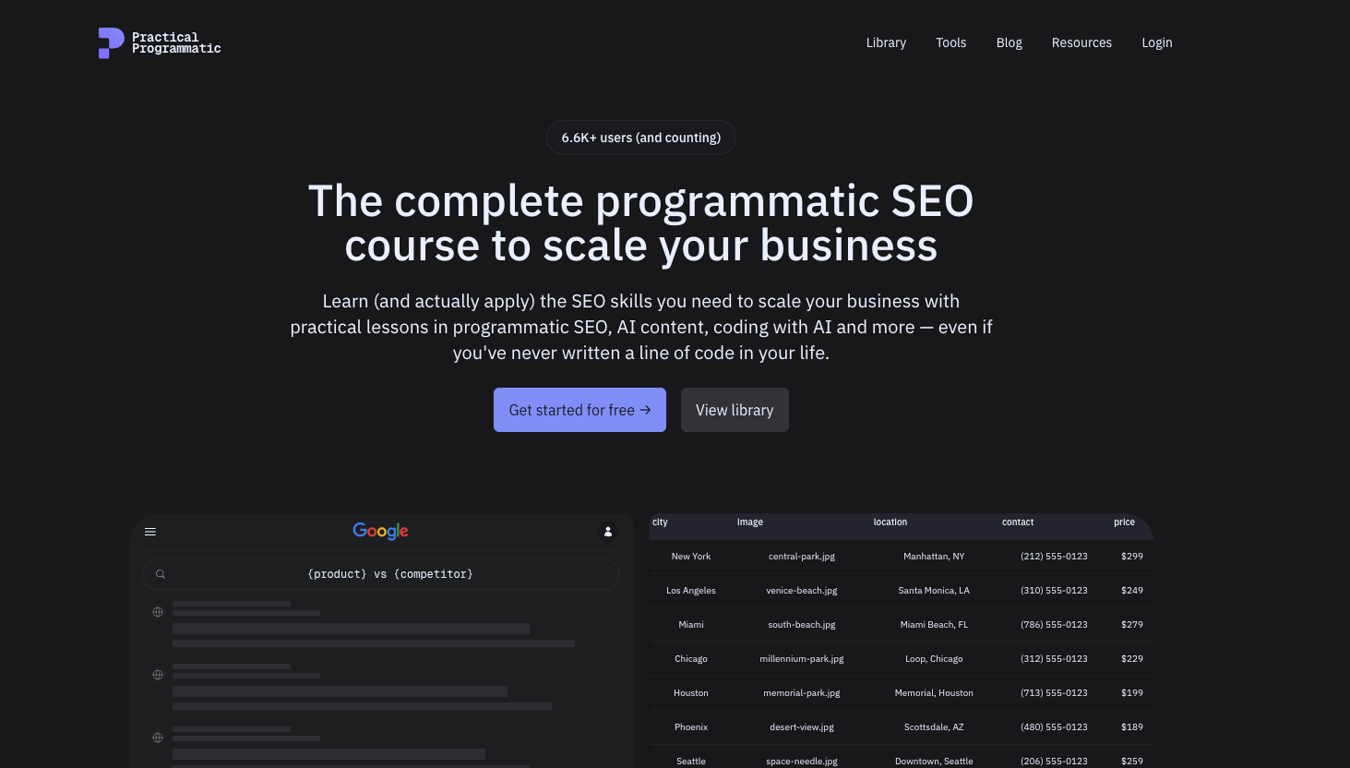
Why it's ranked here: The go-to course for learning pSEO from the ground up, even without coding experience. It focuses on building scalable systems.
Core Topics Covered:
Keyword Research: Combining broad head terms with specific modifiers to generate thousands of long-tail opportunities
Finding Unique Data: Strategies for gathering public data, scraping, or creating custom datasets to serve as the backbone of your pages
Crafting Templates: Building dynamic templates that display unique content based on the data, avoiding duplicate content issues
Automation Workflows: Creating systems to generate high-quality pages at scale
Indexing Content: Crucial technical SEO strategies to ensure Google crawls and indexes your programmatically generated pages
Cost: $229 one-time payment for lifetime access Link: Practical Programmatic
While a course like Practical Programmatic provides the blueprint for pSEO, the execution—especially for B2B SaaS companies needing to integrate with complex product data—requires significant technical resources. This is where growth partners like Synscribe come in, with full-stack engineering teams that can build and deploy advanced AI and programmatic SEO systems to help partners dominate niche search verticals.

Category 4: Essential Free Resources & Must-Watch Community Insights
10. Must-Watch Video: 13 Underrated SEO Tips That Actually Work (From Reddit's Best)
Why it's critical: Distills practical, field-tested advice directly from the SEO community, cutting through the typical guru noise.
Link: 13 Underrated SEO Tips
11. Must-Watch Video: 8 Proven Link Building Strategies from the SEO Subreddit
Why it's critical: Link building remains a core pillar of SEO. This video provides proven, community-vetted strategies. Addresses the user pain about the complexity of backlinks.
Link: 8 Proven Link Building Strategies
12. Must-Watch Video: Topical Authority Finally Clicked: SEO Is Mechanical, Not Mystical
Why it's critical: Demystifies one of the most important but often misunderstood concepts in modern SEO: topical authority. As one Redditor noted: "I've been studying for 8 months, and I found the most important aspect to master is keyword research and topical authority."
Link: Topical Authority Finally Clicked
13. Must-Watch Video: Top SEO Myths Busted: What Really Matters in 2025
Why it's critical: Helps you focus on what's important by debunking outdated and incorrect SEO advice that can waste your time and resources.
Link: Top SEO Myths Busted
14. Must-Watch Video: The Fake 'GEO' Movement: How SEO Disinfo Campaigns Target Creators
Why it's critical: As new concepts like GEO emerge, so does misinformation. This video serves as a crucial reminder to stay critical and vet your sources.
Link: The Fake 'GEO' Movement
The Great SEO Divide: Traditional vs. AI-Driven Approaches
As you explore these courses, you'll notice a fundamental shift in how SEO is approached in 2026. Let's break down the key differences:
Traditional SEO (Still Important)
Focus: Keyword optimization, backlinks, and technical performance
Goal: Rank in the top 10 results for targeted keywords
Metrics: SERP rankings, organic traffic, click-through rates
AEO (Answer Engine Optimization)
Focus: Structuring content to directly answer specific questions
Goal: Win featured snippets and "People Also Ask" boxes
Metrics: Featured snippet wins, zero-click engagement
GEO (Generative Engine Optimization)
Focus: Creating comprehensive, authoritative content that AI systems can synthesize
Goal: Be cited as a source in AI-generated responses
Metrics: AI citation frequency, authority signals
pSEO (Programmatic SEO)
Focus: Scaling content production through automation and data
Goal: Dominate long-tail keywords across a niche
Metrics: Indexation rate, ranking breadth, conversion from long-tail traffic
Key Skills to Develop in 2026
Based on our research and the courses above, these are the critical skills to focus on:
1. Semantic Content Optimization
Modern SEO requires understanding the relationships between topics, entities, and user intent. This means moving beyond keyword density to creating content that comprehensively covers a topic from all angles.
As Google's SEO Starter Guide emphasizes, "Creating compelling and useful content will likely influence your website more than any of the other factors."
2. Schema Implementation
Structured data has evolved from a nice-to-have to a must-have, especially for GEO. Schema markup helps search engines understand your content's context and structure, making it more likely to be used in AI-generated responses.
3. Content Silos and Topical Authority
As one Redditor mentioned: "Kyle Roof's reverse content silo guides can get you some easy wins in SERPS and a basic understanding how you should build internal linking silos."
Organizing your content into logical clusters and building strong internal linking structures signals topical authority to search engines.
4. Technical Proficiency
Beyond basic SEO, understanding how to implement:
Advanced schema markup for entity recognition
JavaScript rendering for dynamic content
API integration for programmatic SEO
Natural Language Processing (NLP) concepts for content optimization
5. AI Literacy and Prompt Engineering
As AI tools become central to SEO workflows, understanding how to effectively use them becomes crucial. This includes:
Prompt engineering for generating and optimizing content
Data interpretation from AI-powered tools
Understanding AI limitations and when human expertise is needed
Combining Courses for Maximum Impact
Rather than treating this as a ranked list where you should only take the top course, consider combining courses from different categories to build a comprehensive skill set:
Beginner Path:
Google SEO Fundamentals (Foundational)
HubSpot Academy SEO Certification (Free Resource)
The recommended YouTube videos (Community Insights)
Intermediate Path:
Edward Sturm's Compact Keyword (Tactical Deep Dive)
Advanced Path:
Practical Programmatic (pSEO Scaling)
Your Roadmap from Learning to Dominating AI Search
The SEO landscape is evolving faster than ever, but success in 2026 isn't about finding one "magic bullet." It's about building a stack of skills:
Master the fundamentals: Even with AI advancements, the core principles of creating valuable content, technical excellence, and understanding user intent remain crucial.
Embrace AI as a tool, not a threat: AI is changing how users discover content, but it's also providing powerful tools for SEO professionals. Courses that teach AI integration (like IBM's SEO Mastery) will help you leverage these technologies.
Scale strategically: Once you've mastered the core strategies, programmatic SEO allows you to apply them at scale, dramatically increasing your impact.
Test and iterate: As one Reddit user emphasized: "The best way to learn is with your own projects where you can test all the practices." No course can replace hands-on experience.
The future of search is about understanding and serving user intent more deeply than ever before. Focus on creating genuinely helpful, expert-level content, structured for both humans and AI, and you'll not only survive the shift to AI search—you'll dominate it.
Final Thoughts
The transition to AI-powered search might seem daunting, but it's actually a tremendous opportunity for SEO professionals willing to adapt. By combining the traditional SEO fundamentals with new approaches like GEO and pSEO, you can position yourself at the forefront of this evolution.
Remember that no single course will transform you into an SEO expert overnight. The most successful practitioners combine structured learning with relentless experimentation. Choose courses that align with your current skill level and business goals, then immediately apply what you learn to real-world projects.
As the search landscape continues to evolve, those who stay curious, test continuously, and focus on delivering genuine value to users will always find ways to thrive—regardless of how the algorithms change.
Frequently Asked Questions
What is Generative Engine Optimization (GEO) and why does it matter?
Generative Engine Optimization (GEO) is the practice of optimizing your content to be selected and cited as a trusted source by AI-powered search engines for their generated answers, like Google's AI Overviews. It matters because as search shifts from a list of links to direct, synthesized answers, being featured as a source in these AI responses is the new "ranking #1" for visibility and authority.
Are traditional SEO skills still relevant in the age of AI search?
Yes, traditional SEO skills are more relevant than ever. They form the foundation upon which modern strategies are built. Core principles like understanding user intent, creating high-quality "people-first" content, building topical authority, and ensuring technical excellence (site speed, crawlability) are crucial for both traditional rankings and for signaling trust to AI engines.
What's the difference between AEO, GEO, and pSEO?
These are specialized disciplines within modern SEO.
AEO (Answer Engine Optimization) focuses on structuring content to directly answer specific questions to win featured snippets and "People Also Ask" boxes.
GEO (Generative Engine Optimization) is broader, aiming to make your content a citable, authoritative source for comprehensive AI-generated summaries.
pSEO (Programmatic SEO) is a method of scaling content creation by using automation and data to generate thousands of pages targeting long-tail keywords.
How quickly can I expect to see SEO results after taking a course?
You can expect to see significant SEO results within 3 to 6 months of consistently applying what you've learned. The courses provide the knowledge and strategy, but SEO success comes from hands-on implementation, testing, and patience. There are no instant results; it's a long-term investment.
What is programmatic SEO (pSEO) and is it suitable for beginners?
Programmatic SEO (pSEO) is an advanced strategy that uses automation to create hundreds or thousands of optimized pages from a dataset, targeting very specific long-tail keywords. While powerful, it is generally not suitable for complete beginners as it requires a solid understanding of SEO fundamentals, data management, and often some technical resources to implement effectively.
Which SEO course is best for a complete beginner in 2026?
For a complete beginner, the Google SEO Fundamentals course on Coursera is an excellent starting point. It comes directly from Google's best practices and provides a strong, practical foundation. Combining this with free resources like the HubSpot Academy SEO Certification and the recommended YouTube videos in this guide will create a comprehensive learning path.
Is building backlinks still a crucial part of SEO?
Yes, building high-quality backlinks remains a crucial part of SEO. Backlinks act as votes of confidence from other websites, signaling to search engines that your content is credible, authoritative, and trustworthy. This authority is a key factor that AI engines consider when selecting sources for generated answers, making link building a vital component of both traditional SEO and GEO.
Dominate ChatGPT and Google Search
Synscribe helps B2B companies with SEO & GEO using programmatic SEO approach. Book a call to find out how we help you win.