Measuring AI Share of Voice: 5 Tools That Go Beyond Basic Metrics
Summary
With an estimated 20.5% of the global population using voice search, traditional SEO metrics are insufficient for measuring brand visibility in the new era of AI-powered answers.
B2B SaaS companies must track their AI Share of Voice (SOV)—how often they are mentioned, cited, and recommended across platforms like ChatGPT and Perplexity.
Effective AI SOV measurement goes beyond simple mentions, focusing on revenue-driving metrics like citation rate, recommendation rate, and brand sentiment.
Synscribe provides the tools and strategy to measure AI SOV and execute a data-driven content plan that improves visibility and drives revenue.
You've set up a meticulously crafted content strategy, optimized your website, and tracked your Google rankings religiously. But there's a growing blind spot in your analytics that could be costing you valuable visibility and leads: your brand's presence in AI-generated answers.
"I started manually checking queries like 'Best tools for X' in ChatGPT. It was exhausting," admits one marketer on Reddit. Others echo the sentiment: "I've been mapping mentions and citations manually, but it's super time consuming."
As users increasingly bypass traditional search engines for direct answers from AI platforms like ChatGPT, Perplexity, and Claude, a new metric has emerged as critical for B2B SaaS companies: AI Share of Voice (SOV).
Why Traditional SEO Metrics No Longer Tell the Whole Story
That #1 rank on Google you worked so hard to achieve? It no longer guarantees visibility in the age of AI-synthesized answers. Users on Reddit have observed a "completely different optimization strategy needed" as brands with lower traditional rankings sometimes receive more mentions in AI responses.
The reality is stark: by 2024, an estimated 20.5% of the global population uses voice search, indicating a massive shift toward conversational interfaces. This creates what one marketer calls "the biggest gap right now" – a feedback loop problem where "teams cannot improve what they cannot see, and LLM visibility is still mostly invisible inside normal analytics stacks."
To truly understand your brand's digital footprint today, you need a comprehensive AI Share of Voice framework that measures:
Query Coverage: How often your brand appears across a representative set of high-intent queries
Answer Engine Diversity: Your visibility across multiple AI platforms (not just ChatGPT)
Mention Quality: The context and sentiment of those mentions (because "being mentioned is useless if the AI says your product is 'outdated'")
The AI SOV Metrics That Actually Drive Revenue
Simple mention counting is a vanity metric. True insight comes from a more nuanced scorecard:
AI Share of Voice %: The percentage of answers where your brand is mentioned
Citation Rate: How often your content is cited as an authoritative source (crucial for driving referral traffic)
Recommendation Rate: The percentage of answers that explicitly recommend your product
Brand Sentiment Score: Measures if mentions position your brand favorably
Freshness Score: How up-to-date is the information about your brand
Hallucination Rate: The percentage of answers containing false claims about your brand
These metrics, based on frameworks from industry research, form the foundation of an effective measurement strategy that connects AI visibility directly to business outcomes.
5 Tools for Measuring AI Share of Voice
1. Synscribe's Social Listening Dashboard
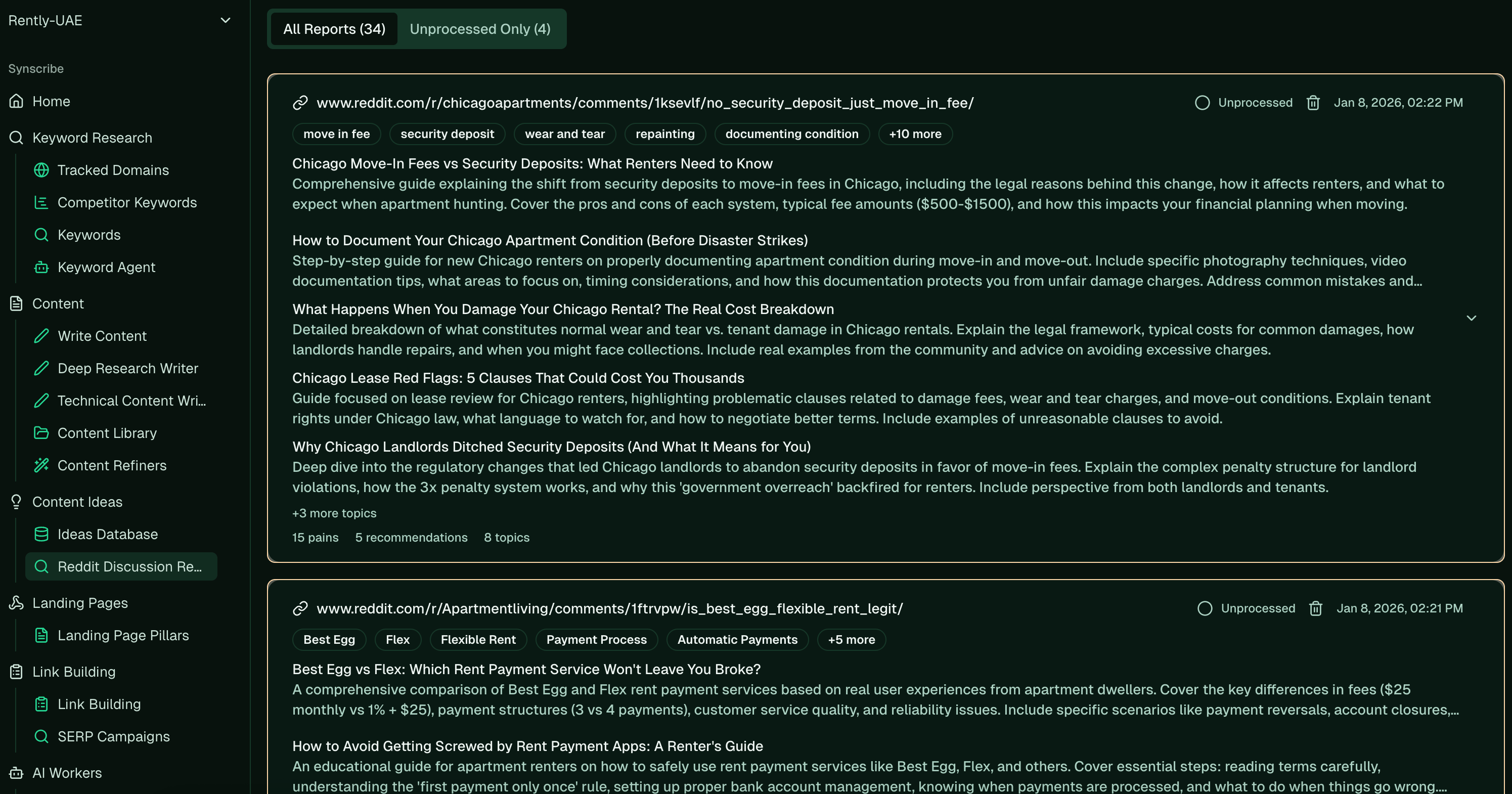 Overview: Synscribe's dashboard goes beyond basic metrics by connecting AI visibility directly to revenue outcomes for B2B SaaS companies (typically Series A to Series B).
Key Differentiators:
Focus on Pain Points, Not Just Keywords: Taps into live audience conversations on platforms like Reddit to uncover timely content ideas, customer pain points, and the specific jargon your ICP uses
From Insight to Action in One Click: Distills thousands of data points into strategic content opportunities with a one-click transition from insight to content creation
Revenue-Driven Analysis: By identifying bottom-of-funnel conversations and content gaps, it ensures every piece of content attracts high-intent customers ready to convert
Best For: B2B SaaS companies who need to tie their content and AI visibility efforts directly to measurable business outcomes like leads and sales.
Unique Advantage: Synscribe doesn't just track – it helps execute. Their full-stack engineering team can build custom tools for companies needing deeper AI visibility insights and implement technical strategies to improve AI mentions.
2. Conductor
 Overview: An enterprise platform providing quantitative understanding of brand visibility against competitors on key topics.
Key Features:
Mention vs. Citation Analysis: Distinguishes between simple brand mentions and authoritative citations, a crucial distinction in driving referral traffic
Trend Tracking: Monitors changes in market share over time to measure the impact of your Answer Engine Optimization efforts
"Blue Ocean" Discovery: Identifies topics with low competition where your brand can establish leadership in AI search results
Pricing: Custom/Quote-based
Best For: Large enterprises that need detailed, quantitative benchmarks and historical visibility data.
3. Brand24
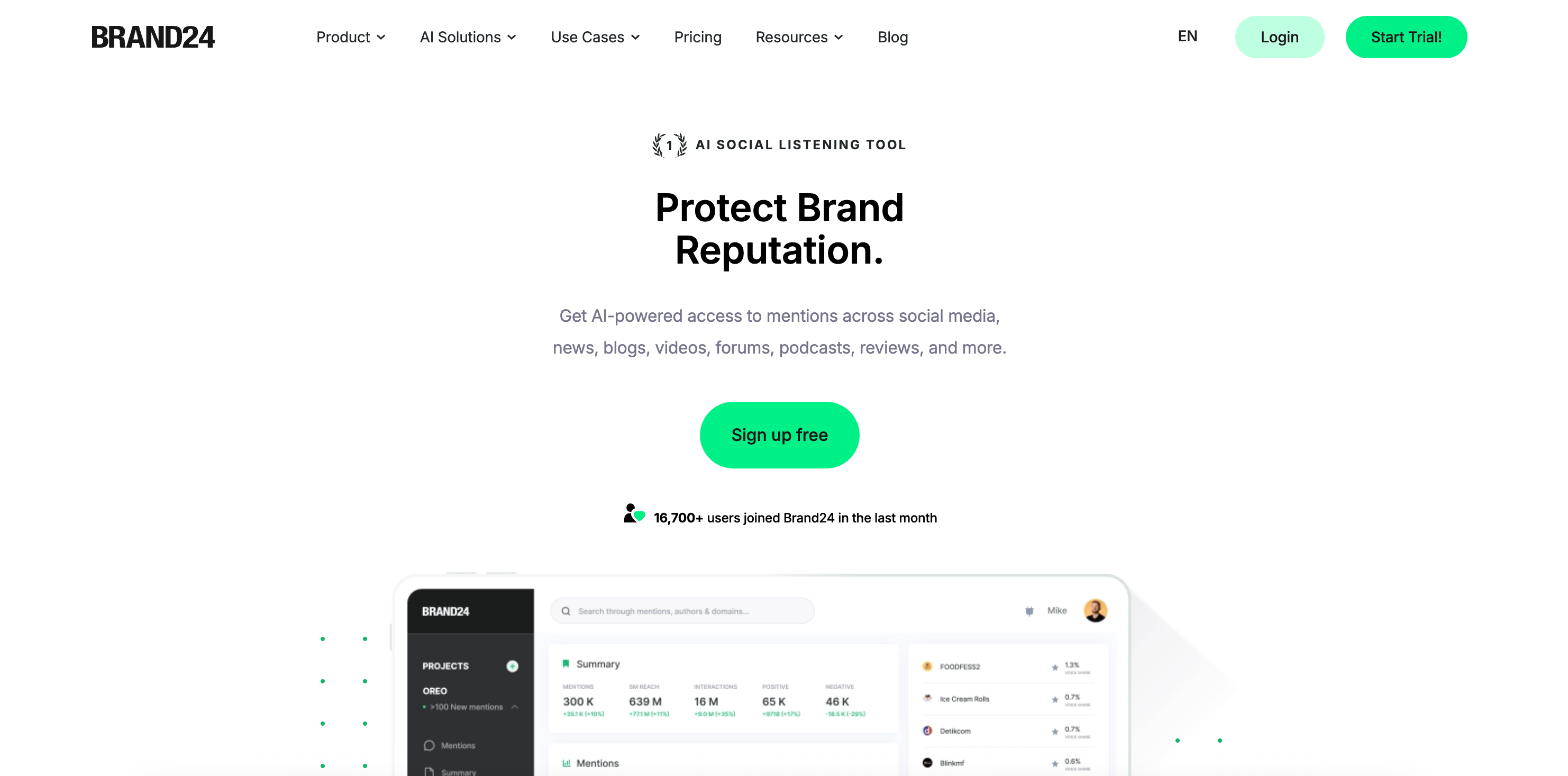 Overview: A robust social listening tool offering real-time monitoring of brand mentions across multiple online platforms.
Key Features:
Advanced AI Analysis: Includes Event Detection, Topic Analysis, and Emotion Analysis
Sentiment Analysis: Provides a strong gauge of public perception (positive, neutral, negative)
Customizable Alerts: Delivers real-time notifications via Slack or email when important mentions occur
Pricing: Starts at approximately $149/month
Best For: Mid-sized businesses and agencies that need immediate insights into brand conversations and sentiment across the web.
4. Brandwatch
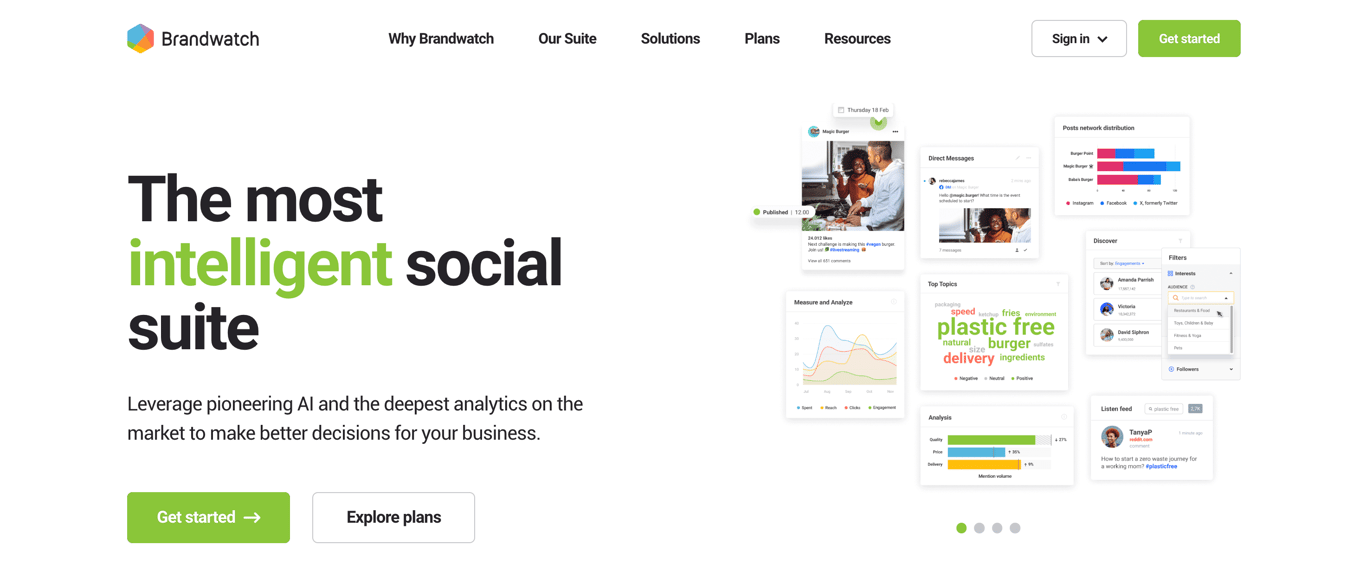
Overview: An enterprise-level social intelligence platform known for its deep analytics and trend forecasting capabilities.
Key Features:
Extensive Data Analysis: Provides comprehensive sentiment analysis, demographic data, and image recognition
Historical Data Access: Can retrieve large volumes of historical data for long-term trend analysis
Advanced Visualization: Offers powerful data visualization tools for presenting insights to stakeholders
Pricing: Custom/Quote-based
Best For: Large, global enterprises requiring comprehensive market research and consumer intelligence beyond basic share of voice metrics.
5. Mentionlytics
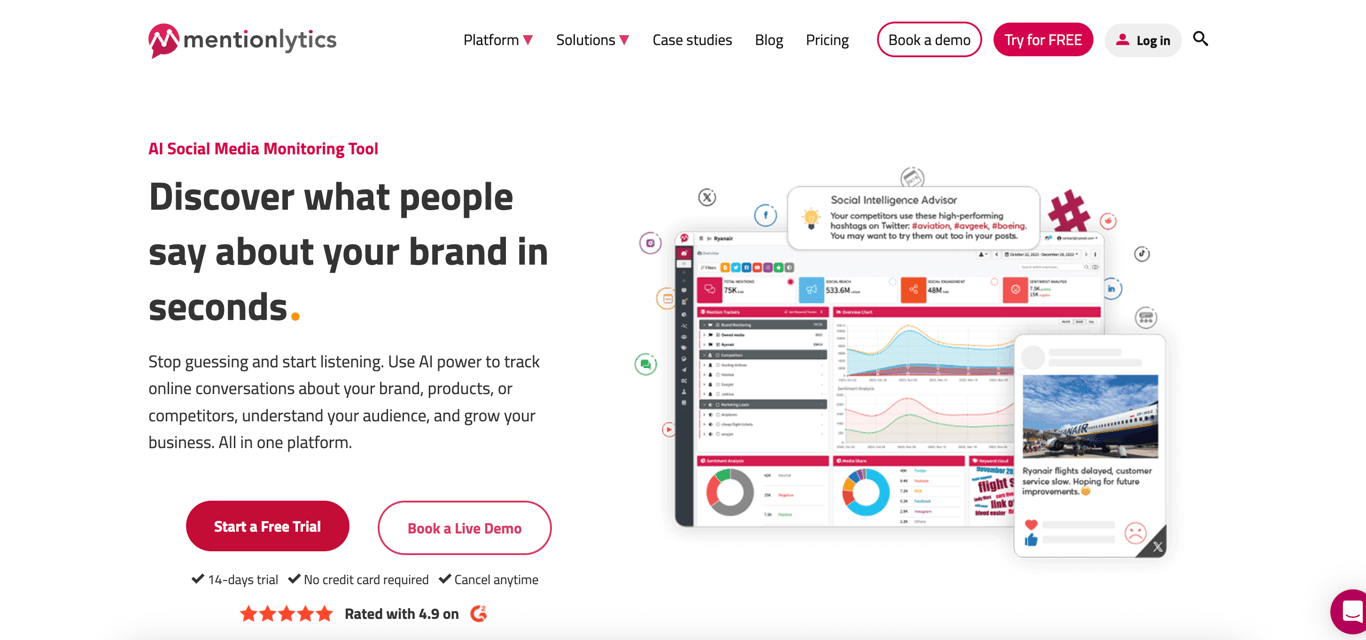
Overview: An intuitive tool designed for businesses of all sizes to easily monitor brand mentions online.
Key Features:
AI-driven Social Intelligence: Offers AI-powered insights to guide strategy development
Customizable Reports: Simple, easy-to-generate reports for tracking mentions over time
Affordable Entry Point: Provides basic AI SOV tracking capabilities at a lower price point
Pricing: Starts from $59/month
Best For: Small to medium-sized businesses looking for an affordable, user-friendly entry point into social listening and mention tracking.
From Measurement to Action: Building Your AI SOV Strategy
As one Reddit user aptly noted, "tracking alone does not solve the upstream issue." Here's how to operationalize your AI share of voice measurement to drive real business results:
Step 1: Establish Your Query Set
Define a comprehensive list of high-intent, problem/solution-oriented prompts relevant to your B2B SaaS product. Think beyond branded terms to include queries like:
"Best tools for [problem your product solves]"
"How to solve [pain point]"
"Alternatives to [your competitor]"
This query set should cover brand-specific, competitor, and high-intent problem/solution phrases to give you a complete picture of your market.
Step 2: Build Your Scorecard
Use the advanced metrics outlined earlier (Citation Rate, Sentiment, etc.) to create a dashboard for ongoing monitoring. For a quick start, AvenueZ's AI Share of Voice Tracker Template provides a free framework you can customize for your needs.
Remember that "generic content fails. AI ignores fluff. It cites specific, opinionated content," according to one marketer's observation. Your metrics should reflect this reality by prioritizing citation quality over mere mentions.
Step 3: Benchmark and Monitor
Run your queries consistently (weekly is recommended) to establish a baseline for your market share and track changes over time. This creates the feedback loop that's missing in most analytics stacks. Compare your performance against:
Your historical data
Direct competitors
Industry leaders
Emerging startups in your space
Step 4: Close the Loop with Action
The true value comes from integrating these insights into your content and visibility strategy:
If competitors are winning on certain topics, create more authoritative content to counter them
If you see negative sentiment, address misconceptions with targeted content
If your citation rate is low, focus on creating more linkable, reference-worthy resources
If you're missing from key queries, develop content specifically optimized for those questions

The Synscribe Advantage: Engineering-Led Execution
While other tools provide data, Synscribe provides both strategy and execution to act on it. Their approach stands out through:
Proprietary AI & Full-Stack Engineering: Unlike typical agencies, Synscribe's in-house engineering team doesn't just analyze data—they build tools to get it. For clients needing deeper AI visibility, they develop custom solutions to track niche queries and specific LLM behaviors.
Generative Engine Optimization (GEO): They specialize in optimizing content not just for Google, but for visibility across AI engines like ChatGPT, Perplexity, and Claude, leveraging insights from how these models source information.
'Fire Bullets then Cannonballs' Methodology: They use insights to run small-scale content experiments, validate what works with real data, and then scale the winning strategies rapidly for maximum impact.
Stop Tracking Vanity Metrics, Start Winning in AI Search
Success in the new era of search isn't about chasing rankings; it's about systematically measuring and improving your AI Share of Voice with metrics tied to revenue. Many marketers are stuck in a cycle of manual, time-consuming tracking or using fragmented tools that don't connect to business goals.
As AI-driven search continues to grow, the brands that thrive will be those that develop robust measurement frameworks and act decisively on the insights they provide. Whether you choose Synscribe's comprehensive solution or another tool from this list, the important step is to start measuring your AI presence now—before your competitors do.
Ready to see how your brand really shows up in AI search? Contact Synscribe today to learn how their data-driven GEO strategies can connect your AI visibility directly to your bottom line.
Frequently Asked Questions
What is AI Share of Voice (SOV)?
AI Share of Voice (SOV) is a metric that measures your brand's visibility within answers generated by AI platforms like ChatGPT, Perplexity, and Claude. It goes beyond traditional search rankings to quantify how often your brand is mentioned, cited, or recommended in response to relevant user queries, helping you understand your presence in the new landscape of conversational AI.
Why is AI Share of Voice important for my business?
AI Share of Voice is crucial because potential customers are increasingly using AI chatbots for product research and recommendations, bypassing traditional search engines. If your brand isn't mentioned in these AI-generated answers, you lose visibility with high-intent buyers. Tracking AI SOV allows you to optimize your content strategy to capture this valuable audience.
How is AI SOV different from traditional SEO Share of Voice?
Traditional SEO Share of Voice measures visibility on a search engine results page (SERP), like your Google ranking, while AI SOV measures your presence within the synthesized answers of AI models. A high Google ranking doesn't guarantee inclusion in an AI's response. AI SOV focuses on metrics like mention frequency, citation rate, and sentiment within conversational answers, requiring a different optimization strategy.
What are the key metrics for measuring AI Share of Voice?
Beyond simple mention counts, the most important AI SOV metrics include Citation Rate, Recommendation Rate, Brand Sentiment Score, and Hallucination Rate. These metrics provide a more nuanced view: Citation Rate shows when your content is used as a source, Recommendation Rate tracks endorsements, Sentiment Score assesses if mentions are positive, and Hallucination Rate identifies false information about your brand.
How can I start measuring my brand's AI Share of Voice?
You can start by defining a set of high-intent queries relevant to your product, selecting a tool to track your performance, and establishing a scorecard to monitor key metrics over time. Begin by listing questions your customers might ask an AI, such as "best tools for X" or "alternatives to [competitor]." Then, use a specialized tool or a manual template to consistently run these queries and benchmark your performance against competitors.
What is Generative Engine Optimization (GEO)?
Generative Engine Optimization (GEO) is the practice of optimizing content to improve its visibility and favorable mentions within AI-powered answer engines. Unlike SEO, which targets search engine algorithms, GEO focuses on influencing the Large Language Models (LLMs) that power platforms like ChatGPT. This involves creating high-quality, authoritative content that is likely to be sourced and cited by AI models.
Dominate ChatGPT and Google Search
Synscribe helps B2B companies with SEO & GEO using programmatic SEO approach. Book a call to find out how we help you win.