A Singapore Business Owner's Guide to Digital Marketing & Overseas Expansion Grants (Beyond PSG)
Summary
Singaporean businesses can leverage four key government grants for digital marketing: PSG for basic tools, EDG for custom strategy, MRA for overseas campaign execution, and DTDi for tax savings.
A critical distinction is that EDG funds the development of marketing strategy but not its execution, whereas MRA directly funds the implementation of campaigns in new international markets.
Strategically choose grants based on your goals: PSG for simple, pre-approved solutions; EDG for large-scale strategic projects; and MRA when you're ready to execute marketing campaigns abroad.
By aligning your business goals with the right grant, you can significantly reduce costs when partnering with specialized agencies like Synscribe for strategic consulting (EDG) or international campaign execution (MRA).
Are you a Singapore business owner looking to boost your digital marketing efforts or expand internationally? While the Productivity Solutions Grant (PSG) is often the first stop for many SMEs seeking government support, it's just the tip of the iceberg.
This comprehensive guide explores four powerful government support schemes that can dramatically reduce your costs when working with digital marketing agencies or expanding overseas: the Productivity Solutions Grant (PSG), Enterprise Development Grant (EDG), Market Readiness Assistance (MRA), and Double Tax Deduction for Internationalisation (DTDi).
We'll break down exactly what each grant covers, its specific applications for digital marketing, and how to strategically leverage them to fund your growth initiatives—whether you're working with pre-approved vendors or specialized agencies for more customized needs.
The Productivity Solutions Grant (PSG): Your Digital Marketing Starting Block
You've likely heard of PSG—it's the go-to grant for many Singapore SMEs taking their first steps in digitalization. But how exactly does it apply to digital marketing, and what are its limitations?
What is PSG?
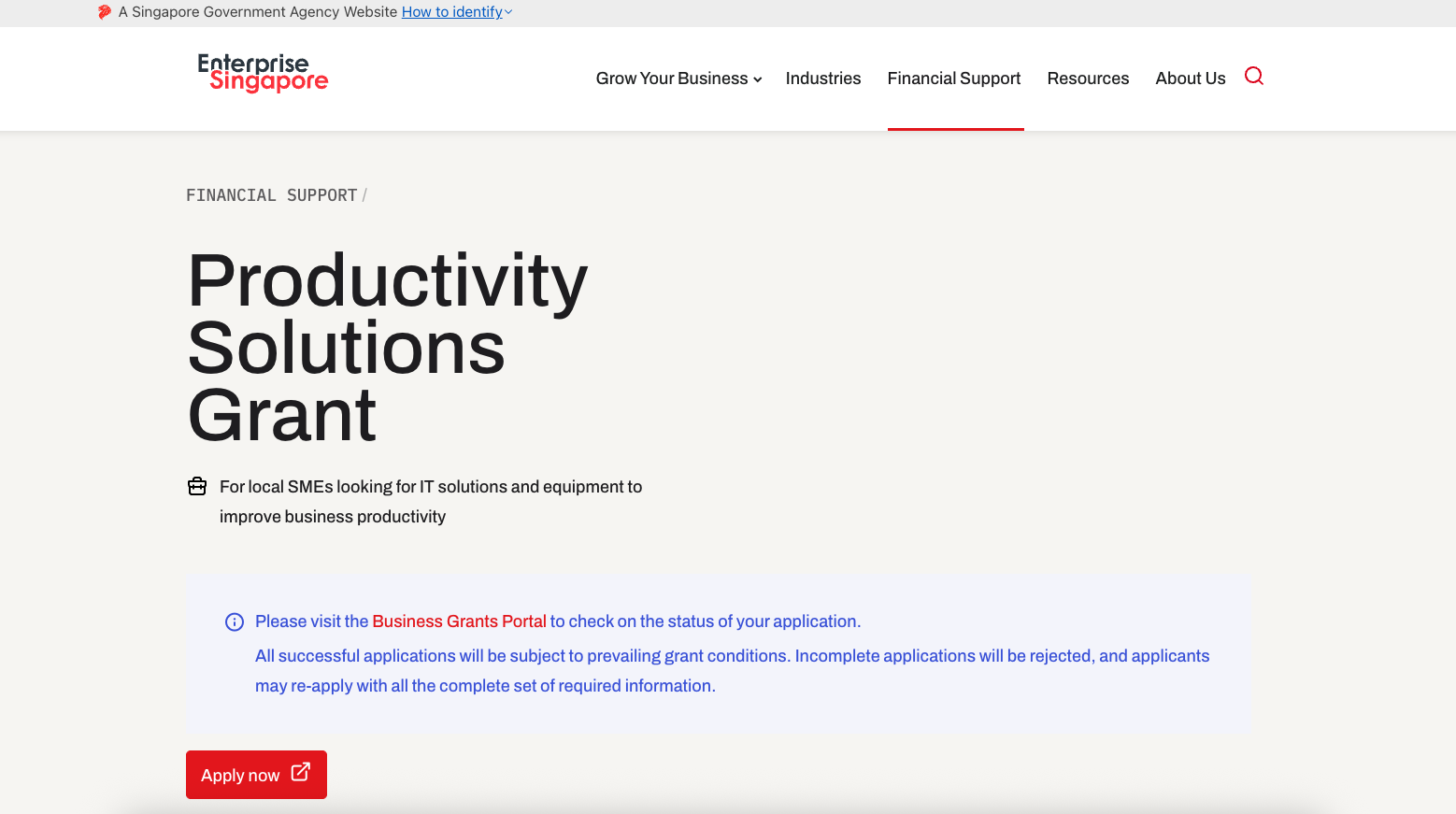 The Productivity Solutions Grant (PSG) helps Singapore companies improve productivity by subsidizing the adoption of pre-approved IT solutions and equipment under the IMDA "SMEs Go Digital" program. It's designed to make digital transformation more accessible by offering straightforward support for standard solutions.
Funding & Eligibility
PSG covers up to 50% of eligible costs for pre-approved solutions, typically capped at S$30,000 per company. To qualify, your business must meet these criteria:
Registered and operating in Singapore
Minimum 30% local shareholding
Group annual sales below S$100 million OR fewer than 200 employees
One crucial rule: your project must not have commenced before application approval. This means no payments or deposits should be made to vendors before you receive the green light.
PSG for Digital Marketing
Under PSG, you can access pre-approved digital marketing packages from vetted vendors. These typically include:
E-commerce website setup
Basic SEO optimization packages
Short-term digital advertising campaigns
Social media marketing services
The focus is on adopting tools or software that enhance efficiency, such as marketing automation platforms, analytics tools, or e-commerce enablement solutions.
The Limitations of PSG
While PSG is accessible and straightforward, it comes with significant constraints:
Limited to pre-scoped packages: You're restricted to choosing from a fixed menu of solutions that have been pre-approved by Enterprise Singapore.
Short-term engagements: Most PSG-approved marketing packages cover only basic implementations or short-term campaigns (typically a few months), not long-term strategic partnerships.
Standardized deliverables: Since vendors must offer standardized packages to qualify for PSG, the solutions may not be tailored to your specific business needs or goals.
Results can be basic: Many PSG vendors focus on volume and standardization, potentially delivering outcomes that tick the boxes but don't drive transformative growth.
When to Use PSG
PSG is ideal when you have specific, immediate needs where a standard, pre-approved solution exists. For example:
Building a simple e-commerce website
Implementing a basic SEO package to improve your Google rankings
Setting up a customer relationship management (CRM) system
Getting started with digital advertising
The application process is simpler than other grants, making it good for quick, small-scale projects. It's perfect for dipping your toes into digital marketing without a major financial commitment.
Enterprise Development Grant (EDG): Funding Your Strategic Leap Forward
If PSG is your first step, EDG is your strategic leap forward. This grant supports transformative projects that can fundamentally change how your business operates and competes.
What is EDG?
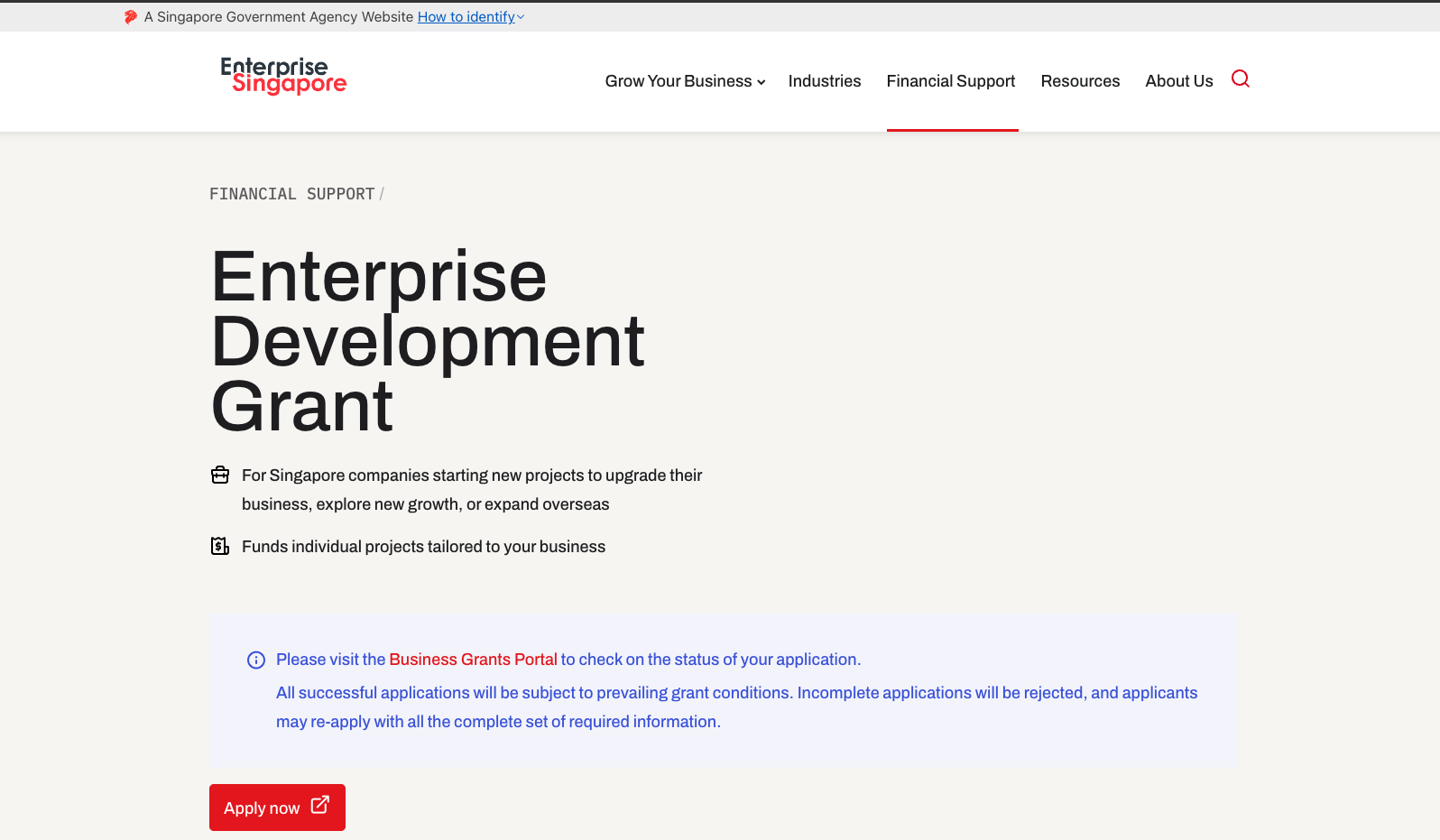 The Enterprise Development Grant (EDG) is Enterprise Singapore's flagship program designed to help businesses upgrade, innovate, and grow. Unlike PSG's focus on pre-approved solutions, EDG supports custom projects tailored to your company's specific needs and long-term transformation goals.
EDG can fund various project costs, including:
Third-party consultancy fees
Software and equipment purchases
Internal manpower costs related to the project
Funding & Eligibility
For SMEs (similar criteria to PSG), EDG will cover up to 50% of qualifying project costs. There's no fixed dollar cap per project, which means larger, more ambitious initiatives can receive substantial support.
To qualify, your business must be:
Registered in Singapore
Have at least 30% local ownership
Be financially viable to undertake and complete the project
EDG requires a detailed project proposal outlining scope, objectives, deliverables, and expected outcomes. Enterprise Singapore assesses each application on its merits, looking for projects that demonstrate significant potential for business transformation.
EDG's Three Pillars of Growth
EDG supports projects under three main categories:
Core Capabilities: Strengthening business foundations, including strategic brand and marketing development
Innovation & Productivity: Exploring new ways to improve efficiency or create innovative offerings
Market Access: Helping businesses venture into overseas markets
For digital marketing initiatives, the most relevant categories are typically Core Capabilities and Innovation & Productivity.
Using EDG for Marketing Strategy & Innovation
Core Capabilities (Strategic Brand and Marketing Development)
Under this pillar, EDG supports developing differentiated brand and marketing strategies to capture target audiences. Eligible activities include:
Brand audits and strategic assessments
Market research and competitor analysis
Development of comprehensive marketing strategies
Creating implementation roadmaps for brand positioning and marketing
The goal is to help you build a strong, data-driven marketing foundation that can drive long-term growth.
CRITICAL DISTINCTION: What EDG Does NOT Fund
This is crucial to understand: EDG will not fund the execution of routine marketing activities.
Specifically excluded are costs related to:
"Implementation of marketing campaigns"
"Advertising and media buys"
"Social media influencers"
"Management of websites/social media"
"SEO, SEM"
In simple terms, EDG will fund the strategy but not the execution. For example, EDG could support a consultant creating a comprehensive digital marketing playbook for your business, but it won't pay for the Google Ads or content creation needed to implement that playbook.
Innovation & Productivity
This EDG pillar can support projects involving innovative marketing technology that goes beyond off-the-shelf solutions.
Examples include:
Building out programmatic SEO capabilities inhouse
Building a custom AI-driven content generation system
Developing a proprietary marketing analytics dashboard
Creating specialized CRM automation for your unique business processes
These projects must involve genuine innovation or significant process improvements, not simply purchasing standard software (which would fall under PSG instead).
Flexibility and Vendor Choice
A significant advantage of EDG is that it has no pre-approved vendor list, allowing you to work with specialists of your choice who best meet your specific needs.
For example, a B2B technology company looking to scale its programmatic SEO efforts might partner with Synscribe in a consulting capacity. The project could involve designing a scalable SEO framework and building a custom tool to automate content deployment. This would qualify for EDG support as it builds the client's long-term capability in digital marketing innovation rather than simply providing routine SEO services.
When to Use EDG
EDG is best suited for large-scale, strategic initiatives where:
No off-the-shelf solution exists
Expert consultancy is needed to chart a new direction
The project will fundamentally transform an aspect of your business
Long-term capability building is the goal rather than a quick fix
The application process is more involved than PSG, but the potential impact and level of funding are significantly greater.
Market Readiness Assistance (MRA) Grant: Your Partner for Overseas Expansion
While PSG helps with domestic digitalization and EDG supports capability building, the Market Readiness Assistance (MRA) grant specifically addresses the challenges of international expansion.
What is MRA?
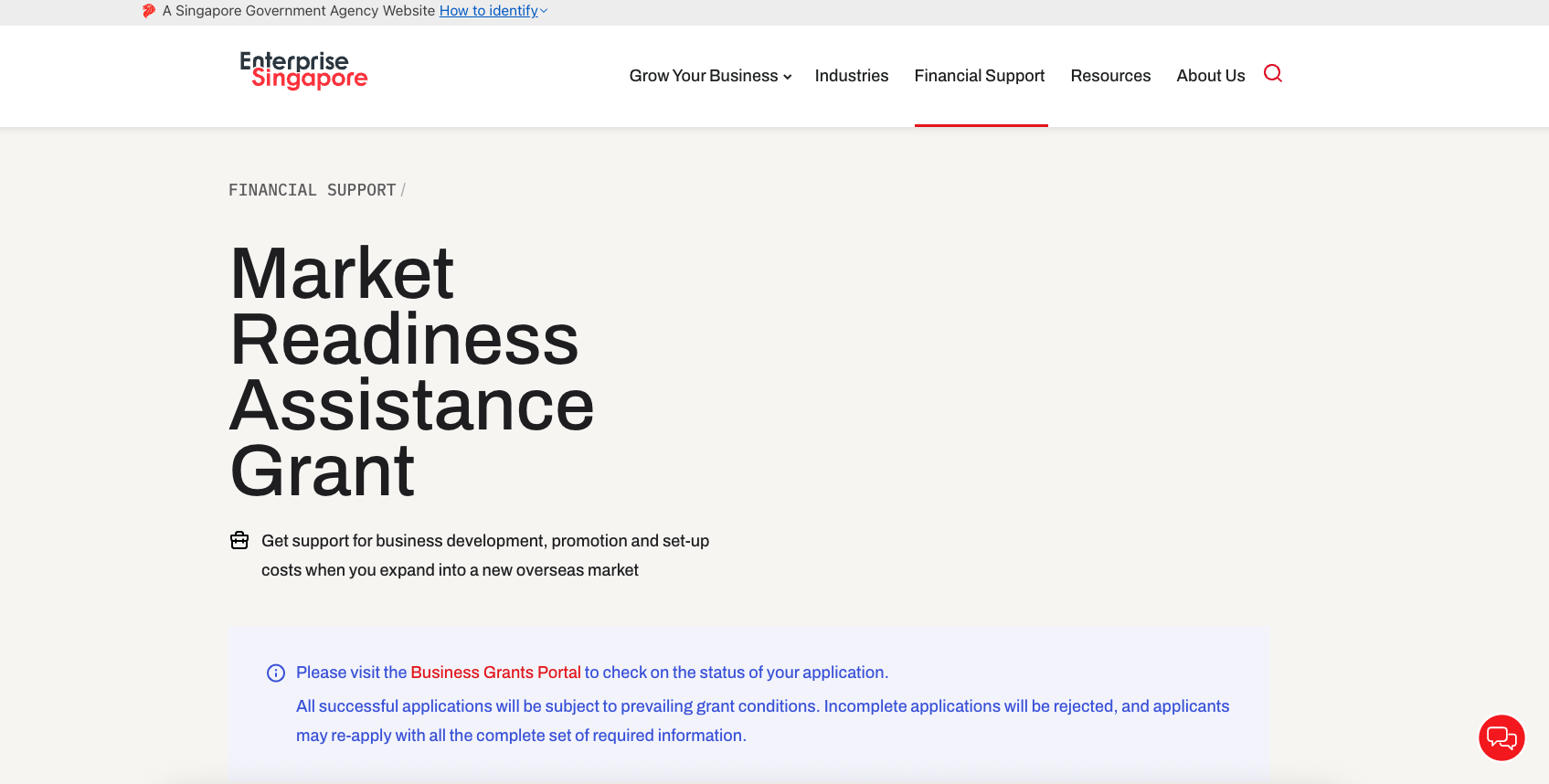 The MRA grant helps Singapore companies expand into new overseas markets by defraying the initial costs of international business development. It's structured around three key pillars:
Overseas Market Promotion
Overseas Business Development
Overseas Market Setup
This makes MRA particularly valuable for businesses looking to use digital marketing as a tool for international growth.
Funding & Caps
MRA provides 50% support for eligible expenses, capped at S$100,000 per company per new market. This overall cap is divided across the three pillars:
Up to S$20,000 for Market Promotion
Up to S$50,000 for Business Development
Up to S$30,000 for Market Setup
A "new market" is defined as a country where your company has not exceeded S$100,000 in annual sales in the last three years. This means you can potentially access MRA support for multiple countries as you expand globally.
Each MRA application can cover only one activity in one overseas market, so you may need multiple applications for a comprehensive international strategy.
How MRA Funds Digital Marketing Execution
This is where MRA truly shines for marketers. Unlike EDG, MRA directly funds the execution of marketing campaigns, provided they target a new overseas market.
Overseas Market Promotion (Cap S$20k)
Under this pillar, MRA supports a wide range of digital marketing activities focused on building your brand presence in a target country:
Localized SEO campaigns targeting overseas search engines (e.g., optimizing for Baidu in China or Google.fr in France)
Social media marketing campaigns tailored to local audiences
Online advertising targeting the overseas market
Local influencer engagements
Creation of market-specific content and landing pages
The key requirement is that these activities must be distinctly targeted to the overseas market and show evidence of local adaptation – such as translated content or culturally relevant messaging. Generic global campaigns or marketing efforts actually targeting Singaporean audiences are not supported.
Overseas Business Development (Cap S$50k)
This pillar focuses on building business relationships in the target market:
Identifying potential overseas partners or distributors
Engaging in in-market business development activities
Participating in overseas trade fairs (physical or virtual)
One valuable option is the Overseas Marketing Presence component, which allows you to send an employee to be based in the target country for business development. MRA can co-fund that employee's salary and certain travel costs for up to a year.
Overseas Market Set-up (Cap S$30k)
This pillar covers administrative costs associated with establishing a presence in the new market:
Legal fees for incorporating an overseas entity
Registering trademarks or intellectual property in the target country
Obtaining regulatory approvals or certifications
While not directly marketing-related, these activities are often essential prerequisites to a successful market entry.
Practical Application Example
Let's illustrate how MRA works with a practical scenario:
A Singapore tech firm wants to enter the UAE market. They need to build brand awareness in Dubai and Abu Dhabi, optimize their website for Middle Eastern audiences, and generate leads locally. They partner with Synscribe to execute an overseas digital marketing campaign that includes:
Arabic and English keyword research
Creating localized content to rank on UAE search engines
Setting up a Middle East-focused section of their website
Running Google/Facebook ads targeting UAE businesses
Organizing a PR launch event in Dubai
Under MRA, the company can claim 50% of Synscribe's fees for this project, as well as related marketing expenses, up to S$20,000 (under the Market Promotion category). If they also decide to send a sales manager to Dubai for 6 months to follow up on leads, that cost could be covered up to S$50,000 under Business Development. And if they register a local entity, those fees fall under Market Set-up (capped at S$30,000).
For the claims process, the company pays Synscribe in full, then submits proof of deliverables and payments for reimbursement after a third-party audit.
Examples of Digital Marketing Activities Funded by MRA
MRA supports various digital marketing strategies for international expansion:
Search Engine Optimization (SEO) for foreign markets: Optimizing your website to rank on overseas search engines like Baidu in China or Google in Europe. MRA will support costs of hiring SEO experts to create localized content, build backlinks in the local market, and improve your organic visibility abroad.
Social Media Marketing targeted to the new market: Creating and running social media campaigns on platforms like Facebook, Instagram, LinkedIn or TikTok with content tailored to the target country's audience and culture. This helps humanize your brand for a foreign audience.
Overseas Advertising and PR: Placing ads in overseas media or engaging a PR firm to get coverage in the target country's press. These activities qualify as "overseas advertising and promotional campaigns".
E-commerce market entry: Setting up on e-commerce platforms specific to your target market (like Amazon US, Alibaba, or Shopee Indonesia). MRA could co-fund hiring a consultant to set up your store and run promotions on those platforms for the launch.
Content Marketing and Localization: Creating market-specific content (blog articles, videos, case studies) that addresses the needs of your target audience in that country. MRA expects fresh content adapted to the local market's context, not just translations of existing material.
When to Use MRA
MRA is the go-to grant when:
You're ready to execute a marketing and sales plan in a specific new international market
You need to fund the actual implementation of overseas marketing campaigns
You're looking to establish partnerships or distribution channels in a new country
You want to set up a legal entity or protect your IP in an overseas market
It's particularly valuable because it funds execution activities that EDG typically won't cover.
Double Tax Deduction for Internationalisation (DTDi): Maximizing Your Overseas Investment
While the previous grants provide direct funding, DTDi offers a different but equally valuable form of support through tax benefits.
What is DTDi?
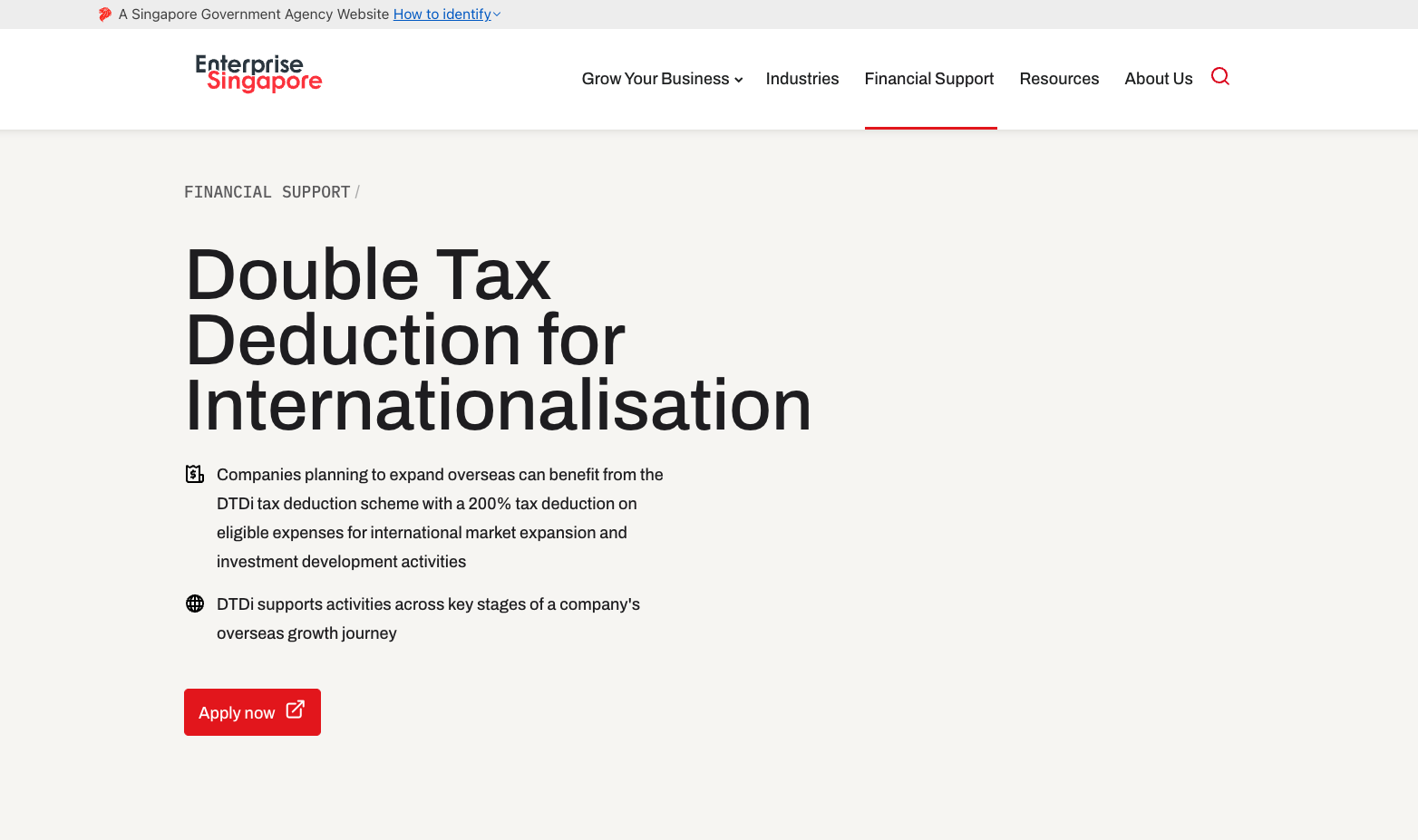 The Double Tax Deduction for Internationalisation (DTDi) is a tax incentive that allows a 200% tax deduction on eligible expenses related to overseas expansion activities.
In simple terms, for every S$1 spent on qualifying activities, S$2 can be deducted from your taxable income. At Singapore's current corporate tax rate of approximately 17%, this effectively saves you 34 cents in tax for every dollar spent on international expansion.
Qualifying Activities and Caps
DTDi automatically applies to nine categories of activities, with several directly relevant to marketing:
Overseas business development trips/missions
Overseas investment study trips/missions
Overseas trade fairs (physical and virtual)
Overseas advertising and promotional campaigns
Design of packaging for overseas markets
Advertising in approved local trade publications with international reach
For these activities, you can claim double tax deduction on up to S$150,000 of qualifying expenses per Year of Assessment without prior approval. This means a potential S$300,000 deduction on your tax return (since it's a 200% deduction).
A recent enhancement: the scheme has been extended to December 31, 2030, and now includes "e-commerce campaigns," covering costs like listing on international e-marketplaces.
DTDi as a Complement to Grants
DTDi is particularly valuable as a complement to other grants because it can cover expenses that grants might not, such as:
Airfare and accommodation for business trips to target markets
Trade fair participation costs that exceed MRA caps
Marketing expenses for markets where you've already used up your MRA allocation
It's important to note the "no double-dipping" rule: If an expense is already subsidized by a grant (like MRA or EDG), you should only deduct the portion you actually paid out-of-pocket. For example, if your overseas marketing campaign cost S$40,000 and MRA reimbursed S$20,000, the remaining S$20,000 could potentially be eligible for the double tax deduction.
When to Use DTDi
DTDi should be utilized by any profitable company incurring overseas expansion expenses. Unlike grants, there's no application process for the automatic categories—you simply claim the deduction when filing your corporate taxes.
This tax incentive is less immediately useful for non-profitable startups (since they don't have taxable income to offset), but it can still accumulate benefits for when they do become profitable.
DTDi is a continuous benefit that runs in parallel with your grant applications, making it an essential part of your internationalization toolkit.
Comparison: Choosing the Right Grant for Your Business Needs
With multiple support schemes available, how do you decide which one best fits your specific situation? Here's a comparative breakdown:
PSG vs. EDG
Ready-made vs. Custom: PSG is for standardized, pre-approved solutions, while EDG supports customized projects tailored to your business.
Scale: PSG typically involves smaller initiatives (capped at S$30,000), whereas EDG can fund larger transformative projects.
Focus: PSG emphasizes quick productivity gains, while EDG aims for long-term capability building and strategic transformation.
Application: PSG has a simpler application process but less flexibility; EDG requires more detailed proposals but offers greater scope.
PSG vs. MRA
Domestic vs. International: PSG supports solutions used within Singapore, while MRA specifically funds expansion into overseas markets.
Use case: Use PSG for improving your local digital capabilities, then MRA when you're ready to take those capabilities into new countries.
EDG vs. MRA
Strategy vs. Execution: EDG funds the development of strategies and capabilities but not their execution; MRA directly funds execution in new markets.
Process: EDG might fund a consultant to develop an internationalization strategy, while MRA would fund the actual marketing campaign to implement that strategy.
Sequence: Many companies use EDG first to build capabilities, then MRA to deploy those capabilities in specific markets.
MRA vs. DTDi
Direct vs. Indirect benefit: MRA provides cash reimbursement, while DTDi offers tax savings.
Coverage: MRA has specific caps per market and activity type; DTDi has a broader annual cap across all qualifying activities.
Complementary use: Use MRA for major market entry expenses, and DTDi to cover additional costs or expenses in markets where you've used up your MRA allocation.
Summary Table
Grant | Purpose | Support Level | Key Use Case for Marketing | Key Limitation |
|---|---|---|---|---|
PSG | Adopt pre-approved digital solutions | 50% (up to S$30k cap) | Basic SEO/SEM package, simple e-commerce setup | Limited to pre-scoped, standard solutions. |
EDG | Custom projects for transformation & growth | 50% for SMEs (no fixed cap) | Developing a comprehensive marketing strategy or custom tech | Does not fund campaign execution (ads, SEO retainers). |
MRA | Enter a new overseas market | 50% (up to S$100k/market) | Running a localized digital marketing campaign in a new country | Only for new markets; has specific activity caps. |
DTDi | Tax savings on internationalisation expenses | 200% tax deduction | Overseas advertising, travel for business, trade fairs | Tax benefit, not a cash grant. Only useful for profitable firms. |
Bonus Tip: The SkillsFuture Enterprise Credit (SFEC)
For eligible employers, the SkillsFuture Enterprise Credit (SFEC) provides a S$10,000 credit that can be used to cover up to 90% of the out-of-pocket expenses for qualifying schemes, including EDG and MRA.
This means if you qualify for SFEC, your net cost after applying grants could be reduced even further—potentially making your digital marketing initiatives almost cost-neutral.
Crafting Your Growth Strategy with Government Support
Singapore's robust grant ecosystem provides multiple avenues to fund your digital marketing and international expansion efforts. Here's how to strategically apply each grant for maximum impact:
Sequential Grant Strategy
The most effective approach is often to use these grants sequentially as your business evolves:
Start with PSG to adopt basic digital marketing tools and build your online presence locally. This provides a foundation of digital capabilities with minimal financial risk.
Progress to EDG when you're ready for transformation. Use it to develop comprehensive strategies, build custom marketing technologies, or prepare for international expansion. EDG helps you create the playbook for your next phase of growth.
Deploy MRA to execute your entry into specific overseas markets. Once your strategy is solid and you know which countries to target, MRA can fund the actual marketing campaigns and business development activities in those markets.
Apply DTDi consistently throughout your internationalization journey to maximize tax benefits on all eligible expenses, particularly those not covered by other grants.

Stacking for Maximum Benefit
These support schemes can also be "stacked" strategically:
EDG + MRA: Use EDG to create a global expansion strategy, then MRA to fund execution in your first target market.
MRA + DTDi: Apply for MRA to cover 50% of your market entry costs, then use DTDi to reduce the tax impact of your remaining expenses.
PSG + EDG: Use PSG for immediate tool adoption, while simultaneously working on an EDG project for longer-term transformation.
For example, a Singapore software company might use EDG to develop an AI-powered content recommendation engine (innovation), then use MRA to fund marketing campaigns introducing this technology to the Australian market, while claiming DTDi for business trips to meet potential Australian partners.
Working with Agencies Like Synscribe
When partnering with digital marketing agencies, understanding these grants can help you maximize value:
For strategic consulting projects (market research, developing marketing frameworks, creating expansion strategies), EDG is typically the appropriate grant.
For executing international digital marketing campaigns (SEO for overseas markets, localized content creation, foreign market PPC), MRA is usually the best fit.
For standard marketing services with pre-defined deliverables, check if your chosen agency is a PSG pre-approved vendor.
Specialized agencies like Synscribe can be particularly valuable partners for grant-supported projects because their data-driven, results-focused approach aligns well with the transformation goals of grants like EDG and MRA. While Synscribe's core expertise lies in ensuring B2B SaaS companies are found across search engines through optimized content and strategic placements, their proprietary AI tools and full-stack engineering capabilities make them suitable partners for the kind of innovative projects EDG supports, as well as the overseas marketing campaigns covered by MRA.
Final Advice: Strategy First, Grants Second
While these grants offer substantial financial support, remember that successful digital marketing and international expansion start with sound business strategy. Let your business goals drive your grant applications, not the other way around.
The most successful businesses use grants to accelerate well-defined plans, not to determine what those plans should be. Ask yourself:
What are your core business objectives for the next 1-3 years?
What digital marketing capabilities or international markets are most critical to achieving those objectives?
Which grant best supports building those specific capabilities or entering those specific markets?
By aligning grant applications with clear business goals, you'll not only increase your chances of approval but also ensure the funded activities deliver meaningful business impact.
Conclusion
Singapore's government grant ecosystem offers unparalleled support for businesses looking to enhance their digital marketing capabilities and expand globally. By understanding the unique purpose of each grant—PSG for basic digitalization, EDG for transformation, MRA for international execution, and DTDi for tax optimization—you can significantly reduce the cost of working with marketing agencies and accelerate your growth journey.
The key is matching the right grant to your specific stage of development and business needs. Whether you're taking your first steps into digital marketing or preparing to conquer global markets, there's likely a grant that can help shoulder the financial burden and mitigate the risks.
For the latest guidelines and application details, always check the official Enterprise Singapore website. Consider also reaching out to experienced agencies like Synscribe that have worked on grant-supported projects, as they can provide practical insights beyond what's available in official documentation.
With strategic use of these grants, Singapore businesses of all sizes can transform from local players into global contenders, leveraging world-class digital marketing capabilities without bearing the full cost burden. The government is essentially offering to be your co-investor in growth—it's an opportunity too valuable to ignore.
Frequently Asked Questions (FAQ)
What is the main difference between EDG and MRA for digital marketing?
The primary difference is that EDG funds the strategy and development of marketing capabilities, while MRA funds the execution of marketing campaigns in new overseas markets. Think of it this way: EDG helps you build the marketing playbook (e.g., market research, brand strategy), but it will not pay for running the ads or day-to-day SEO. MRA is designed specifically to pay for those execution activities—like running Google Ads or localized SEO campaigns—but only when they are targeted at a new international market.
Which grant should I use for SEO and digital advertising?
For SEO and digital advertising in a new overseas market, use the Market Readiness Assistance (MRA) grant. For basic, pre-approved packages targeting the Singapore market, you can use the Productivity Solutions Grant (PSG). The Enterprise Development Grant (EDG) explicitly does not fund the implementation of routine marketing like SEO retainers or media buys, making MRA the best choice for funding the execution of these campaigns abroad.
Can I hire any marketing agency for a grant-supported project?
It depends on the grant. For PSG, you must choose from a list of pre-approved vendors with pre-scoped packages. For EDG and MRA, you have the flexibility to choose any agency or consultant that has the right expertise for your project. This allows you to work with specialized agencies that can tailor solutions to your specific business needs, rather than being limited to standardized offerings.
Can I apply for multiple grants for the same project?
No, you cannot use two grants to fund the exact same expense, a practice often called "double-dipping." However, you can strategically "stack" grants to cover different parts of a larger initiative. For example, you could use EDG to fund the development of an international marketing strategy, and then use MRA to fund the execution of that strategy in a specific country.
What is the most critical rule to remember before starting a grant project?
The most critical rule is that you must not commence the project before receiving official grant approval. This includes signing any contracts, making deposits, or starting any work with your chosen vendor. Starting the project prematurely will render your application ineligible for support, so always wait for the official letter of offer before kicking off your project.
How do I know if my company is eligible for these grants?
Generally, your business is eligible if it is registered and operating in Singapore with at least 30% local shareholding and is financially viable. For SMEs, additional criteria often include having a group annual sales turnover of less than S$100 million or fewer than 200 employees. As these are the core requirements for PSG, EDG, and MRA, it's always best to check the latest specific eligibility criteria on the official Enterprise Singapore website before applying.
Sources:
Dominate ChatGPT and Google Search
Synscribe helps B2B companies with SEO & GEO using programmatic SEO approach. Book a call to find out how we help you win.