I Taught ChatGPT to Write 10/10 SEO Optimized Landing Pages - Here’s the Framework
 Raymond, Founder of Synscribe AKA my boss on a Monday, morning sync: "Just onboarded a new client and they need 70 SEO-optimized landing pages by the end of the week"
I was instantly stunned. Not because 70 pages is impossible, but because I had no clue about:
What actually makes a landing page convert (beyond the usual "clear headline" BS)
What "SEO-optimized" means beyond stuffing keywords
How to tell if a page will actually rank before we publish it
How to go from 1 decent page to 70 without losing our minds
We had 5 days. And I had a $400 course to soak up as much information as i could. (shoutout to Edward Sturm's Compact Keywords)
My naive plan was beautiful in its simplicity:
Feed our target keywords into an LLM
Get 70 perfect pages back
Client happiness → profit
What actually happened was... well, let me show you. (Note: Blurred out company name for privacy so fill it in with any imaginary name you like!!)
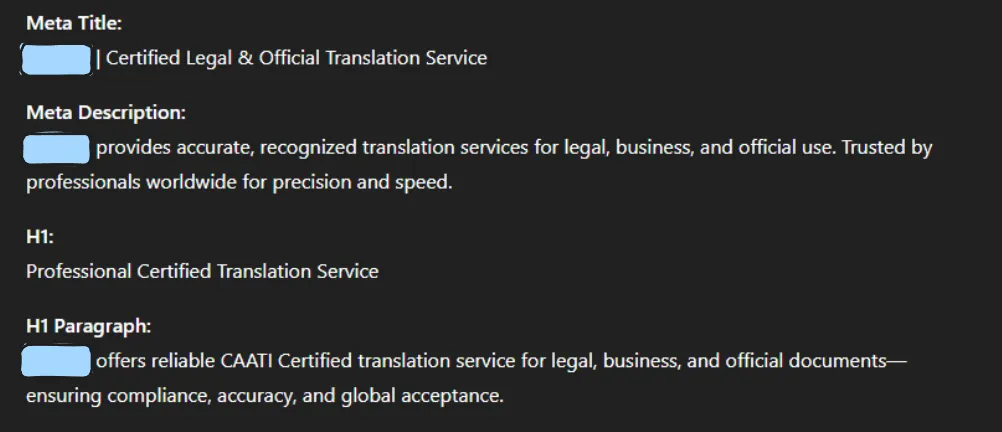 This was our first attempt. If you heard of CAATI before, you know its the Chinese accreditation that legal assistants and firms recognize. Yet, nothing about meeting the strict Chinese statutory requirements was mentioned! Picture this: A Chinese legal assistant, stressed about getting documents certified for a court filing, lands on this page and sees... nothing that speaks to their world. No mention of Chinese legal standards, no understanding of the urgency, no real value.
The brutal truth hit me: We were about to pump out the exact same generic garbage that every other agency was flooding the internet with. Same structure, same bland promises, same complete lack of relevance to real human problems.
We were about to become part of the content pollution problem.
The Breakdown (How We Stopped Trusting AI and Started Training It)
So I Started learning what actually makes landing pages work. Not just "write a clear headline" basics, but the real mechanics:
Learn what makes killer landing pages (from that $400 course)
Choosing the right keyword from a list of keywords from our client’s data (over 40,000+ keywords long)
How search intent maps to page structure
Create a system that builds GREAT pages like we would if we had infinite time
All in the span of the next 5 days….
So we decided to break it down into parts and train AI to do just one thing, but do it like how we want it: best-in-class.
If you're dealing with the same problem, here's exactly how we built our system...
The Prompting Rabbit Hole (Spoiler: It Wasn't Enough)
We started of our journey by seeing how far prompts alone could take us. Feed in a keyword, add client context (company overview and Ideal Customer Profile (ICP)) and ask for a landing page.
For Context: Synscribe has a PSEO Report generator that is able to do a deep dive into a client’s company overview, keywords and competitors. Think of it as a Automated Researcher. If you would like to try it out, head to https://www.synscribe.com/jump-start
Prompt:
You are a **strategic SEO and copywriter**.

Write SEO-optimized landing page content (**Meta Title, Meta Description, H1, H1 Paragraph**) for **Company A** targeting the keyword **“CAATI Certified translation service”**.

### Company Overview

Company A is an AI-powered document translation platform built for professionals in legal, financial, and corporate teams who need fast, accurate, and secure translations without losing formatting.
Unlike generic tools, Company A preserves complex structures such as legal numbering, clauses, tables, and scanned documents through advanced OCR - so teams can review, share, and file documents immediately.

### Ideal Customer Profile

Legal assistants, paralegals, and compliance professionals at law firms or corporate legal departments who require certified translation services for contracts, court documents, and cross-border filings.

### Output Requirements

1) Meta Title (50–60 chars):
   - Exact format: "{{targetKeyword}} | {{benefitOrGoal}} | {{brand}}"
   - Use Title Case where natural; no ALL CAPS; no emojis.
   - Make it clickworthy without clickbait.
   - Example: "Personal Injury Lawyer NYC | Free Consultation | ClaimRise Legal"

2) Meta Description (150–170 chars, 2 sentences):
   - Must START with the target keyword.
   - Summarize the page and include a concrete benefit or outcome.
   - Natural phrasing, not keyword-stuffed. No exaggerated claims.

3) H1 (20–70 chars):
   - Start with the target keyword or a close natural variant.
   - Speak to the search intent; human-first, not robotic.

4) H1 Paragraph (150 chars):
   - Exactly ONE paragraph, 150 characters maximum.
   - Directly satisfy the stated search intent.
   - Work the target keyword in naturally (no stuffing).
Result:
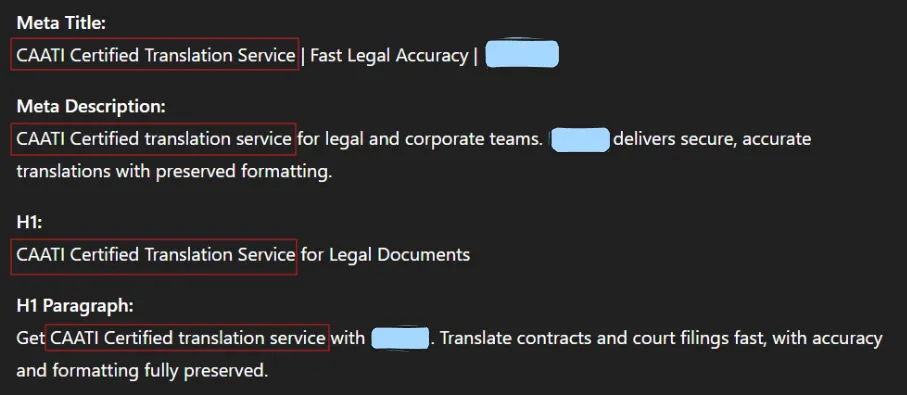 Evaluation: Clearly an improvement from earlier attempts because the targeted keyword appeared more prominently in the output. The LLM attempted to use the keyword repetitively, but without true understanding, it used the term without meaningful context or value.
Also, it was super inconsistent. But the deeper we pushed, two problems kept surfacing:
Problem #1: The AI was making stuff up. Without constraints, it would confidently invent features our client never offered. "Company A's 24/7 live chat support!" (They didn't have live chat….)
 Problem #2: Zero emotional intelligence. Even when the copy was technically correct, it missed the human urgency behind searches.
 A paralegal frantically trying to get documents certified by a court deadline doesn't want to read about "improved efficiency or automated translation" they want to know you understand their panic and can solve it fast.
The Scale Problem: When Good Pages Don't Scale
Even when we got individual pages right, we hit another wall: scale. Creating one perfect landing page is manageable. Creating 70 unique, high-quality pages without losing consistency or our sanity? That's where traditional copywriting breaks down.
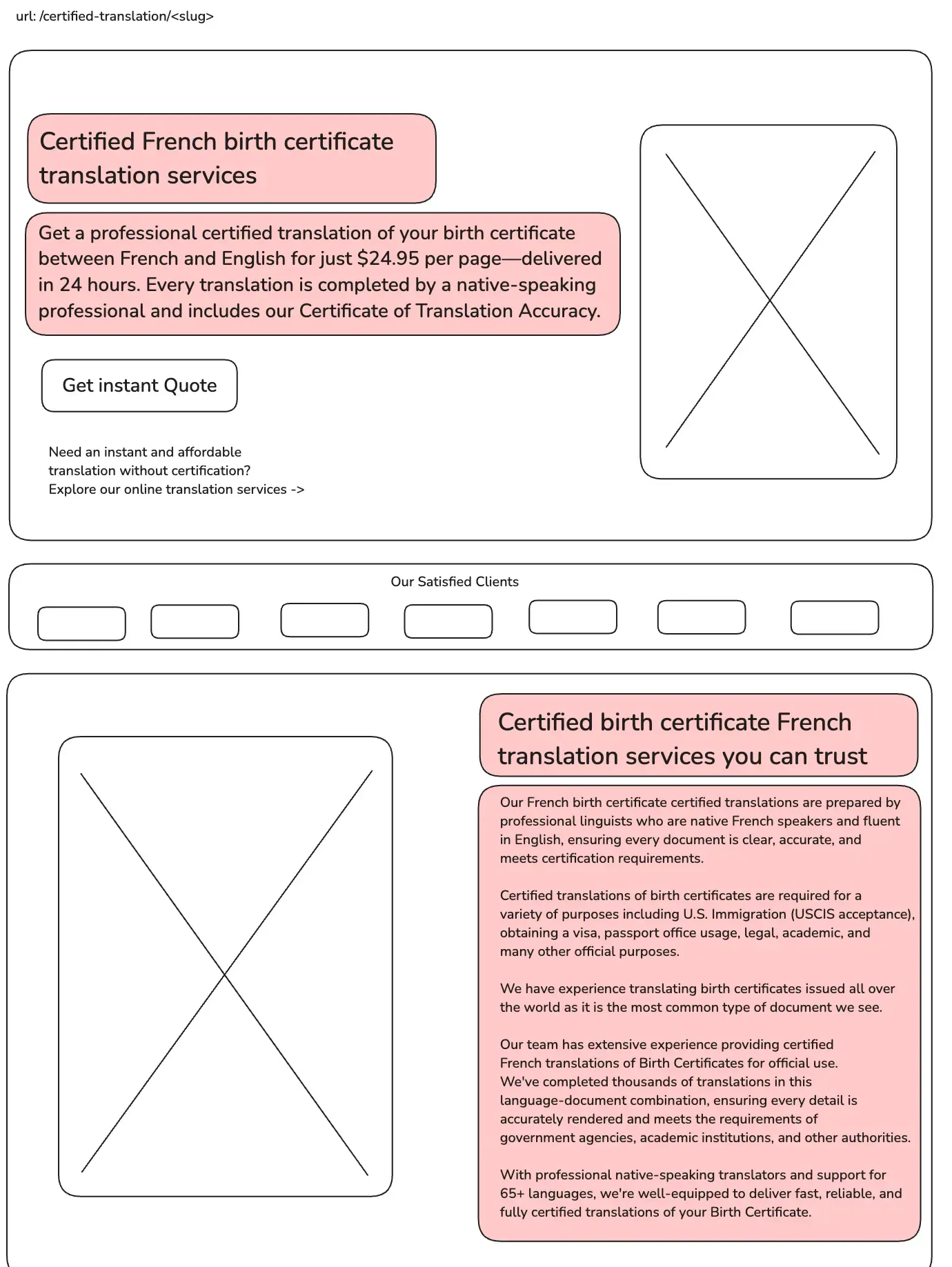
Instead of generating from scratch, PSEO uses templates with placeholders: metaTitle, metaDescription, heroTitle, faq, cta. Define the template once, fill placeholders systematically.
Data Generated:
{
"metaTitle": "CAATI Certified Translation | Court-Ready Documents | Company A",
"metaDescription": "CAATI certified translation for legal documents. Our accredited human translators....",
"heroTitle": "CAATI Certified Translation for Official Documents",
"faq": [...],
"cta": "Get CAATI Certified Translation Now"
}
Values in red are placeholders:
The Critical Thinking Framework (Teaching AI to Feel Human Urgency)
But even with PSEO templates, I still had the core problem: getting AI to understand human urgency instead of generating generic filler. We introduced a Critical Thinking Framework directly into the prompt. Before the model could draft any copy, it had to explicitly answer:
[CRITICAL THINKING FRAMEWORK]

Before writing, deeply consider:

1) **Product Functionality Focus**:
   - What SPECIFIC features and capabilities does this product actually have?
   - How does it solve the user's immediate problem?
   - What makes it different from alternatives?
   - Focus on CONCRETE functionality, not generic benefits.
   - **CRITICAL**: Only mention features that are explicitly described in the Company Information. Do NOT invent or assume any features.

2) **Higher-Level Goals**:
   - What is the user's ultimate business/personal objective?
   - What are they trying to achieve beyond just solving this immediate problem?
   - How does this solution fit into their broader workflow or life?
   - Think about their career advancement, business growth, or personal development goals.

3) **User Context & "Hair on Fire" Problem**:
   - What urgent, painful situation is the user in RIGHT NOW?
   - What would happen if they don't solve this problem immediately?
   - What are they thinking about when they wake up in the morning?
   - What tools are they currently using that aren't working?

4) **Buying Funnel Stage**:
   - Awareness: User is learning about the problem/solution
   - Interest: User is researching specific solutions
   - Consideration: User is comparing options
   - Decision: User is ready to choose
   - Tailor content to where they are in their journey.
This wasn't just busy work. By forcing the AI to articulate user roles, pain points, and stakes first, we shifted it from generic pattern-matching to context-specific reasoning.
Now, the LLM was able to surface real search intent - not just “someone looking for professional translation services,” but the actual human stakes behind the query. For example:
Generic Search Intent: “A legal professional needing a translation service provider that is recognized for CAATI-certified translations.”
Real search intent: “A paralegal in Shanghai racing to submit bilingual contracts by tomorrow, needing CAATI-certified translations to avoid delays in court.”
Insight: The framework worked because it imposed reasoning discipline, forcing the AI to act like a practitioner weighing facts, urgency, and context before generating text.
The Lightbulb Moment: Stop Teaching, Start Systemizing
Still, outputs were too fragile to use in production. Around this time, Raymond gave me a piece of advice:
“Become a master at SEO before trying to teach it to the LLM.”
It clicked. If I didn’t understand how to structure a page that ranks and converts, the AI had no chance of getting it right. So I stepped back, studied SEO fundamentals, and tried it manually. When I broke the work down myself, the pattern became obvious: every good landing page was written in the same process.
So instead of treating it like a prompting trick, I rebuilt the pipeline as a system design problem:
Draft structured content → Headlines, intros, proof points, features, CTAs
Capture search intent → Who is this person and why are they searching?
Lock in metadata → Title and description that align with keyword and urgency
By breaking it down this way, I wasn’t asking the model to juggle everything at once. Each stage was smaller, auditable, and easy to refine when something went wrong, the same way I handled it when I was doing it by hand.
Building the Production System
Breaking down the process made outputs more reliable, but I still needed the system to handle variation. Not every keyword is equally well-known to the AI, and not every client wants identical page layouts.
The first design choice was context injection. Instead of discarding obscure keywords, the system allows users to pass in optional background (e.g., CAATI = China’s national certification for translators, often required in legal cases). This gave the model just enough domain-specific grounding to stay on track and avoid drifting into generic copy unrelated to the keyword. That solved the knowledge gap.
Result:
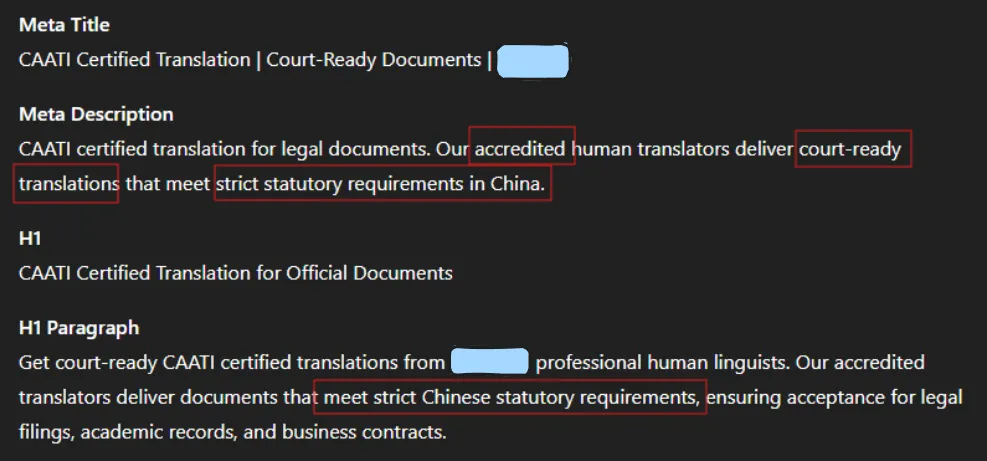 Evaluation: With the additional context, the LLM is able to generate copy that targets the certification, and clearly shows that translated documents conform to the Chinese court’s requirement. It speaks directly to the searcher’s urgency.
The second design choice was schema-driven flexibility. Landing pages don’t always follow the same structure. For example, a law firm might want a simple “legal disclaimer” section, while an online store might need a “featured products” section.
Rather than hard-coding formats, the pipeline accepted a JSON Schema that defined what fields to generate (metaTitle, metaDescription, faq, etc. - back to PSEO). Each schema was converted into a Zod schema for runtime validation, which meant:
Easy to adapt: Adding a new block just meant updating the schema, not rewriting prompts.
Predictable outputs: Validation caught format drift immediately.
Tailored results: Different clients could have different layouts without breaking the system.
So the system stayed flexible on two fronts:
Semantic flexibility: obscure keywords worked because we could inject context.
Structural flexibility: new page formats worked because the pipeline was schema-driven.
This combination turned a brittle “prompt + output” experiment into a resilient system that could evolve with both unfamiliar keywords and changing client needs.
Making the System Auditable
The system was getting better, but I still had a trust problem. AI-generated text can look perfect but fail silently in production - missing meta descriptions, broken formatting, or outputs that don't fit where they need to go.
To prevent this, every stage had to return structured data instead of free-form text.
Check this article out to discover how to use structured output with langchain: https://js.langchain.com/docs/how_to/structured_output/
All three mini-functions, intent generation, metadata creation, and content drafting, were chained inside a single main function, then exposed as a Trigger.dev task. That gave orchestration, retries, and background execution whenever a user needed a new page.
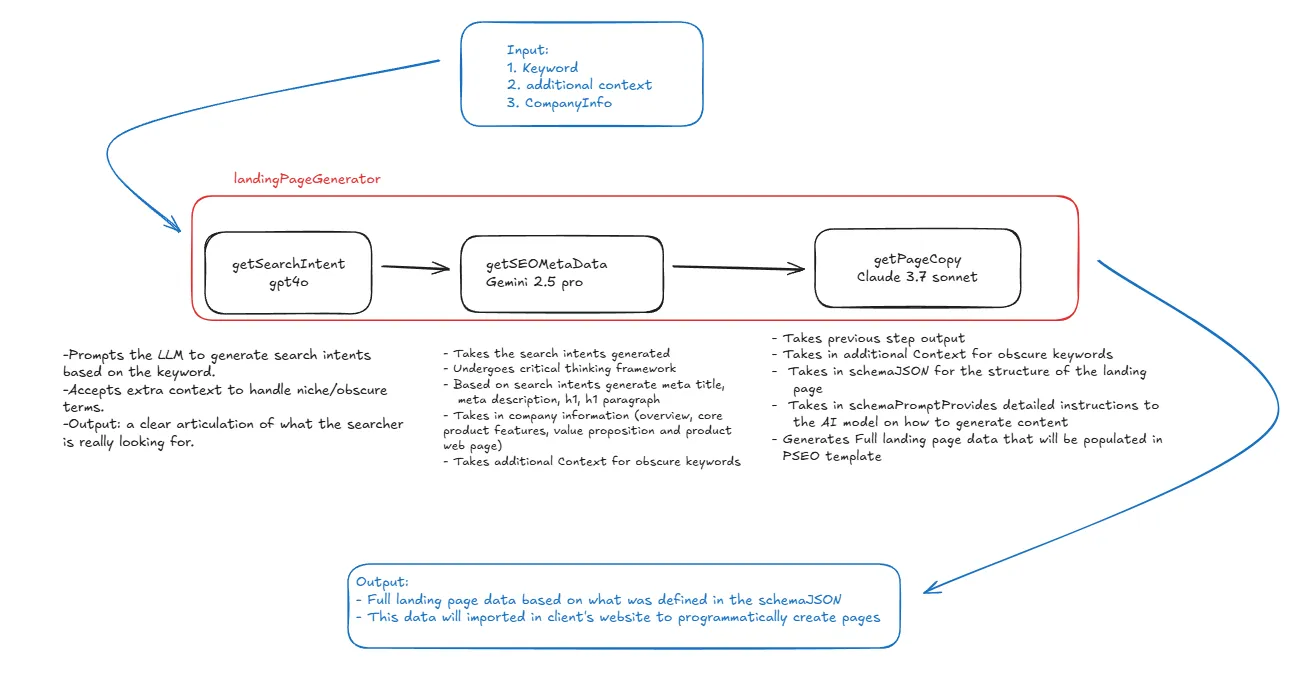 This design gave the pipeline three big advantages:
Reliability: Structured outputs meant fewer/no broken runs.
Traceability: Failures were isolated to one stage instead of cascading downstream, making debugging faster.
Scalability: Predictable outputs meant the pipeline could be reused across clients and keywords without rewriting.
In short, structured outputs plus orchestration turned AI’s unpredictability into something auditable, scalable, and production-ready.
Real-World Impact
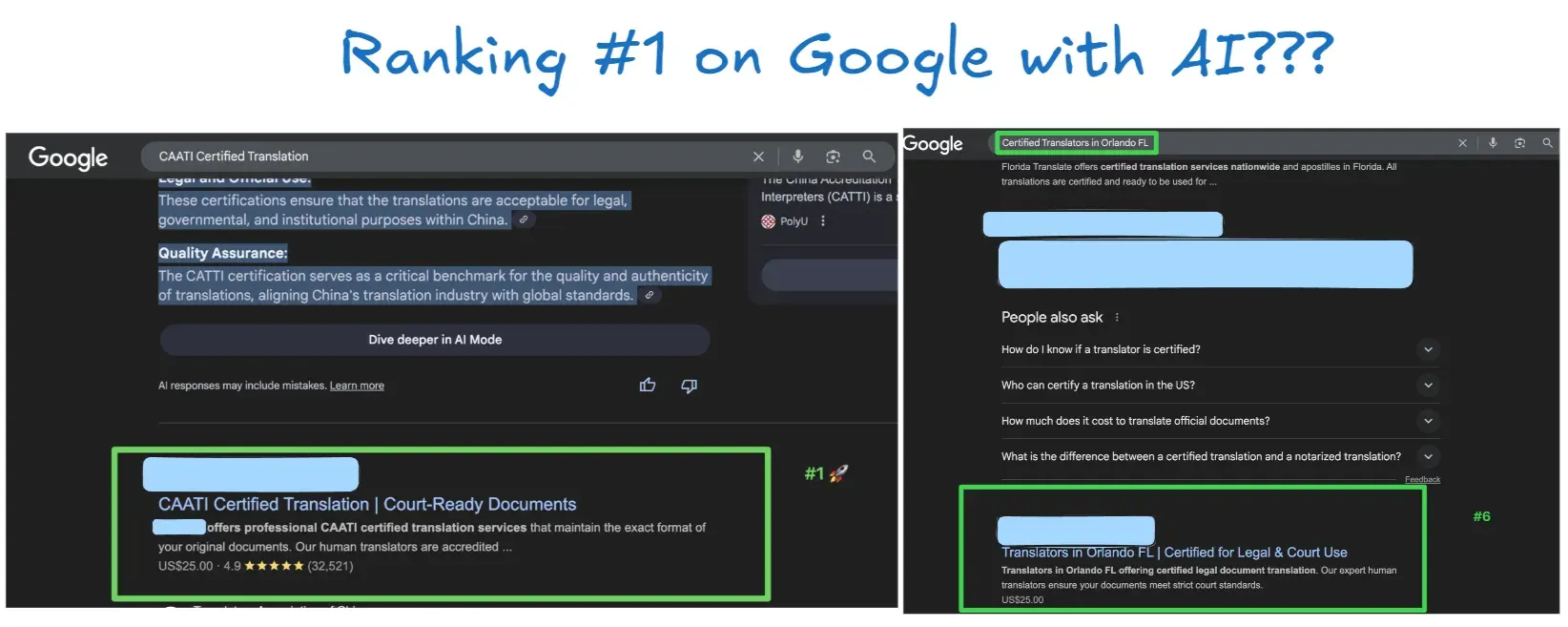
This wasn’t just theory. Some of the pages built with this system, or audited and rewritten using it, went live and ranked on Google’s first page overnight after indexing.
That proved the combination of structured design, SEO fundamentals, and user empathy wasn’t just technically sound, but commercially effective.
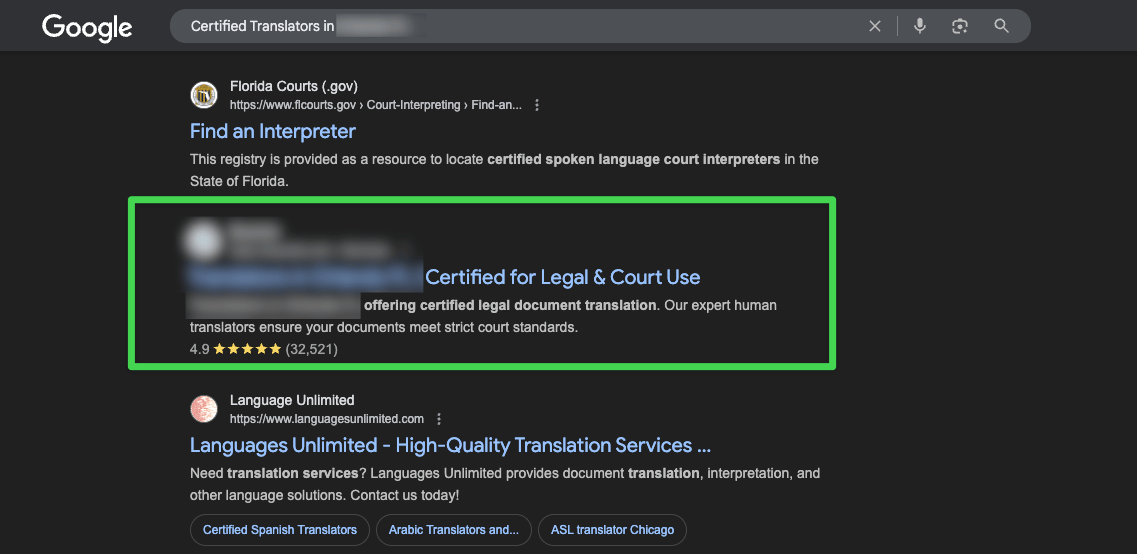
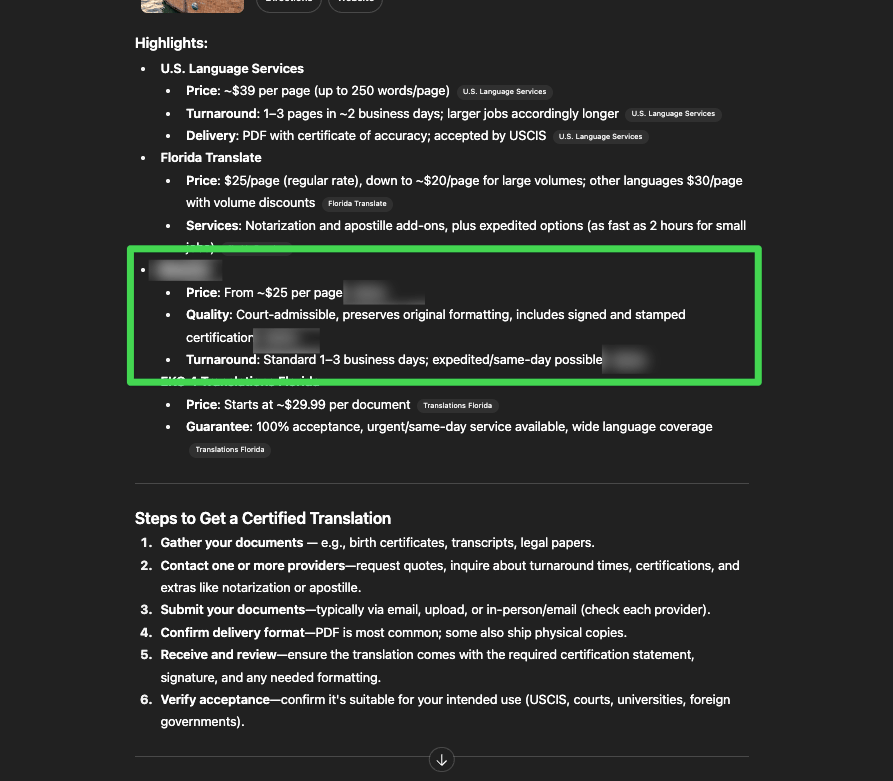
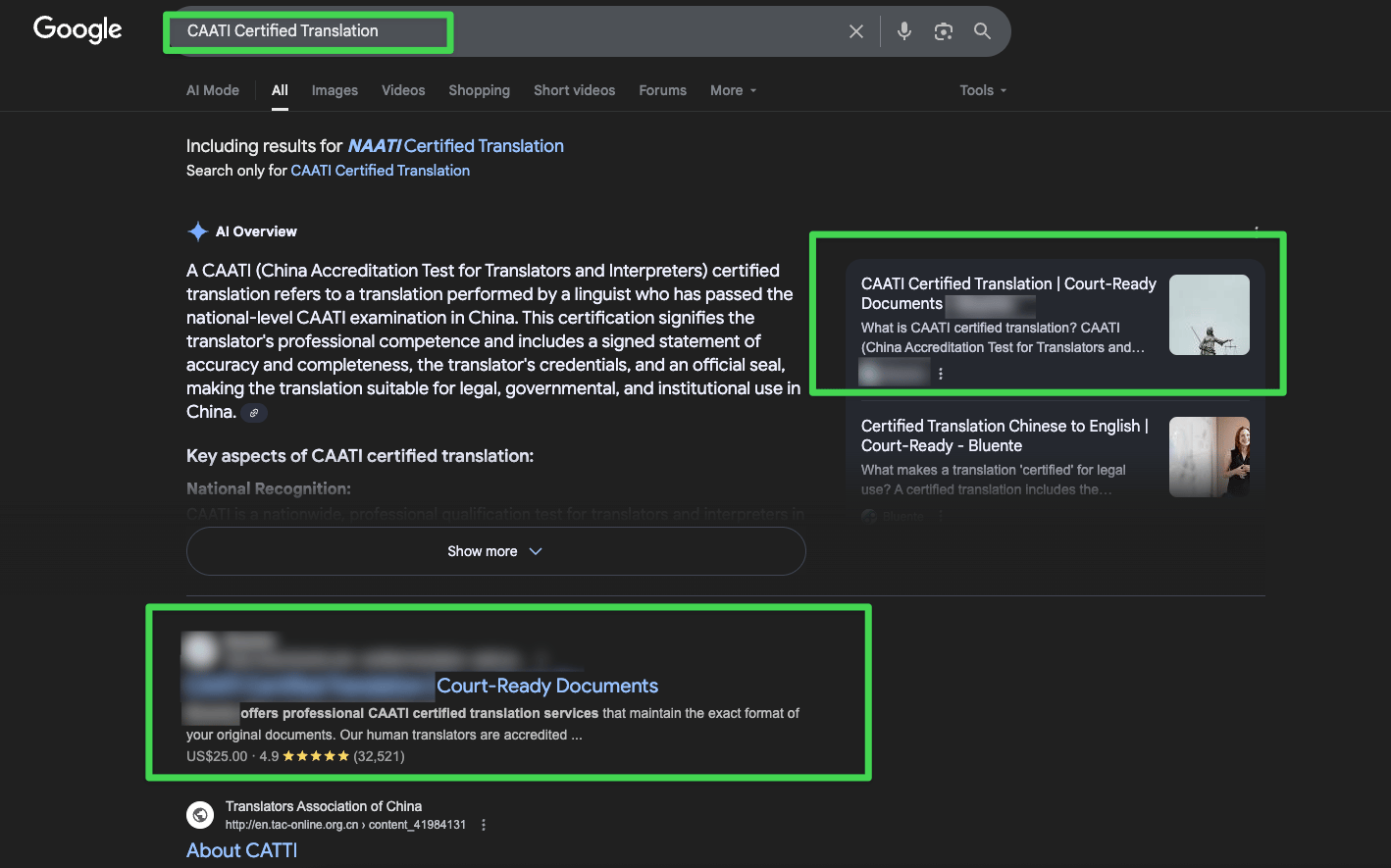 What surprised us was how easy it was to get ChatGPT to recommend our client too:
Reflection: What This Project Taught Me
What started as “let’s see what AI can do” turned into a crash course in problem-solving:
Curiosity: I stress-tested LLMs to find their breaking points instead of assuming they’d work.
Systems thinking: moved from one-shot prompting to a staged, auditable pipeline.
Empathy with structure: built frameworks that forced the AI to think about the real person behind the search.
Learning as leverage: I paused to learn SEO fundamentals, then used them to guide both my prompts and my system design.
In the end, I learned that building with AI isn’t about chasing the perfect prompt. It’s about designing systems that balance AI’s strengths with human judgment.
More importantly, this project taught me that the real skill isn’t just technical execution (in fact, technical execution might be the easiest part), it’s understanding context. In an era where AI can generate code faster than most engineers, what sets great builders apart is their ability to grasp the nuances, connect to the non-technical realities (like business goals or user pain), and then encode those insights into technical systems.
That’s the mindset I want to keep developing.
Article was written by Abel Lee who interned with Synscribe as a software engineer.
Dominate ChatGPT and Google Search
Synscribe helps B2B companies with SEO & GEO using programmatic SEO approach. Book a call to find out how we help you win.