We Tried 5 AI Humanizer Tools for SEO, Here's Our Review
Summary
Our tests of five popular AI humanizer tools show they often degrade content quality, introducing errors and awkward phrasing in an attempt to bypass AI detectors.
AI detection scores are not a Google ranking factor. Google’s algorithms reward high-quality, helpful content that demonstrates E-E-A-T, regardless of its origin.
Adopt a "human-in-the-loop" approach: use AI for first drafts, then have an expert editor add unique insights, fact-check information, and refine the brand voice.
Synscribe's SEO & Content Strategy leverages AI as a powerful assistant to create high-ranking, expert-reviewed content, focusing on quality over arbitrary detection scores.
You've just spent hours crafting the perfect AI-generated article for a client. The content is insightful, well-researched, and genuinely helpful. But then comes the dreaded response: "Sorry, we only accept 100% human-written content. Our AI detectors flagged your submission."
Sound familiar? You're not alone.
With the rise of AI content generation, we're seeing a parallel surge in clients and platforms demanding "zero AI" content. This has spawned an entire industry of "AI humanizer" tools that promise to make your AI-generated content undetectable to AI scanners.
But do these tools actually work? And more importantly—should you even be using them?
Our team decided to put five popular AI humanizers to the test, assessing their ability to fool detectors while maintaining readability and SEO value. What we discovered might surprise you (and save you some money).
What Google Actually Says About AI Content
Before diving into our reviews, let's address the elephant in the room: Google's stance on AI content.
Many content creators fear that Google actively penalizes AI-written content. This misconception has fueled anxiety and created a market for humanizer tools. But here's what Google actually says:
"Our focus on the quality of content, rather than how content is produced, is a useful guide that has helped us deliver reliable, high-quality results to users for years." - Google Search Central Blog
Google's systems aren't designed to detect and penalize AI content—they're designed to identify low-quality, unhelpful content, regardless of how it was created. The focus is on E-E-A-T: Experience, Expertise, Authoritativeness, and Trustworthiness.
In fact, our own experience shows that AI-written content consistently ranks well when it's high-quality, original, and provides genuine value to readers.
Our Methodology
For our test, we generated a well-written 300-word article snippet using GPT-4 and ran it through five popular AI humanizer tools. We evaluated each tool based on:
Readability and naturalness
Preservation of original meaning
AI detection scores (using multiple detectors)
Overall quality and usability
Tool #1: GPTHuman.ai
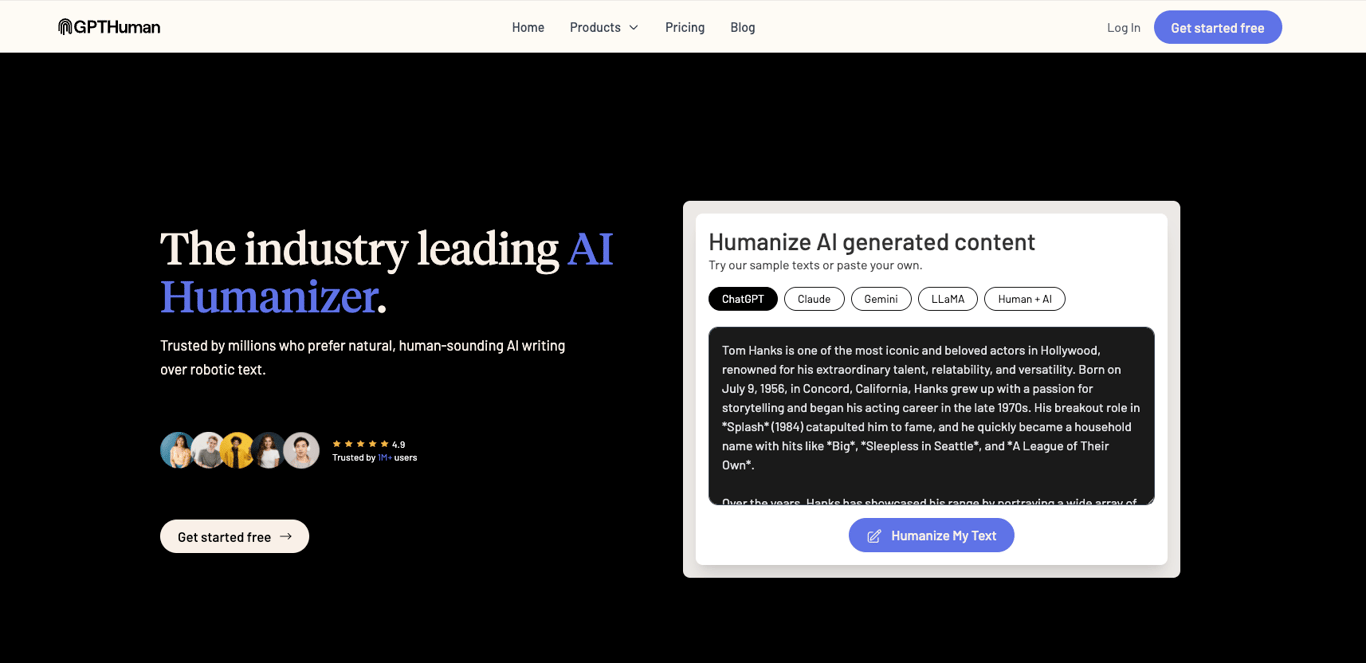 Claims: Bypasses all premium AI detectors with industry-leading technology.
Features: Provides a "Stealth Score" indicating how humanized your content is along with readability metrics.
Pricing: Free trial available, then starts at $25/month for 50,000 words.
Our Experience: GPTHuman was among the better tools we tested. It did manage to reduce AI detection scores significantly, and the interface is clean and intuitive. The output preserved most of the original meaning, which is a plus.
The Drawbacks: While it performed well compared to competitors, we still noticed some awkward phrasing and unnatural word choices. The "humanized" content lost some of the punch and clarity of the original. A human editor would still need to go through and clean up several sentences.
Tool #2: Quillbot
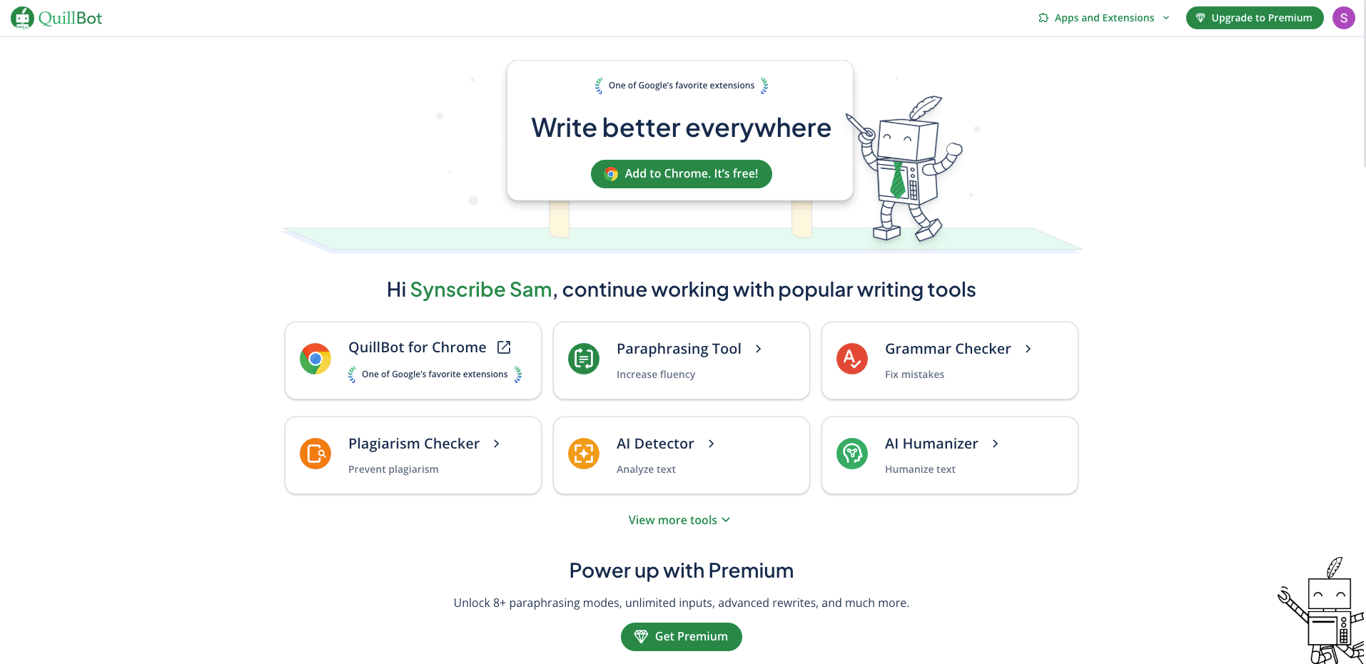
Claims: A writing assistant that helps refine your text for clarity and engagement.
Features: Multiple paraphrasing modes (Standard, Fluency, Formal, etc.) and tone customization.
Pricing: Free plan with a 125-word limit; Premium is $4.17/month.
Our Experience: Quillbot isn't marketed specifically as an AI humanizer, but many content creators use it for this purpose. It excels at restructuring sentences and offering alternative phrasings.
The Drawbacks: It feels like "thesaurus gone wild" at times. The output often sounds overly academic or stilted, especially in Formal mode. It might help you bypass AI detectors, but the resulting text often reads less naturally than the original AI output.
Tool #3: WriteHuman AI
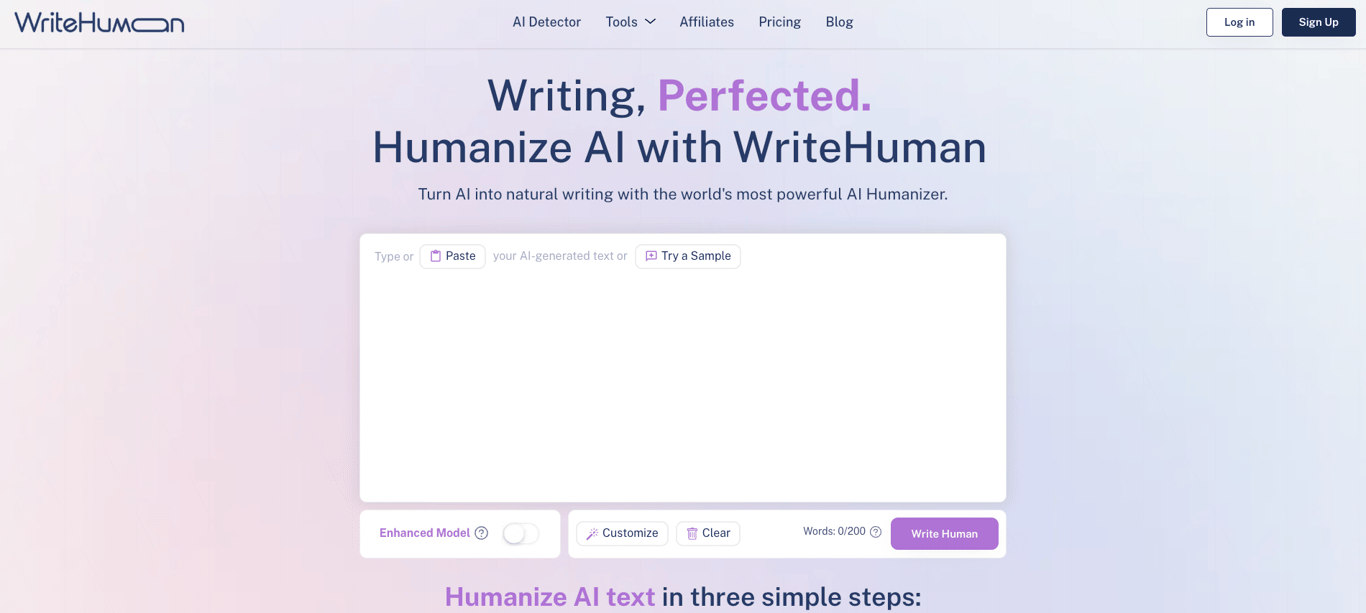
Claims: High accuracy in humanizing AI text with a simple interface.
Features: Easy-to-use platform with free trials for new users.
Pricing: Starts at $12/month for the Basic plan.
Our Experience: WriteHuman produced results that felt very similar to classic "spinner" software from the early SEO days. It successfully changed enough words and phrases to reduce AI detection scores.
The Drawbacks: The content flow suffered significantly. Technical terms were often replaced with incorrect or overly simplistic synonyms. In one case, "semantic search optimization" became "meaningful search improvement," completely changing the technical meaning.

Tool #4: Undetectable AI
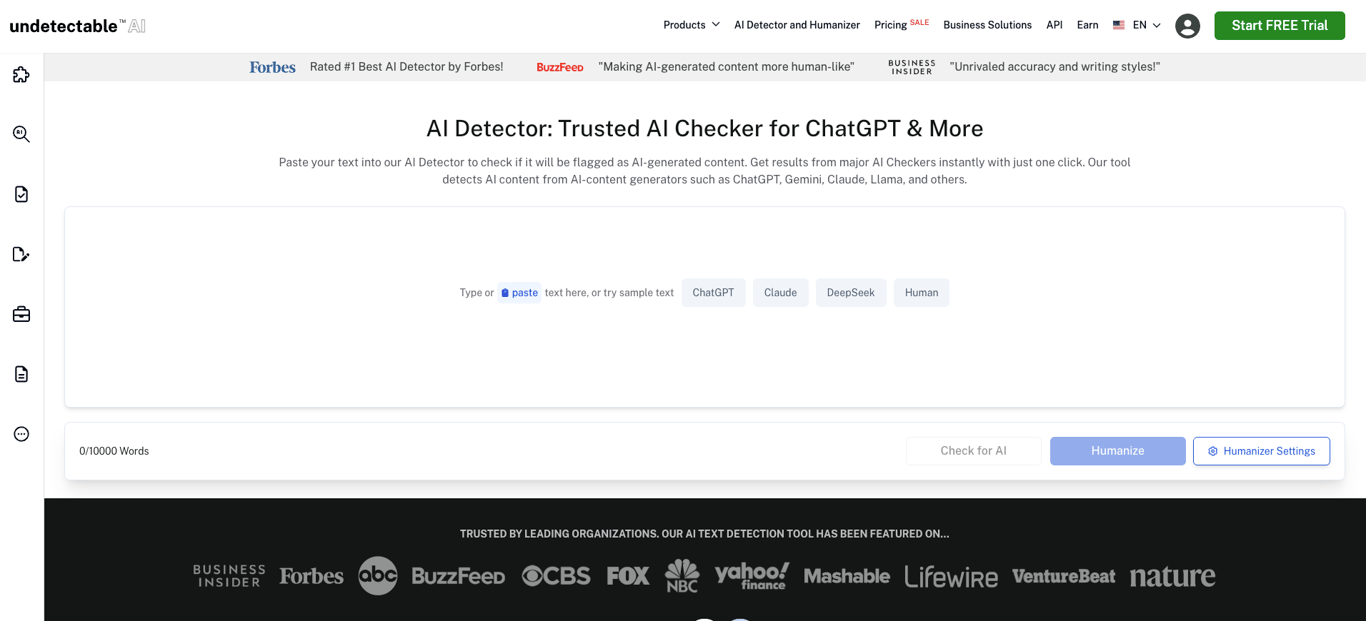
Claims: Comprehensive solution that checks for AI presence and humanizes content.
Features: Built-in AI detector, extensive input limits.
Pricing: Free plan with 250 AI credits; paid plans start at $9.99/month.
Our Experience: Undetectable AI was aggressive in its rewriting approach. It certainly changed enough of the text to fool most AI detectors we tested against.
The Drawbacks: The output didn't feel human-like at all. As Kripesh Adwani noted in his review, the tool often creates grammatically correct but logically disjointed sentences. We found that fixing these issues took more effort than simply editing the original AI draft would have.
Tool #5: HumanizerPro.ai
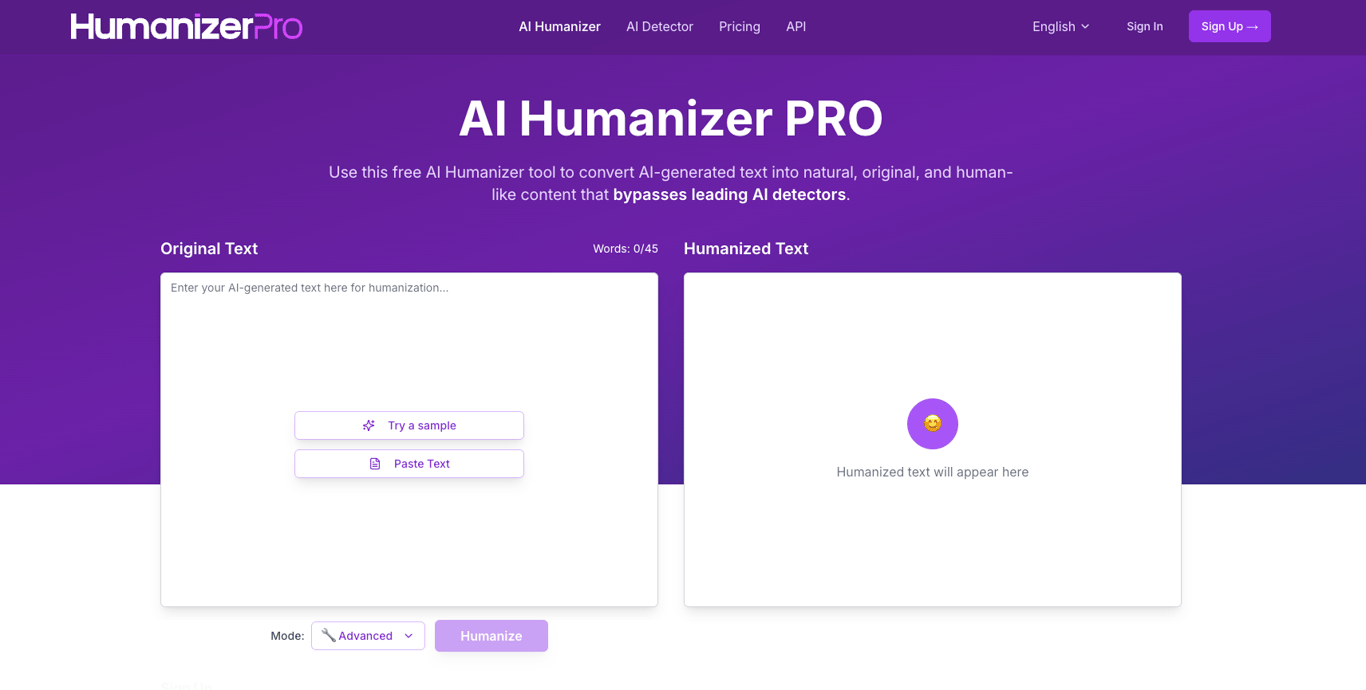
Claims: Quick humanization with an inbuilt AI detector.
Pricing: Very affordable at $7/month for the starter plan.
Our Experience: HumanizerPro delivered on its promise of bypassing AI detection, but at a significant cost to quality.
The Drawbacks: This tool exemplifies what one reviewer aptly described as content that "sounds like it was written by a second grader using a thesaurus" (Medium). Word choices were often bizarre and out of context, completely undermining the credibility of the content.
Why We're Not Using Any of These Tools
After testing these tools extensively, we've decided not to incorporate any of them into our content workflow. Here's why:
1. Optimizing for AI Detection Scores is a Waste of Time
AI detection scores are not a Google ranking factor. They're an arbitrary metric created by third-party tools with varying levels of accuracy. These detectors are constantly changing their algorithms, just as AI writing tools are evolving.
Spending time and resources chasing a "100% human" score is a cat-and-mouse game that distracts from what really matters: creating valuable content for your audience.
2. High-Quality AI-Assisted Content Already Ranks Well
We've consistently seen AI-written content rank well on Google when it's thoughtfully created and edited. According to a HubSpot survey, 46% of web strategists reported AI has helped their pages rank higher.
Our own experience confirms this. We've documented how our AI-written content consistently ranks on Google because we focus on quality, depth, and originality—not on fooling detectors.
3. The Output Quality is Genuinely Poor
Most of these tools rely on glorified "spinning" technology. They swap synonyms and restructure sentences without understanding context or nuance.
This process often destroys the natural flow, introduces errors, and makes the content sound more robotic—the exact opposite of what you want. Modern AI models like GPT-4 are getting better daily; their raw output is often more readable than what these humanizers produce.
A Better Approach: The Human-in-the-Loop Method
Instead of relying on AI humanizer tools, we've found that the best approach is what we call the "human-in-the-loop" method:
Use AI as a First Draft Assistant: Generate outlines, initial drafts, or research summaries. Don't just copy-paste outputs.
Inject Your Experience (The 'E' in E-E-A-T): Add personal stories, unique insights, original data, or expert quotes that AI cannot invent.
Fact-Check Everything: AI models can pull outdated or inaccurate data. Your job is to verify every claim and ensure accuracy.
Refine the Voice: Edit the text to match your brand's unique personality. Add humor, empathy, or a specific point of view.
Improve Flow and Readability: Break up long paragraphs, use simple language, and ensure the content flows logically from point to point.
Conclusion: Focus on Value, Not Detection Scores
The pressure to bypass AI detectors is understandable but misguided. Our tests show that AI humanizer tools often degrade content quality in pursuit of an arbitrary score that has no bearing on search rankings.
Google doesn't penalize AI content; it penalizes low-quality, unhelpful content. Stop worrying about AI detection and start obsessing over value creation.
The best AI humanizer on the market is you. Use AI as a powerful assistant to augment your workflow, but never forget that your unique experience, voice, and critical eye are what turn good content into great content that ranks.
By focusing on creating genuinely helpful, expert-reviewed content that serves your audience's needs, you'll not only rank better but also build lasting trust with your readers—something no AI humanizer tool can do for you.

Frequently Asked Questions
What is an AI humanizer tool?
An AI humanizer tool is software designed to rewrite AI-generated text to make it appear as if it were written by a human, primarily to bypass AI detection scanners. These tools work by rephrasing sentences, swapping synonyms, and altering syntax. However, this process often degrades the quality and readability of the content.
Does Google penalize AI-generated content?
No, Google does not penalize content simply because it was generated by AI. Google's algorithms focus on identifying and demoting low-quality, unhelpful content, regardless of how it was created. High-quality, valuable AI-assisted content that adheres to E-E-A-T guidelines can rank very well.
Why are AI humanizer tools not recommended?
AI humanizer tools are not recommended because they often degrade content quality, introduce factual or grammatical errors, and focus on an arbitrary metric (AI detection scores) that has no impact on Google rankings. The effort required to fix the output from a humanizer is often greater than the effort needed to edit the original AI draft.
How can I make AI content better without a humanizer?
The best way to improve AI-generated content is through the "human-in-the-loop" method. Use AI to create a first draft, then have a human editor refine, fact-check, and add unique insights, personal experiences, or original data. This process ensures the final content is accurate, valuable, and trustworthy.
Are AI detection scores important for SEO?
No, AI detection scores from third-party tools are not a Google ranking factor and are therefore not important for SEO. These scores are often unreliable and inconsistent. Your focus should be on creating high-quality content that satisfies user intent, not on passing an arbitrary AI detection test.
What is the best way to use AI for content writing?
The best way to use AI is as a powerful assistant to augment your workflow, not as a replacement for human expertise. Use it for brainstorming, outlining, and drafting, but always ensure a human expert guides the process, fact-checks the output, and injects a unique voice and perspective to create content that truly stands out.
Dominate ChatGPT and Google Search
Synscribe helps B2B companies with SEO & GEO using programmatic SEO approach. Book a call to find out how we help you win.